864 JOURNAL OF THE SOCIETY OF COSMETIC CHEMISTS the product, the contamination from both the raw materials and manu- facturing process, and the unpredictable contamination by the consumer. One can exercise control over raw materials and manufacturing, but one cannot control or predict the extent or type of consumer contamination. We have studied cosmetics of varying chemical compositions, varying end use, with and without preservatives, in relation to consumer con- tamination in an effort to determine (a) what type of cosmetics can be self-sterilizing and (b) the relation of chemical composition and consumer contamination to the problem of preservative evaluation. The products evaluated after use were stick and pressed powder make-up, stick and pressed powder blushers, liquid and pressed powder eyeliners, a facial cleansing cream and a moisturizing lotion both containing avocado oil, and a night cream containing 10ø•o skim milk. EXPERIMENTAL Products used were either from regular production or prepared in the laboratory. Except for the powdered blushers, the products made in the laboratory were prepared in such a manner that they were free from microorganisms as determined by plate count. To assure low counts, some of the components (talc, pigments) of pressed products, liquid eye- liner, and brushes with natural bristles were exposed to ethylene oxide treatment. With the emulsion products, the microbiological content was controlled by heat and care during preparation and filling into sterile containers. Products taken from stock had no microorganisms by the plate count procedure. Volunteer users were obtained among female office workers. Subjects were instructed verbally as to how to use the product and were contacted frequently to be sure they were using the product regularly. Products were collected after 10 to 21 days of use, and a plate count was made. Plate counts were done again on the liquid eyeliner and the emulsion products 12 weeks after collection. The diluent used in the plate count procedure was 0.1% Tween 80* in 0.85% saline solution or Tryprone Azolectin Tween (TAT) broth. t The plating media were Sabouraud's Dextrose Agar, Seed Agar, or Tryptic Soy Agar (TSA). Incubation was 5 days at 30 ø C or 37 øC. All negative plates were streaked to be sure they supported growth. The enrichment procedure used consisted of placing a 1- or a 10-g sample of product into TAT broth followed by incubation at 37 øC for 24 * Atlas Powder Co., Wilmington, Del., Difco, Detroit, Mich. t Dif½o, Detroit, Mich.

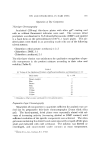
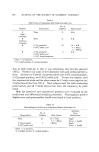
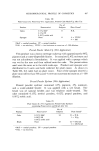
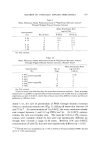
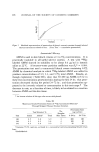
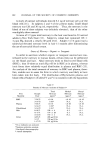
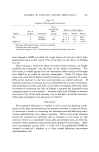
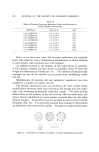
MICROBIOLOGICAL PROFILE OF COSMETICS 865 hours. One-gram samples were used when sample size was limited (i.e., eyeliners) and/or contamination was known to be on the surface only (i.e., sticks, blushers, pressed cakes). Streaks from the enrichment medium were made onto Vogel-Johnson Agar, Pseudomonas Isolation Agar, Eosin Methylene Blue, and Sabouraud's Dextrose Agar plates. This enrichment procedure was done upon collection of the samples and 12 weeks later for the liquid eyeliner and emulsion products. In the case of the unpreserved liquid eyeliner, a pilot study was performed to determine the extent of the proliferation of contaminant microorganisms by monitoring product from two users on a daily basis. The facial cleansing cream, the moisturizing lotion, and the night cream were packaged in wide-mouth (45 mm and 55 mm) jars. This was done to force the user to insert her fingers into the product at least once during each time of use. RESULTS Stick Mke-U (,nhydrous) Two formulations of stick make-up were used. The first (A) was a light-to-medium coverage make-up consisting of approximately 20% waxes, 50% oils, and 30% pigments, and B, a medium-to-heavy coverage consisting of approximately 10% waxes, 45% oils, and 45% pigments. The sticks were applied directly onto the face. Product A, prepared in the laboratory, contained no preservatives. Results are shown in Table I. Each unpreserved Product A stick from 11 subjects showed a plate count of less than 50/g. Product B, containing preservatives and made in production, was evaluated on 23 subjects. The preservatives were 0.1 • methyl paraben, 0.1% propyl paraben, and 0.05% sorbic acid. After use, 18 sticks showed no plate count, 4 showed approximately 100 colonies/g and one showed 3000/g. Hexa- chlorophene at 0.25% was added to the preservatives and these sticks were used by 5 additional subjects. The plate count after use was negative. Eleven subjects used the laboratory-prepared unpreserved sticks, and in all cases, there was a negative plate count. Enrichment was not done on stock make-ups A or B. Blusher Stick This product was a nonmatte or moderately shiny product used to give highlights and/or color to the face. It was somewhat similar in composi-
Purchased for the exclusive use of nofirst nolast (unknown)
From: SCC Media Library & Resource Center (library.scconline.org)