dr. Soc. Cosmet. Chem., 23, 899--911 (December 6, 1972) Application of Physical Chemistry in Product Development HOSNY Y. SAAD, Ph.D., and E. GRIFFIN SHAY, M.S.* Presented December 13, 1971, New York CYty Synopsis--Basic physical-chemical theories are related to FORMULATION PARAMETERS. Designing a product on the basis of these principles aids the chemist in understanding the mechanisms involved, and enables him to modify and alter the physical features and chemical properties of the product to be marketed. The effects of ELECTROKINETIC PHENOM- ENA and of CRITICAL MICELLE CONCENTRATION on a variety of product types are discussed in a manner which provides guidance for future work. The physical-chemical princi- ples of EMULSION formulation are discussed and related to emulsion separation, creaming, and graininess. Particle size, pigment wetting, particle-particle aggregation, and adhesion are related in a physical-chemical manner to typical COSMETIC PRODUCTS. Shelf-life determinations and performance characteristics are demonstrated to be associated with several of these prin- ciples. INTRODUCTION The scientific cosmetic field is now being faced with its biggest challenge in its long history. The state of the art now is still fluctuating between trial and error development approaches and glimpses of scien- tifically based approaches. This situation should not, however, be too distressing. By analogy, the pharmaceutical industry had to face this same challenge in the late 1950's, when the industry and its scientists came to realize that good, stable, aesthetic products could no longer be developed by simply basing them on art and practical know-how. The pharmaceutical industry recognized the need for adapting and reshaping, to meet its own needs, the overabundance of basic chemical information that was available in the literature. * Avon Products, Inc., Suffern, N.Y. 10901. 899

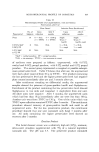
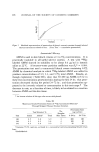
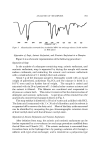
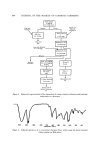
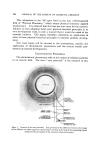
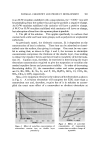
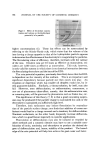
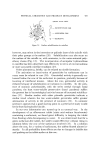
900 JOURNAL OF THE SOCIETY OF COSMETIC CHEMISTS This adaptation in the '50's gave birth to the now well-recognized field of "Physical Pharmacy," which means physical chemistry applied to pharmacy. It is believed that the time has now come for the cosmetic industry to start adapting these same physical-chemical principles in its own development work, in such a manner that it meets the needs of the cosmetic industry. This paper, therefore, represents an application of some of these physical-chemical principles in cosmetic product develop- ment. Two main topics will be covered in this presentation namely, the application of electrokinetic phenomena and the critical micelle phe- nomena in cosmetic developments. ELECTROKINETIC PHENOMENA The electrokinetic phenomena refer to the motion of colloidal particles in an electric field. The term "zeta potential" is the measure of this : PARTICLE ':ELECTRIC SURROI/N I) • __ PL.•NE ':OP {mm}•N oF Figure 1. Concept of the zeta potential. Zeta potential is the difference between the charge of the diffused moveable negatively charged layer and that of the bulk of the suspending liquid. (Reprinted by permission of the American Chemical Society)
Purchased for the exclusive use of nofirst nolast (unknown)
From: SCC Media Library & Resource Center (library.scconline.org)