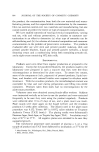
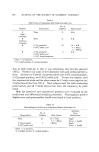
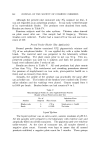
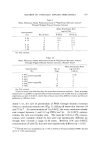
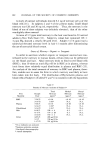
866 JOURNAL OF THE SOCIETY OF COSMETIC CHEMISTS Table I Plate Count of Anhydrous Stick Make-Ups after Use No. of Product Preservative Subjects Plate Count" A (light coverage) B (medium coverage) B None 11 50/g None 11 N.R. 0.2% parabens b 23 0.05% sorbic acid 0.2% parabens b 5 0.05% sorbic acid 0.25 % hexachlorophene 18 = N.R. 4 = •00/g I = 3000/g N.R. "N.R. = no recovery. • 0.1 methyl paraben, 0.1 propyl paraben. tion to stick make-up in that it was anhydrous, but had less pigment (10%). Product was made in the laboratory with and without preserva- tives. As shown in Table II, the preservatives were 0.1% methyl paraben, 0.1% propyl paraben, and 0.05% sorbic acid. Twenty-one subjects used the unpreserved sticks and the plate counts for 12 sticks were negative and 9 sticks showed less than 200/g. Nine subjects used the stick containing preservatives and all 9 sticks showed less than 200 colonies/g by plate count. Both the preserved and unpreserved products were evaluated by the enrichment and differential streaking procedure. Noncoagulase positive Staphylococcus and gram-positive bacilli were found in both products. Table II Microbiological Profile of an Anhydrous Blusher Stick after Use Isolations No. of From Preservatives Subjects Plate Count • Enrichments None 21 12 = N.R. Staph 9 = 200/g Gram q- bacilli 0.2% parabens• 9 200/g Staph 0.05% sorbic acid Gram q- bacilli • N.R. = no recovery. • 0.1 methyl paraben, 0.1 propyl paraben.

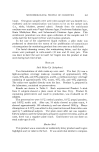
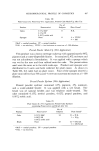
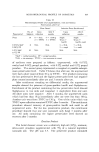
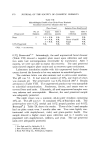
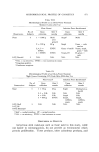
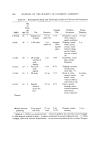
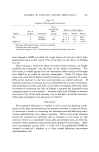
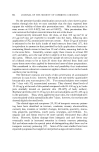
MICROBIOLOGICAL PROFILE OF COSMETICS 867 Table III Plate Count of a Preserved, Wet Application, Pressed Cake Make-Up After Use Product Preservative • Subjects Plate Count • Cakes 0.1% MeP 8 N.R. 0.1% PP 0.05% sorbic acid Sponges None 8 4 = TNTC 4 = 500 a MeP = methyl paraben PP = propyl paraben. b N.R = no recovery TNTC : too numerous to count on a 1-100 dilution. Pressed Powder Make- Up ( Wet Application) This product was a heavy coverage make-up with approximately 80% pigment and a water-dispersible binder. It contained 2.4% moisture and was not anhydrous in formulation. It was applied with a sponge which was wet by the user and then rubbed onto the cake. The preservatives used were the same as in the stick make-ups. Product and sponges were distributed to 8 users and both collected for plate count. As shown in Table III, the cakes had no plate count. Four of the sponges showed a plate count of less than 500/g and 4 were too numerous to count on a 1-100 dilution. Pressed Powder Eyeliner (Wet Application) Pressed powder eyeliner contained 65% pigment, 4% moisture, and a water-soluble binder. It was applied with a wet brush. The brush was of natural bristles and was ethylene oxide-treated. The cake contained 0.15% methyl paraben, 0.02% propyl paraben, and 0.01% sorbic acid. Table IV Plate Count of a Wet Application Pressed Cake Eyeliner containing Preservatives and Brush after Use Product Preservative • Subjects Plate Count b Cake 0.15% MeP 14 0.02% PP 0.01% sorbic acid Brush None 13 13 = N.R. 1 = 10/g 12 = 8/brush 1 = 420/brush a MeP = methyl paraben PP = propyl paraben. b N.R. = no recovery.
Purchased for the exclusive use of nofirst nolast (unknown)
From: SCC Media Library & Resource Center (library.scconline.org)