J. Soc. Cosmet. Chem., 23, 887-898 (December 6, 1972) Methods Used in the Analysis of Shampoos R. F. SCHUBERT, B.S., and P. H. KO, B.S.* Presented October 11, 1971, Joint Symposium of the Society of Cosmetic Chemists and the Association of O•cial Analytical Chemists, Washington, D.C. Synopsis--Modern SHAMPOOS are designed not only to clean the hair and scalp, but to impart conditioning properties, fragrance, luster, and other attributes to hair. As a consequence, the ANALYSIS of a shampoo becomes a complicated exercise in separation and identification of components, calling on many of the disciplines of modern analytical chemistry. The literature on shampoo analysis is reviewed and some older schemes of analysis are dis- cussed. A proposed scheme for the analysis of a modern shampoo using a combination of SOLVENT EXTRACTION and ION EXCHANGE SEPARATION is presented. INTRODUCTION Schwartz and Perry (1) and others state that the main requisites of a shampoo are: (a) it must clean the hair and scalp (b) it must leave the hair lustrous (c) it must leave the hair soft rather than harsh and dry (i.e., it must provide conditioning) (d) it must rinse off easily and com- pletely enough not to interfere with subsequent treatment (e) it must not be irritating and (f) it must be esthetically pleasing in odor, physical form, visual impact, etc. To achieve these properties, many popular brands of shampoos are based on mixtures of synthetic detergents or syn- thetic detergents and soap (2, 3). Soap in such mixtures is generally not present as a detergent, but rather as a conditioner. The physical forms of shampoos found in the market place include clear liquids, liquid creams (or lotions), pastes, gels, aerosols, and powders * The Gillette Company, Personal Care Division, Merchandise Mart, Chicago, Ill. 60654. 887

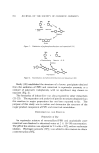
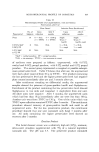
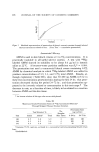
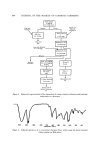
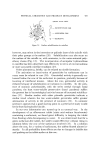
888 JOURNAL OF THE SOCIETY OF COSMETIC CHEMISTS (2). It is obvious that the formulations needed to achieve the product requisites and physical forms are an analytical chemist's nightmare when he tries to analyze them. SURVEY OF SHAMPOO ANALYSIS METHODS Shampoos have been identified by a number of workers as examples of complex mixtures of surfactants which present difficult problems for analy- sis (4-6). Various methods are used by these workers to classify surfac- tants, including functional group analysis (7), elemental analysis (6), and paper chromatographic separation and identification (6, 8). All methods used are qualitative or semiquantitative, at best. Specific references to the analysis of shampoos are not plentiful in the literature. The earliest dated reference in the chemical literature is by Rosenberger (9) who published qualitative and quantitative methods for determining soap and inorganic salts in shampoo powders in 1938. In 1942, Ram (10) reported the analysis of an alkali sulfate and an alkyl sul- fate or sulfonated oil in the presence of each other in another shampoo powder. Ram's work is the first reported analysis of a synthetic deter- gent in a shampoo. In 1949, Parisot (11) described an analytical scheme applicable to liquid shampoos. From a single sample, he separated by solvent extrac- tion the free fatty acids, fatty acids combined in soap, fatty acids in un- saponified material, the unsaponified material itself, and sulfonated deter- gent. Other components were determined on separate samples. In 1958, Newburger (12) described the analysis of shampoos using ion exchange resin. Figure 1 shows an abbreviated scheme of analysis. Note that the method is applicable to shampoos containing an alkyl sulfate, a fatty acid-alkanolamine condensate, and soap. This method is still useful for shampoos with these components. Bush (13) cited the Newburger paper in his review of analysis in the cosmetic industry in 1959. He indi- cated the potential error in attempting to determine an alkyl sulfate by hydrolysis if a fatty alkanolamide is present and suggested that the deter- mination of an ester value of the separated fats after hydrolysis is a reliable indication of the presence of a fatty alkanolamide. Since alkanolamides are not easily extracted from shampoos by ordinary methods, Bush sug- gested the use of ion exchange techniques. Neu (14) and Mapstone (15) contributed methods for determining the foaming properties of shampoos and improving the AOAC water deter- mination (16), respectively. Others dealt with problems of viscosity de- termination (17) and phosphoric acid emulsifiers in egg shampoos (18).
Purchased for the exclusive use of nofirst nolast (unknown)
From: SCC Media Library & Resource Center (library.scconline.org)