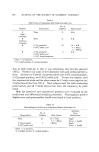
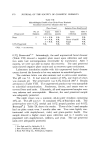
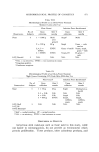
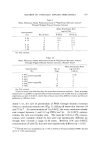
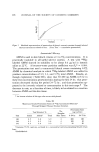
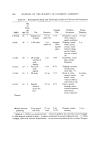
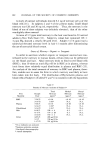
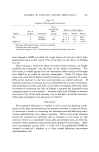
HAZARDS OF TOPICALLY APPLIED MERCURIALS 879 The overall results of these skin penetration studies conducted on PMA and AMM suggest that at their use concentrations, AMM repre- sents more than a 10-fold greater absorption, with its attendant potential hazard of mercury poisoning, than PMA, if applied to the same size area of skin surface. The results are surprising in view of the far greater aqueous and lipid solubility of the PMA-mercury.* The variability in results may partly explain the well-known great range in individual sus- ceptibility to mercurial exposure. RETROSPECTIVE STUDY Clinical Findings Data were collected on 6 women who had used mercurial skin bleach creams for 2 years or more. Four of these (Subjects 1, 2, 3, and 4) had used creams containing 1% AMM. Two of them (Subjects 5 and 6) had used creams containing 3% AMM. According to hospital and physician records, all subjects displayed symptoms consistent with mercurialism. These consisted of numbness or aching of extremities, weakness, and ataxia. Some subjects also experienced nervousness and had difficulties in speech, vision, or hearing, according to the medical records. Classi- cally, chronic mercurialism (inorganic) is characterized by erethism, tremors, ataxia, paresthesia, muscle pain, speech, vision or hearing diffi- culties, and kidney injury. Urinary and blood levelsl' of Hg were obtained, mostly from hospital records, at various times after use of bleach creams ceased. In some cases, blood was analyzed at FDA (7). Mercury in the hair was analyzed at FDA, after samples were washed to remove any external Hg contami- nation, by neutron activation analysis for total mercury (8) and glc for methyl and phenyl mercury (9). Table IV is a compilation of the total findings. Inorganic mercury is excreted mainly in the urine. The normal urinary volume is 1 to 2 1./24 hr, and the normal mercury excre- tion is about 8 /•g/24 hr (10). Signs suggestive of mercury poisoning have been reported to occur at urinary excretion levels ranging from 80 to 197/•g/liter (10). In the present group of women, Subjects 1, 3, and 6 displayed clearly elevated urinary mercury excretion rates of 945, 634, and 251 /•g/24 hr. The latter two values were determined many months after cessation of use of the bleach cream. * Molecular size may be a factor. • Correlation between blood and urinary mercury following exposure to inorganic mercury is rarely found in individuals (6).

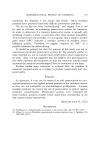
880 JOURNAL OF THE SOCIETY OF COSMETIC CHEMISTS Table IV. Restrospective Study and Toxicologic Profiles of 6 Women with Symptoms Hg in Prod- uct S topped Problems Illness Subj. * Age (%) Use Duration Use Symptoms Duration 1. E.J.K. 46 1 Nightly face 5-6 yr 7/70 Headache, nausea, 6 mos. & body (1965-70) tired, vision & speech problems 2. B.E. 32 1 1-2X daily 2 yr Stopped Tingling, numb, 2 yr (1968-70) 1969 weak, ataxia, started urinary incon- again tinence (disap- peared during non-use of prod- uct 3. S.M. 30 1 3X weekly 2 yr 1969 Emotional, numb and face & legs, urinary neck frequency nightly 4. A.G. 53 1 Face and 2 yr 8/71 neck nightly 5. G.K. 55 3 2X daily 4-5 yr 1/71 6. P.H. 53 3 Nightly 4-5 yr 4/71 nands & arms, occ. face Normal Tingling, nervous, numb hands, tired Mar. '71 Bowel & urine control, numb, ataxia .weak, vision problems, ache arms & legs Coord., speech, hearing, vision, urinary frequency equil brium, arms & legs ache 4 yr pres- ent Methyl mercury 10 oz. sword- 21/2 yr 5/66 Tremors, ataxia, 3 yr. poisoning fish daily total 11/70 memory Subjects 1--Doctor says psychosomatic. Alerted to problem by nurse who read newspaper 4--Has thoracic scoliosis of spine symptoms attributed to tunnel carpel syndrome. 5--Nails mologist, mild early macular degeneration at one time mid-portion of hair reached 760 ppm
Purchased for the exclusive use of nofirst nolast (unknown)
From: SCC Media Library & Resource Center (library.scconline.org)