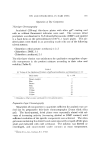
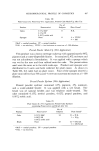
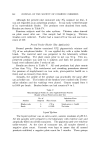
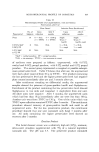
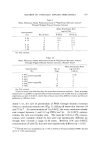
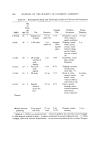
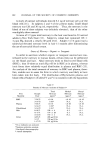
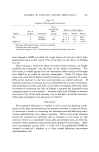
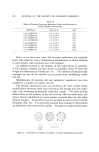
HAZARDS OF TOPICALLY APPLIED MERCURIALS Table VI Analysis of Hair Samples for Mercury 883 Daily Gavage Hg Mercury in Hair (ppm) No. of Dose a Species Samples Compound (t•g/kg) Total b Methyl Phenyl Rat 4 Control 0 2 q- 1 0.3 None 5 CH•HgC1 100 60 4- 2 50.1 None Subject 6* 1 ... 128 q- 4 0.3 0.05 60 doses, administered daily, weekends excluded. Neutron activation analysis. Collected August 10, 1971 (4 months after cessation of bleach cream use). that inorganic AMM provided the major source of mercury rather than food sources such as fish where 95% of the Hg is in the form of CH3Hg (14,15). Hair contains a long-term depot of stored, fixed mercury, no longer available for resorption into the body or for further metabolism. For this reason, it would appear that hair sometimes offers certain advantages over blood as an index of mercury absorption. Table VI shows that when rats were fed 60 doses of methyl mercury over a period of 12 weeks, 83% of the mercury in the hair was laid down as methyl mercury. If fixation of mercury in human hair is accomplished by the same incorpora- tion processes as in rats, and there is no reason to suppose otherwise, then the results of analyzing the hair of Subject 6 support the hypothesis that inorganic mercury was involved. Analysis of the hair of Subject 6 showed that only 0.2% of the total mercury was in the form of methyl mercury. Other data on Subject 6 are also given in Table V. DISCUSSION Percutaneous absorption is studied in z& o in man by applying a sub- stance to the skin and measuring the amounts excreted in urine and feces. A correction is made by measuring the amounts excreted following intra- venous administration of a known quantity. When only small amounts of the test material are excreted, due to retention in the body as with mercury which is a cumulative toxin, skin penetration data are best ob- tained by direct methods, such as have been employed in this study. Mai- bach has reported a mean of 4.4 + 0.3% (S.E.) ofradiolabeled AMM re- covered in urine of 3 subjects in a 5-day period following intravenous administration (16)

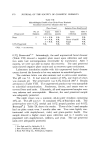
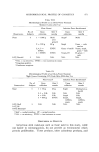
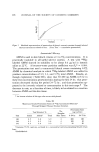
884 JOURNAL OF THE SOCIETY OF COSMETIC CHEMISTS On the premise that skin sensitization occurs only when there is pene- tration through the skin we may conclude that the data reported here support the validity of these skin penetration tests. Skin sensitization in man occurs at 0.01-0.05% but not at 0.001%. Skin penetration like- wise occurs at the higher concentrations but not at the lower. Conservatively estimated from the data, at least 100 ng/cm2/hr or 2.4 t•g/cm2/day are expected to transfer into the body, following skin application of 3% ammoniated mercury cream. Since 20 t•g of mercury is estimated to be the daily intake of total mercury from food (17), this is equivalent in amount to that provided by daily application of mercury- containing bleach cream to less than 10 cm"of skin, assuming both to be in the same form. Generally, women apply these creams to at least 200 cm •, and often, as in the case of the 6 subjects of this report, much larger skin areas. Hence, one can expect the uptake of mercury during the use of a bleach cream to be at least 20 times that derived from food and many times more when applied by determined users of these preparations. Not considered in this evaluation is the real possibility that inadvertent ingestion occurs whenever a consumer applies a bleach cream to the hands and face prior to retiring. The literature contains one study of skin penetration of ammoniated mercury in man in vivo however, the results are not entirely quantitative because skin area was not given (18). Two normal subjects were treated for 7 days with 5% ammoniated mercury. They showed blood levels of 19-20 ng/g at the end of this period compared with 85-450 ng/g in 5 sub- jects similarly treated on psoriatic skin (50-60% of body surface). Erythrocyte levels were 15-18 ng/g in the normal subjects and 94-435 ng/g in the psoriatics. Thus, when applied to intact skin, the whole blood mer- cury remained within normal limits after 7 days however, the erythrocytes showed slightly elevated levels. The clinical signs and symptoms (19, 20) of inorganic mercury poison- ing have been described as tremors, weakness, sensory abnormalities, memory loss, emotion or intellect changes, dermatitis, spasticity, stoma- titis, gingivitis, paresthesia, mucle pains, neuralgia, and erethism. In- organic and aryl forms tend to be more quickly eliminated than alkyl forms. However, kidney damage from inorganic and aryl forms may eventually result in increased retention in chronic mercury poisoning. Eyl and others make the special point of distinguishing alkyl from aryl or inorganic mercury poisoning (19). Some of the cases studied here have reported symptoms that might be interpreted as signs of mercurialism.
Purchased for the exclusive use of nofirst nolast (unknown)
From: SCC Media Library & Resource Center (library.scconline.org)