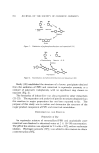
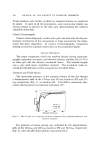
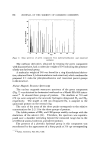
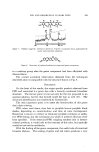
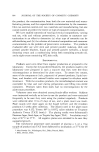
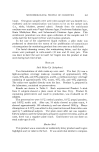
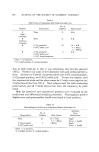
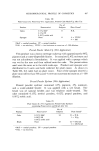
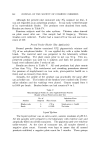
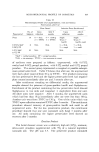
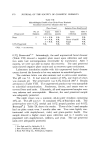
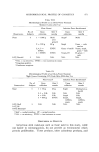
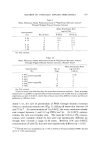
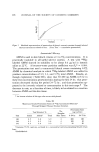
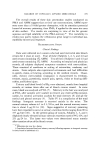
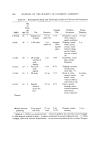
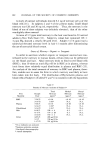
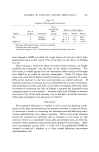
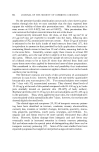
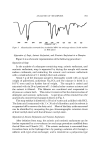
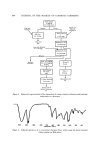
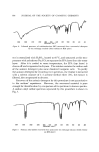
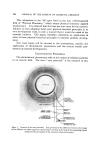
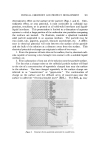
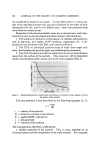
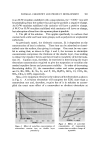
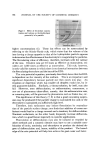
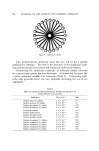
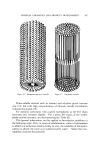
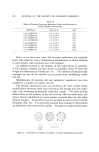
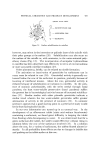
ANALYSIS OF SHAMPOOS 893 3500 3000 2500 2000 1800 1600 1400 1200 1000 80C 600 FREQUENCY (CM 4) Figure 3. Alkanolamide recovered from Amberlite MB-1 ion exchange column (dried residue on KBr plate) Separation of Soap, Artionic Surfactant, and Nonionic Surfactant in a Shampoo Figure 4 is a schematic representation of the following procedure: Separation of Soap In the analysis of a shampoo containing soap, artionic surfactant, and nonionic surfactant, soap is separated by drying the sample with excess sodium carbonate, and extracting the artionic and nonionic surfactants with a mixed solvent of 1: 1 diethyl ether and acetone. About 5 g of the shampoo sample is thoroughly mixed with an equal weight of pulverized, anhydrous Na2COa and the mixture is dried in a 105 øC oven until no further loss of weight. The sample is cooled and extracted with six 20-ml portions of 1: 1 diethyl ether-acetone mixture and the extract is filtered. The flitrates are combined and evaporated to dryness on a steam bath. This extract is reserved for the determination of detergent and nonionic surfactants. A spectrum of this residue from the analysis of a commercial shampoo is shown in Fig. 5. The soap residue is dissolved in 50 ml of water and acidified with HC1. The fatty acid is extracted with 3 X 30 ml of chloroform and the solvent is evaporated off to recover the fatty acid. Most of the fatty acids recovered can be identified by comparing the gas chromatographic retention times of their methyl esters with that of known methyl esters. Separation of Artionic Surf actants and Nonionic Surf actants After isolation from soap, the artionic and nonionic surfactants can be further separated by a two-column ion exchange procedure modified from that of Ginn and Church (33). The artionic surfactant is converted from its sodium form to the hydrogen form by passing a solution of it through a sulfonic acid-type of ion exchanger, and is retained on a polyamine-type

894 JOURNAL OF THE SOCIETY OF COSMETIC CHEMISTS Figure 4. I Sample I •n Na2CO 3 Ext. EtOEt-Acet.
Dried Soap and Residue I Fdtrate Arnoinc and (norgenies Nonlomc I 1 Surfactants Ext CHCl 3 1,1 IPA-H20 I Fatty Acid I Amberlite IR-120 Stnp w•th 2•NaOH I In 1:1 IPA-H20 I Amberlite IR-45 Ion Exchange Effluent I I I Neut. with H2S041 Nonionic ISat. with Na2CO31 Surfactant ! at 60øC. I IPA Layer- Evap I 1:1 Ether-Acetone Purification Sodium Salt of Arnoinc Surfactant (It) Strip with 2N HCI I Evap to Dryness Alkanolamlne HCI (ir) Schematic representation of the separation of a soap, anionic surfactant, and nonionic surfactants in a shampoo 20OO 1goo 16oo FREQUENCY (CM -I) 14•3 1200 lo00 Figure 5. Infrared spectrum of a commercial shampoo from which soap has been removed (dried residue on KBr plate)
Purchased for the exclusive use of nofirst nolast (unknown)
From: SCC Media Library & Resource Center (library.scconline.org)