J. $oc. Cosmet. Chem., 23• 875-886 (December 6, 1972) Potential Topically Systemic Hazards of Applied Mercurials F. N. MARZULLI, Ph.D., and DANIEL W. C. BROWN, M.S.* Presented May 26, 1972, Seminar, Los Angeles, Calif. Synopsis--Measurements of the SKIN-PENETRATING CAPACITY of one organic (phenyl mercuric acetate) and one inorganic type (ammoniated mercury) MERCURIAL COM- POUND at close to use levels are presented as background for a retrospective study of six female chronic users of skin bleach creams containing ammoniated mercury who show elevated mercury levels in tissues and symptoms suggestive of ACCUMULATION of mercury. INTRODUCTION The present investigation was begun in 1968 following the receipt of a letter from a physician who suspected that a toxic trigonitis which she sustained was precipitated by the use of a marketed mercurial skin bleach cream. Although the literature is replete with information on the toxic hazards of mercury, only a small portion is devoted to topically applied mercurials. None of it is concerned with the quantitative aspects of percutaneous absorption. It was therefore deemed desirable to find out more about systemic intoxication as related to skin application of mercurial com- pounds. This report is divided into two parts, the first of which is concerned with the amounts of mercury likely to be absorbed following skin applica- tion of mercurial compounds. The second part involves a retrospective study of 6 female chronic users of commercial bleach creams, with symp- toms and objective findings suggesting topically applied mercurials as the causative agents. * Food and Drug Administration, Department of Health, Education and Welfare, Wash- ington, D.C. 20204. 875

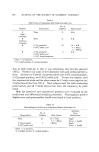
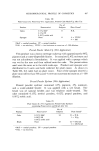
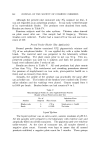
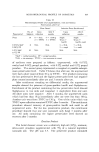
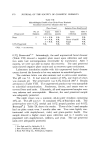
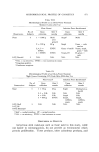
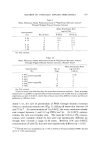
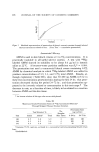
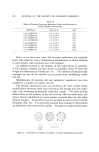
876 JOURNAL OF THE SOCIETY OF COSMETIC CHEMISTS Both organic and inorganic mercurials are employed in topical prep- arations. Organic forms such as phenyl mercuric acetate (PMA) are sometimes used as cosmetic preservatives inorganic forms such as am- moniated mercury (AMM) are the active ingredients in skin bleach creams. SKIN PENETRATION OF MERCURIAL COMPOUNDS Penetration of •'øaHg-labeled PMA and AMM through excised human forearm stratum corneum was measured using diffusion cells as described previously (1-3). Stratum corneum is best removed as a continuous sheet of tissue by swabbing the clipped ventral forearm skin with 70% ethyl alcohol for about 5-10 sec, allowing to air dry, and then applying pressure-sensitive tape for stripping. In prior work, a constant flow of isotonic saline (10 ml/hr) at 37øC was used to bathe the under surface of stratum corneum and sweep the labeled compound out of the diffusion chamber as it penetrated the skin. In the present study, the saline flow was limited to 1 hr prior to each collection time (sequentially at 1, 3, 5, 7, 24 hr) in order to reduce the dilution factor, in view of the small amount of penetrant collected. In contrast with previous studies, the rate of penetration of the test compound was extremely low. As such, the low level of measurable 2ø3Hg, measured together with the known capacity of mercury to react with skin tissue, compounded the problems usually associated with ob- taining quantitative results. The data therefore are considered valid to only one significant figure and are useful only to provide relative rates of penetration. EXPERIMENTAL AND RESULTS Pherzyl zklercuric Acetate PMA is used as a cosmetic preservative at concentrations ranging from 0.0006 to 0.05%. This substance is appreciably soluble in fat solvents and soluble in about 600 parts of water (4). A benzene-water partition coefficient was determined and found to be Kfi 5 = 15.2. At 0.1% concentration and above, PMA is a skin irritant at 0.1 to 0.05% concentration, it is a skin sensitizer (5). It does not sensitize at 0.001% concentration (5). Penetration tests were conducted using con- centrations of 1.00, 0.50, 0.25, 0.13, 0.06, and 0.001% PMA in 95% alcohol. Results are quite variable nevertheless they show that PMA is a poor skin penetrant (Tables I and II). After an initial lag, lasting
Purchased for the exclusive use of nofirst nolast (unknown)
From: SCC Media Library & Resource Center (library.scconline.org)