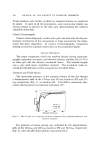
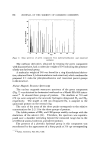
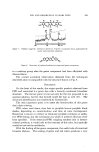
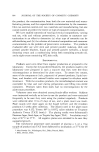
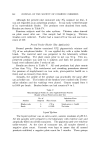
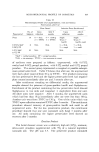
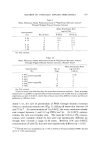
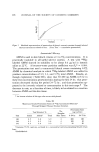
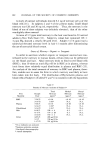
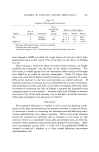
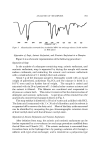
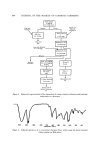
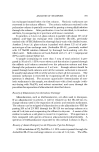
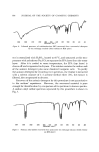
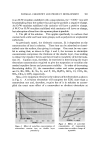
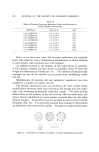
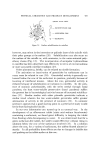
PPD AND RESORCINOL IN HAIR DYES 859 H•, Hc H He .,--,r•. o,"y•o . '.•. ,. HA H Hc HA •,ol I•o I 800 700 600 cps H Figure 8. Structure ofp-phenylenediamine-resorcinol green component to a methoxy group after the green component had been alkylated with diazomethane. The overall analytical information obtained from the techniques described above is compatible with the structure shown in Fig. 8. DISCUSSION On the basis of the results, the major specific product obtained from PPD and resorcinol is a green dye with a linearly condensed trinuclear structure. The former point is true not only for the dye prepared in an aqueous solution, but for that formed inside the hair as well (27). The structural identification was confirmed by Corbett (28). The next important point is to assess the functionality of this green dye in hair coloring. PPD, when used alone, dyes hair to purplish brown-purplish black shades, depending on concentrations and time of color development. Resorcinol is known to reduce or eliminate purplish overtones in oxida- tive PPD dyeing, but the mechanism by which it achieves this has never been specified. If the resorcinol-PPD coupling resulted only in brown- colored products, it would add to the intensity of the color, but optically would not cut out the red shades. With the finding of the green component, the useful role of resorcinol becomes obvious. The mixing of green and red colors produces a very

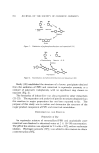
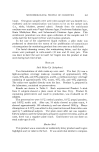
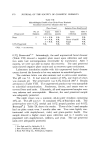
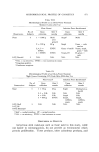
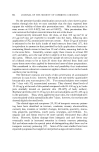
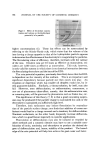
860 JOURNAL OF THE SOCIETY OF COSMETIC CHEMISTS oxidation NH2 NH p - Phenylenediamine Quinonediimine coupling NH 2 r• r• Bandrowski's Base Green Component purple further 1 coupling Brown Polymer Figure 9. Role of resorcinol in oxidative dyeing wide band of light absorption in the visible region, giving an overall brown shade. The competitive coupling of resorcinol and PPD leading to differently colored dominant products is shown in Fig. 9. In addition, the hetero coupling reaction reduces the extent of PPD self-coupling which produces the purplish shade. CONCLUSIONS The major specific product of p-phenylenediamine and resorcinol cooxidation was separated and identified. Spectroscopic data show it to be a trinuclear species with two PPD and one resorcinol unit in it. This green-colored dye component can balance purple shades in oxidative hair dyeing. ACKNOWLEDGMENT The authors wish to thank Dr. G. Subba Rao, of the National Insti- tutes of Health, for the preparation of mass spectra and for helpful dis- cussions. (Received May 16, 1972) REFERENCES (1) Bandrowski, E., Uber die Oxydation des Paraphenylendiamins und des Paramidophenols, Monatsh. Chem., 10, 123-8 (1889). (2) Bandrowski, E., Uber die Oxydation des Paraphenylenediamins, Chem. Bet., 27, 480-6 (1894). (3) Erdmann, E., Oxydationsprodukte des p-phenylendiamins, Ibid., 37, 2906-13 (1904). (4) Willstatter, R., and Mayer, E., Uber chinondiimid, Ibid., $7• 1499-1507 (1904).
Purchased for the exclusive use of nofirst nolast (unknown)
From: SCC Media Library & Resource Center (library.scconline.org)