PPD AND RESORCINOL IN HAIR DYES 86I (5) (6) (7) (8) (9) (10) (11) (12) (13) (14) (15) (16) (17) (18) (19) (20) (21) (22) (23) (24) (25) (26) (27) (28) Green, A. G., Quinonoid addition as the mechanism of dyestuff formation, J. Chem. Soc., 1051, 925-33 (1913). Heiduschka, A., and Goldstein, E., Uber das oxydationsprodukt des Paraphenylendiamins (ursois) durch wasserstoffsuperoxyd, Arch. Pharm., 25, 584-625 (1916). Keiss, M., Mastefts Thesis, University of Minnesota, 1928. Ritter, J. J., and Schmitz, G. H., The constitution of Bandrowski's base, J. Amer. Chem. Soc., 51, 1587-9 (1929). Forster, R. N., and Soyka, D., Fur dyes: Their oxidation and identification on the fiber, J. Soc. Dyers Colour., 47, 99-190 (1931). Cox, H. E., The chemical examination of furs in relation to dermatitis, II, Analyst, 511, 73848 (1933). Lauer, W. M., and Sunde, D. J., The structure and mechanism of formation of the Ban- drowski base, J. Org. Chem., 17, 609-12 (1952). Michaelis, L., et al., The free radicals of the type of Wurster's salts, J. Amer. Chem. Soc., 61, 1981-92 (1939). Sunde, C. J., and Lauer, W. M., Structure of the Bandrowski base. II. N,N-bis(2,5-Di- aminophenyl)-p-quinonediimine, J. Org. Chem., 17, 609-12 (1952). Sandberg, G., Polarography of fur dyes, J. Soc. Dyers Colour., 72, 235 (1956). Austin, W. E., Fur dyes and their oxidation products, Ibid., 72, 574-6 (1956). Altman, M., and Rieger, M., The functions of Bandrowski's base in hair dyes, J. Soc. Cosmet. Chem., 19, 14148 (1968). Dolinsky, M., et al., Oxidation products of p-phenylenediamine in hair dyes, Ibid., 19, 411-22 (1968). Corbett, J. F., Benzoquinoneimines. Ili. The structure of Bandrowski's base, J. Soc. Dyers Colour., 115, 71-3 (1969). Cox, H. E., The functions and reactions of phenols, Analyst, 65, 393-8 (1940). Brody, F., and Burns, M., Studies concerning the reactions of oxidation dye intermediates, J. Soc. Cosmet. Chem., 19, 361-79 (1961). Kass, G. S., and Hoehn, L., Jr., Color reactions of oxidation dye intermediates, Ibid., 12, 146-54 (1961). Corbett, J. F., Intermediates and products in oxidative hair dyeing, Proc. Joint Conf. Cosmet. Sci., Washington, D.C., 159-87 (1968). Tucker, H. H., The formulation of oxidation hair dyes, Amer. Perrum. Cosmet., 115t, 59-62 (October 1968). Silverstein, R. M., and Bassler, G. C., Spectrometric Identification of Organic Compounds, John Wiley & Sons, Inc., New York, 1967, pp. 1634. McLafferty, F. W., Ed., Mass Spectrometry of Organic Ions, Academic Press, New York, 1963, pp. 171-202. Becker, E. D., High Resolution NMR, Academic Press, New York, 1969, pp. 214-27. Tolgyesi, W., Shah, M., and Roche, L., Oxidative hair dyes formed in the fiber and in the dye bath, Amer. Perrum. Cosmet., 116, 46-8 (1971). Corbett, J. F., Private communication, 1971.

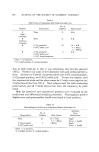
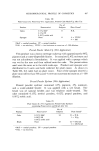
d. Soc. Cosmet. Chem., 23, 863-873 (December 6, 1972) Microbiological Profile of Selected Cosmetic Products with and without Preservatives after Use DAVID W. ANDERSON, JR., Ph.D.,* and MARION AYERS, B.A.• Presented May 25, 1972, Seminar, Los Angeles, Calif. $ynopsls--Anhydrous stick make-up, pressed powder make-up, and blushers applied dry, pressed powder make-up and eyeliner applied wet, liquid eyeliner, facial cleanser cream, moisture lotion, and night cream were prepared with and without PRESERVATIVES. After consumer use, these COSMETIC PRODUCTS were evaluated for MICROBIAL CONTENT by the aerobic plate count and by an enrichment-differential streaking procedure. Consumer INOCULATION of anhydrous stick make-ups and dry-applied pressed products was low and on the surface only. The inocula did not proliferate in these products despite the absence of preservatives. Pressed powder products which are applied after wetting showed a low level of consumer inoculation on the surface of the cakes. Unpreserved emulsion products exhibited proliferation of consumer inoculation, but could be adequately preserved to prevent proliferation. INTRODUCTION Preservatives in cosmetics are used to prevent microorganisms from proliferating both before and after the sale of the product. However, it is Tenenbaum's (1) view that the preservative ability of a product should be well in excess of inhibiting microorganisms and suggests that an ideal preservative system should be self-sterilizing. In determining whether preservatives should be inhibitory or provide self-sterilization of cosmetics one must first consider the chemical nature of * Max Factor & Co., 1655 N. McCadden Place, Hollywood, Calif. 90028. •- Present address, 500 E. Pine St., Alhambra, Calif. 91801. 863
Purchased for the exclusive use of nofirst nolast (unknown)
From: SCC Media Library & Resource Center (library.scconline.org)