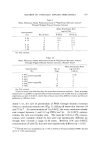
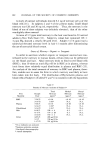
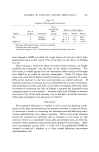
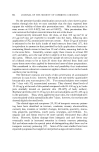
d. Soc. Cosmet. Chem., 23, 863-873 (December 6, 1972) Microbiological Profile of Selected Cosmetic Products with and without Preservatives after Use DAVID W. ANDERSON, JR., Ph.D.,* and MARION AYERS, B.A.• Presented May 25, 1972, Seminar, Los Angeles, Calif. $ynopsls--Anhydrous stick make-up, pressed powder make-up, and blushers applied dry, pressed powder make-up and eyeliner applied wet, liquid eyeliner, facial cleanser cream, moisture lotion, and night cream were prepared with and without PRESERVATIVES. After consumer use, these COSMETIC PRODUCTS were evaluated for MICROBIAL CONTENT by the aerobic plate count and by an enrichment-differential streaking procedure. Consumer INOCULATION of anhydrous stick make-ups and dry-applied pressed products was low and on the surface only. The inocula did not proliferate in these products despite the absence of preservatives. Pressed powder products which are applied after wetting showed a low level of consumer inoculation on the surface of the cakes. Unpreserved emulsion products exhibited proliferation of consumer inoculation, but could be adequately preserved to prevent proliferation. INTRODUCTION Preservatives in cosmetics are used to prevent microorganisms from proliferating both before and after the sale of the product. However, it is Tenenbaum's (1) view that the preservative ability of a product should be well in excess of inhibiting microorganisms and suggests that an ideal preservative system should be self-sterilizing. In determining whether preservatives should be inhibitory or provide self-sterilization of cosmetics one must first consider the chemical nature of * Max Factor & Co., 1655 N. McCadden Place, Hollywood, Calif. 90028. •- Present address, 500 E. Pine St., Alhambra, Calif. 91801. 863

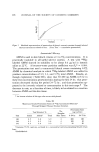
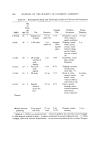
864 JOURNAL OF THE SOCIETY OF COSMETIC CHEMISTS the product, the contamination from both the raw materials and manu- facturing process, and the unpredictable contamination by the consumer. One can exercise control over raw materials and manufacturing, but one cannot control or predict the extent or type of consumer contamination. We have studied cosmetics of varying chemical compositions, varying end use, with and without preservatives, in relation to consumer con- tamination in an effort to determine (a) what type of cosmetics can be self-sterilizing and (b) the relation of chemical composition and consumer contamination to the problem of preservative evaluation. The products evaluated after use were stick and pressed powder make-up, stick and pressed powder blushers, liquid and pressed powder eyeliners, a facial cleansing cream and a moisturizing lotion both containing avocado oil, and a night cream containing 10ø•o skim milk. EXPERIMENTAL Products used were either from regular production or prepared in the laboratory. Except for the powdered blushers, the products made in the laboratory were prepared in such a manner that they were free from microorganisms as determined by plate count. To assure low counts, some of the components (talc, pigments) of pressed products, liquid eye- liner, and brushes with natural bristles were exposed to ethylene oxide treatment. With the emulsion products, the microbiological content was controlled by heat and care during preparation and filling into sterile containers. Products taken from stock had no microorganisms by the plate count procedure. Volunteer users were obtained among female office workers. Subjects were instructed verbally as to how to use the product and were contacted frequently to be sure they were using the product regularly. Products were collected after 10 to 21 days of use, and a plate count was made. Plate counts were done again on the liquid eyeliner and the emulsion products 12 weeks after collection. The diluent used in the plate count procedure was 0.1% Tween 80* in 0.85% saline solution or Tryprone Azolectin Tween (TAT) broth. t The plating media were Sabouraud's Dextrose Agar, Seed Agar, or Tryptic Soy Agar (TSA). Incubation was 5 days at 30 ø C or 37 øC. All negative plates were streaked to be sure they supported growth. The enrichment procedure used consisted of placing a 1- or a 10-g sample of product into TAT broth followed by incubation at 37 øC for 24 * Atlas Powder Co., Wilmington, Del., Difco, Detroit, Mich. t Dif½o, Detroit, Mich.
Purchased for the exclusive use of nofirst nolast (unknown)
From: SCC Media Library & Resource Center (library.scconline.org)