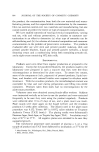
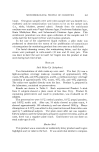
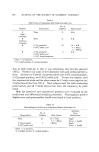
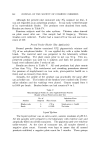
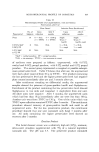
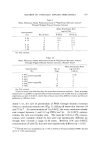
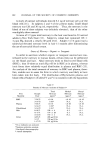
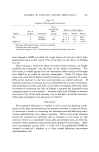
MICROBIOLOGICAL PROFILE OF COSMETICS 867 Table III Plate Count of a Preserved, Wet Application, Pressed Cake Make-Up After Use Product Preservative • Subjects Plate Count • Cakes 0.1% MeP 8 N.R. 0.1% PP 0.05% sorbic acid Sponges None 8 4 = TNTC 4 = 500 a MeP = methyl paraben PP = propyl paraben. b N.R = no recovery TNTC : too numerous to count on a 1-100 dilution. Pressed Powder Make- Up ( Wet Application) This product was a heavy coverage make-up with approximately 80% pigment and a water-dispersible binder. It contained 2.4% moisture and was not anhydrous in formulation. It was applied with a sponge which was wet by the user and then rubbed onto the cake. The preservatives used were the same as in the stick make-ups. Product and sponges were distributed to 8 users and both collected for plate count. As shown in Table III, the cakes had no plate count. Four of the sponges showed a plate count of less than 500/g and 4 were too numerous to count on a 1-100 dilution. Pressed Powder Eyeliner (Wet Application) Pressed powder eyeliner contained 65% pigment, 4% moisture, and a water-soluble binder. It was applied with a wet brush. The brush was of natural bristles and was ethylene oxide-treated. The cake contained 0.15% methyl paraben, 0.02% propyl paraben, and 0.01% sorbic acid. Table IV Plate Count of a Wet Application Pressed Cake Eyeliner containing Preservatives and Brush after Use Product Preservative • Subjects Plate Count b Cake 0.15% MeP 14 0.02% PP 0.01% sorbic acid Brush None 13 13 = N.R. 1 = 10/g 12 = 8/brush 1 = 420/brush a MeP = methyl paraben PP = propyl paraben. b N.R. = no recovery.

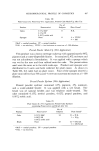
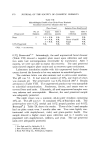
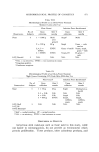
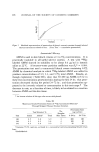
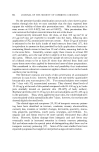
868 JOURNAL OF THE SOCIETY OF COSMETIC CHEMISTS Although the pressed cake contained only 4% moisture (or less), it was not regarded as an anhydrous product. It was easily wetted because of its water-soluble binder. The products were obtained from stock. Results are shown in Table IV. Fourteen subjects used the cake eyeliner. Thirteen cakes showed no plate count after use. One sample had 10 fungus/g. Thirteen brushes were collected. Twelve had a count of 8 or less and one had a count of 420. Pressed Powder Blusher (Dry Application) Pressed powder blusher contained 95% pigment-talc mixture and 5% of an anhydrous binder. It was applied dry with a nylon bristle brush. The material used was prepared in the laboratory without special handling. The plate count prior to use was 50/g. This un- preserved product was used by 6 subjects and both the product and brush were collected after 3 weeks of use. Results are shown in Table V. All used products had plate counts of less than 70/g. The enrichment and streaking procedures showed the presence of staphylococci on two units, gram-positive bacilli on a third, and no recovery from three. Actually, the profile of the product was practically the same after use as before use. The bristles of the brushes were washed with Tween- saline solution and the washings were plated. Counts ranged from 6 to 1000 per brush. Brushes before use had counts of 4 to 5. Table V Microbiological Profile of a Dry-Applied Pressed Powder Blusher without Preservatives after Use No. of Isolations From Product Subjects Plate Count Enrichment Blusher cake 6 70/g Staph, gram q- bacilli Brush 6 6-1000 Not done Liquid Eyeliner The liquid eyeliner was an oil-in-water, anionic emulsion of pH 8.2. All test samples were prepared in the laboratory with extreme care and aseptically filled into sterile containers. The pigments used were ethylene oxide-treated. At the time of consumer use, all samples showed a negative plate count. Controls were kept to assure that all unused products exhibited a negative plate count for 3 months. Three groups
Purchased for the exclusive use of nofirst nolast (unknown)
From: SCC Media Library & Resource Center (library.scconline.org)