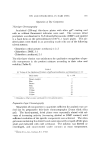
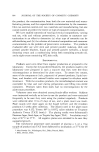
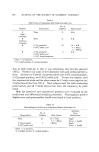
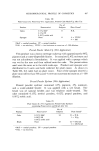
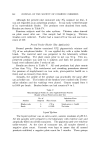
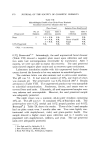
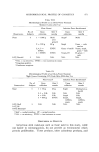
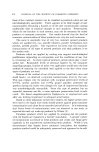
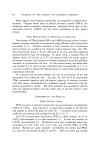
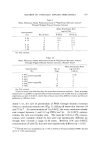
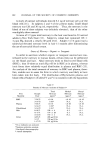
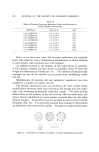
882 JOURNAL OF THE SOCIETY OF COSMETIC CHEMISTS A study of normal individuals showed 8.4 ng of mercury per g of red blood cells (11). In subjects 2 and 4 of the present study, whole blood mercury was 120 and 30 ng/ml, respectively. Thus, the mercury in the blood of one of these subjects was definitely elevated that of the other was slightly above normal. A mean of 1.9 ppm total mercury in the hair was found in 50 normal adults in New York State (12). Subject 6, whose hair contained 128 4- 4 ppm Hg, showed a clearly elevated level. Subject 5 (7.4 ppm) had a somewhat elevated mercury level in hair 11 months after discontinuing the use of mercurial bleach cream. Source of Mercury--Organic rs. Inorganic In order to ascertain whether organic or inorganic sources have con- tributed to the mercury in human tissues, certain tests can be performed on the blood and hair. Alkyl mercury tends to bind to red blood cells (RBC) thus 10 times as much Hg will be in RBC as in plasma, whereas ionic forms show relatively equal distribution in plasma and RBC (13). An analysis of the total amounts of mercury in RBC and plasma, there- fore, enables one to assess the form in which mercury was likely to have been taken into the body. The distribution of Hg between plasma and blood cells of Subject 6 (Tables IV and V) is consistent with the hypothesis Table V Results of Mercury Analyses of Subject 6• Total Methyl Phenyl Test S ample Mercury Mercury Mercury Material Date (ppm) b (ppm)* (ppm) c RBC 7-30-71 0.04 0.03 0.05 3-16-72 0.05 a N.A. N.A. Plasma 7-30-71 0.10 0.03 0.05 3-16-72 0.04 a N.A. N.A. Whole blood 3-16-72 0.05 a N.A. N.A. Hair 8-10-71 128 4- 4 0.3 0.5 11-3-71 199 4- 20 0.3 N.A. 3-16-72 140 4- 2 N.A. N.A. Urine 4-29-71 224 •g/24 hr 9-?-71 158 •g/24 hr 1-17-72 251 t•g/24 hr N.A. indicates not analyzed. Neutron activation analysis. Gas-liquid chromatography. Atomic absorption.

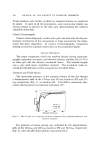
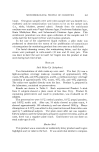
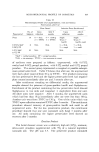
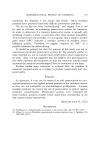
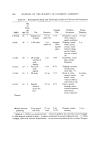
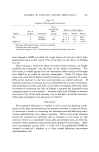
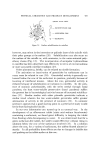
HAZARDS OF TOPICALLY APPLIED MERCURIALS Table VI Analysis of Hair Samples for Mercury 883 Daily Gavage Hg Mercury in Hair (ppm) No. of Dose a Species Samples Compound (t•g/kg) Total b Methyl Phenyl Rat 4 Control 0 2 q- 1 0.3 None 5 CH•HgC1 100 60 4- 2 50.1 None Subject 6* 1 ... 128 q- 4 0.3 0.05 60 doses, administered daily, weekends excluded. Neutron activation analysis. Collected August 10, 1971 (4 months after cessation of bleach cream use). that inorganic AMM provided the major source of mercury rather than food sources such as fish where 95% of the Hg is in the form of CH3Hg (14,15). Hair contains a long-term depot of stored, fixed mercury, no longer available for resorption into the body or for further metabolism. For this reason, it would appear that hair sometimes offers certain advantages over blood as an index of mercury absorption. Table VI shows that when rats were fed 60 doses of methyl mercury over a period of 12 weeks, 83% of the mercury in the hair was laid down as methyl mercury. If fixation of mercury in human hair is accomplished by the same incorpora- tion processes as in rats, and there is no reason to suppose otherwise, then the results of analyzing the hair of Subject 6 support the hypothesis that inorganic mercury was involved. Analysis of the hair of Subject 6 showed that only 0.2% of the total mercury was in the form of methyl mercury. Other data on Subject 6 are also given in Table V. DISCUSSION Percutaneous absorption is studied in z& o in man by applying a sub- stance to the skin and measuring the amounts excreted in urine and feces. A correction is made by measuring the amounts excreted following intra- venous administration of a known quantity. When only small amounts of the test material are excreted, due to retention in the body as with mercury which is a cumulative toxin, skin penetration data are best ob- tained by direct methods, such as have been employed in this study. Mai- bach has reported a mean of 4.4 + 0.3% (S.E.) ofradiolabeled AMM re- covered in urine of 3 subjects in a 5-day period following intravenous administration (16)
Purchased for the exclusive use of nofirst nolast (unknown)
From: SCC Media Library & Resource Center (library.scconline.org)