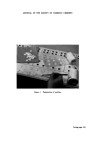
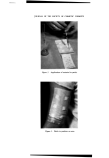
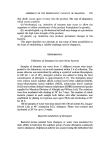
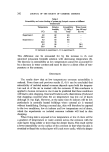
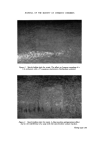
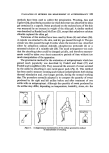
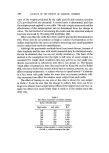
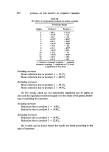
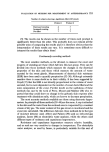
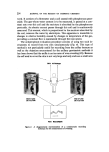
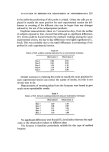
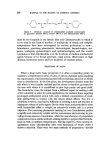
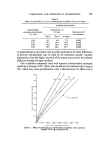
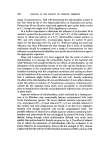
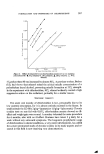
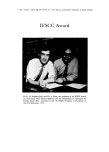
220 JOURNAL OF THE SOCIETY OF COSMETIC CHEMISTS conducting a human patch test to assess primary irritancy (not to establish sensitizing potential), with intermittent application of patches and pre- cautions to avoid excessive skin damage. Their technique thus embodies the main requirements for a test to be applied frequently in a cosmetic re- search laboratory without constant, direct medical supervision. The modi- fications shown below are the result of our own experiences of using this type of patch testing procedure. Cosmetics are mostly applied to the skin without occlusion but in order to expedite irritant skin response for experi- mental purposes, it is usually preferable to carry out tests under conditions of occlusion, i.e. using 'dosed' rather than 'open' patches. However, many cosmetic formulations include readily volatilized solvents such as ethanol which only remain on the skin for a brief period and do not cause irritation, though they would certainly prove irritant under occlusion. Formulations of this nature should be applied to the patch material 15 min before placing on the skin, to exclude irritation due to the volatile solvent. Derrnicel surgical tape* 7.5 cm wide serves as the support for 125 mm squares of lint. Before being cut, the lint is backed with Blenderrn surgical tape• to ensure occlusion (since Dermicel is not occlusive). The Blenderrn- backed lint squares are positioned 250 mm apart and readily adhere to the Dermicel tape (Fig. I). Patches may be prepared for use in pairs, fours or sixes, stored in a roll and only cut for use when needed. The preparation of sufficient patches for a test on 50 subjects takes about 8 man h. Panels of volunteers A panel of 40-50 subjects, comprising equal numbers of male and female volunteers, is suitable. Individuals with known allergic reactions, hay-fever and asthma are excluded. Site of application For simplicity and speed and also to facilitate the use of panels including male and female subjects, patches are applied to the upper arm, towards the inner aspect. The Dermicel readily stays in position on the arm without any retaining bandage (Fig. 3). The positions of the materials to be tested are randomized on each subject in order to minimize effects due to variation within the area of skin *Supplied by Johnson & Johnson Ltd, Slough, England. tSupplied by The 3 M Company, London.

IOURNAL OF THE SOCIETY OF COSMETIC CHEMISTS Figure 1. Preparation of patches. Facing page 220
Purchased for the exclusive use of nofirst nolast (unknown)
From: SCC Media Library & Resource Center (library.scconline.org)