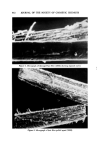
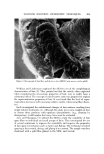
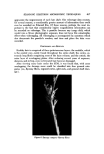
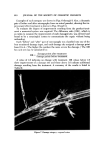
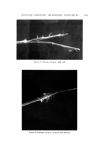
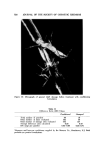
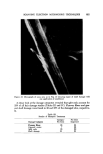
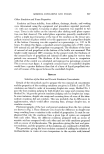
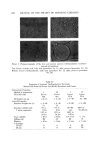
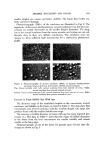
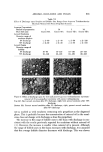
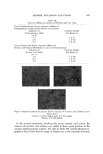
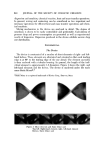
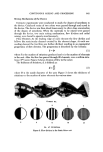
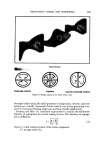
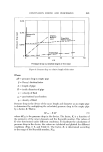
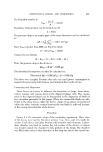
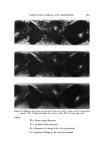
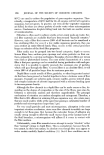
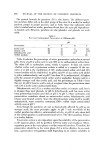
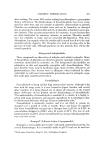
CONTINUOUS MIXING AND PROCESSING 651 ...... "."•:• .: ::'•'• 7"" ' % •:"' :. :..': .': '"' "?' .:'• .,, '".% ... ß •a ... :.'•,:•,!•}!-?}• f .. ....... :":'::! .... '•:'.':.•::',•:.:'::.".':.. '. ':'.' '. '":.:::•'.:'.': ...... ß .. •,:.• :•:-•':: :•.' ..... ß :: :. .:' Figurd 10. D•erent &op s&es are provided in •e same Static Mixer u•t by va•ng the •veloci• (70% of dispersed ph•e fo• drops xvithin 20% of mean drop size) W•eYe D = Sauter mean diameter N = number of size intervals D• = diameter of a drop in the i-th size interval N• = number of drops in the i-th size interval

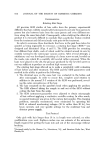
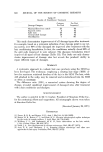
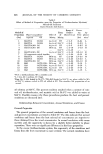
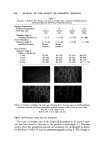
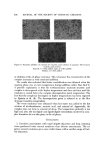
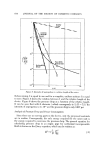
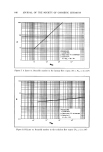
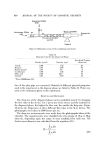
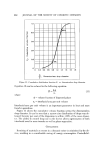
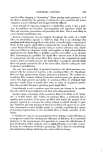
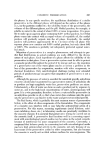
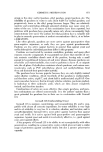
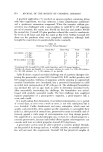
652 JOURNAL OF THE SOCIETY OF COSMETIC CHEMISTS 1.0 0.8 0.6 0.4 0.• 0 0.• 0.4 0.6 0.8 1.0 I.• 1.4 1.6 1.8 Di •, Dimensionless drop diameter D Figure 11. Cumula,tive distribution function Fv rs. dimensionless drop diameter Equation 10 can be reduced to the following equation: 64 -- D-- where qb -- volume fraction of dispersed phase av = interfacial area per unit volume (11) Interfacial area per unit volume is an important parameter in heat and mass transfcr operations. Figure 11 shows the cumulative volume fraction versus the dimensionless drop diameter. It can be seen that a narrow size distribution of drops was ob- tained. Seventy per cent of the dispersion is within +_20% of the mean diame- ter. The ability to control drop size in the device allows optimization of both interfacial area for mass transfer as well as phase separation. CONCLUSIONS Remixing of materials as occurs in a dynamic mixer is minimized in the de- vice, resulting in a considerable saving of energy consumption. Controllabil-
Purchased for the exclusive use of nofirst nolast (unknown)
From: SCC Media Library & Resource Center (library.scconline.org)