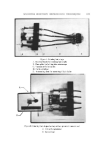
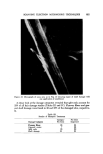
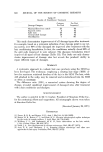
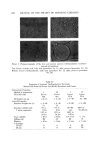
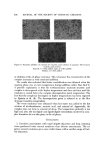
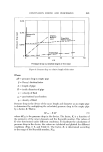
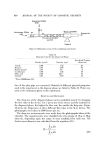
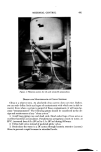
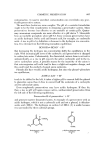
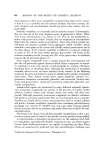
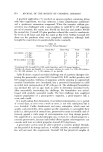
660 JOURNAL OF THE SOCIETY OF COSMETIC CHEMISTS Experience accumulated during the past 16 years in literally millions of sterile filtration runs has indicated that a filter of 0.22-/xm pore size will, un- der all conditions, remove any viable cellular organisms that could pose a spoilage or health hazard (11). Of the smaller strains of problem organisms, Pseudomonas aeruginosa (ATCC 19146) has become the indicator of filter sterilization efficiency. It has a smallest dimension in the order of 0.3 and is completely removed from water using a 0.22-/xm filter. An effective filtration system, currently in use at a large cosmetics manufac- turing plant consists of 12 prefilter cartridges each containing 11 ft 2 of 0.5-/xm (nominal retention) depth filter media and twenty 0.22-/zm (absolute) pore size membrane filter cartridges, each containing 1.3 ft 2 of membrane filter. The inlet and outlet connections are 1% inch Tri-Clamp©.* The maximum flow rate for this system is 115 gal/min. The unit is sanitized nightly using 60øC water. The cost of make-up water filtration at this plant is $2.70 per 1,000 gallons. Raw Materials' Raw materials such as dyes, oils, and petrolatum often contain large num- bers of microorganisms and are difficult to sterilize. Any liquid or soluble ma- terial may be filtered to remove pathogenic or spoilage bacteria. Again, a 0.22-/tin pore size membrane filter is recommended. For example, 40 gallons of soluble dye may be filtered through a single 293- mm diameter 0.22-/zm filter at a cost of approximately seven cents per gallon. Data indicate that filtered dyes do not deteriorate during a three-month stor- age period, whereas unfiltered dyes rapidly deteriorated. Petrolatum and oils are often sterilized by holding at temperatures of 150øC for one hour or longer. In the absence of moisture, the extended time and high temperature are necessary to ensure inactivation of all microorgan- isms. Unfortunately, this sort of treatment causes some degradation and dis- coloration of compounds such as petrolatum. It also necessitates cooling, with the subsequent risk of recontamination, prior to the addition of other com- pounds. A filtration system consisting of a single cartridge housing containing a 0.22-/xm pore size membrane filter cartridge is shown in Fig. 1. This cartridge contains 1.3 ft 2 of membrane and prefilter (depth-type) media. The heating belt provides a temperature of 65øC during the filtration run. Petrolatum is melted in the tank and pumped through the filter, at 35 psig, at a flow rate of 8 kg/min. Lanolin oil at 70øC is filtered at the rate of 7 1./min. at 20 psig. The cost of filtering these compounds is nine cents/kg and nine cents/1. re- spectively. *Ladish Co., Kenosha, Wis.

MICROBIAL CONTROL Figure 1. Filtration system for oils and semisolid preparations 661 DESIGN AND MAINTENANCE OF CLEAN SYSTEMS Clean is a relative term. An absolutely clean system does not exist. Rather, one can only define limits and types of contaminants with which one is able to coexist. Even when a system is purged of these contaminants, it will soon be- come "recontaminated." The following points should be considered in the de- sign and maintenance of any "clean system." 1. Avoid long piping runs and dead ends. Dead ended legs of tees serve as excellent bacterial accumulators. Pseudomonas aeruginosa counts in water, at 25øC, increased from 4.8 x 10a/ml to 1.1 x 10ø/ml during 24 hours. 9.. Utilize ball valves instead of gasketed globe valves. 3. Recirculate the water in a DI system through bacteria retentive (screen) filters to prevent a rapid increase in microbial levels.
Purchased for the exclusive use of nofirst nolast (unknown)
From: SCC Media Library & Resource Center (library.scconline.org)