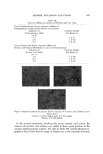
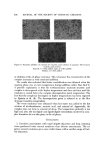
662 JOURNAL OF THE SOCIETY OF COSMETIC CHEMISTS 4. Avoid pipe threads. Use sanitary (Ladish) type or sanitary threaded piping. 5. Periodically sanitize the piping system with steam, hot water, or 2% formalin. 6. Batching tanks should be equipped with bacterial retentive (screen) filters to prevent atmospheric contaminants from entering the tanks as it is being emptied. These filters should be generously oversized and equipped with vacuum breakers to prevent tank implosion. 7. Institute a comprehensive program of routine microbiological sampling to determine the frequency and efficacy of sanitization procedures. ( Received January 3, 1973) t•EFEBENCES (1) Tenenbaum, S., Psuedomonads in cosmetics, J. Soc. Cosmet. Chem., 18, 797-807 (1967). (2) Bogoff, M. H., Chemistry of oxidation of polycyclic aromatic hydrocarbons by soil pseudomonads, J. Bacteriol., 83, 998-1004 (1962). (3) Solari, A. A., Dato, A. A., et al., Use of a selective enrichment medium for the isol. ation of Pseudomonas aeruginosa from feces, Ibid., 84, 190 (1962). (4) Traxler, R. W., Microbial degradation of asphalt, Biotechnol. Bioeng., 4, 369-76 (1962). (5) Alford, J. A., and Pierce, D. A., Production of lipase by Pseudomonas fragi in a synthetic medium, J. Bacteriol., 86, 24-9 (1963). (6) Sultzer, B. M., Oxidative activity of psychrophilic and mexophilic bacteria on satu- rated fatty acids, Ibid., 82, 492-7 (1961). (7) Richards, J. W., Introduction to Industrial Sterilization, Academic Press, London, 1968, p. 153. (8) Dwyer, J. L., The technology of absolute microfiltration, Tech. Quart., Master Brew. Ass. Amer., 5, 243--9 (1968). (9) Hill, R. A., Clarification and Filtration, in Loc}nnan, L., Lieberman, H., and Kanig, J., The Theory and Practice of Industrial Pharmacy, Lea and Febiger, Philadelphia, 1970, Chap. 7, p. 143. (10) Mulvany, J. G., Membrane Filter Techniques in Microbiology, in Norris, J. R., and Ribbons, D. W., Methods in Microbiology, Vol. 1, Academic Press, London, 1969, Chap. VII, pp. 249-50. (11) Avis, K. E., Sterilization, in Lochman, L., Lieberman, H. and Kanig, J., The TI)eory and Practice of Industrial Pharmacy, Lea and Febiger, Philadelphia, 1970, Chap. 8, p. 165.

J. Soc. Cosmet. Chem., 24, 663-675 (September 16, 1973) Modern Concepts of Cosmetic Preservation WILLIAM E. ROSEN, Ph.D., and PHILIP A. BERKE, Ph.D.* Presented September 6, 1972, be[ore the New York Chapter, Saddlebrook, N.J. Synopsis-The maior variables associated •vith control of MICROBIAL GROWTH and antimicrobial action in COSMETICS are considered. Some factors of special importance for preservative effectiveness are pH, solubility of the preservative in the aqueous phase and its partition between water and oil phases, interference with antimicrobial action by other components of the formulation, and enhancement and synergism. The advantages and disadvantages of approximately a dozen PRESERVATIVES generally accepted for use in cosmetic preparations are briefly reviewed. INTRODUCTION There are several factors that determine whether microorganisms find a cosmetic favorable for growth. First, the composition of the cosmetic deter- mines what types of organisms can grow. Modern cosmetic ingredients pro- vide many of the nutrients needed by microorganisms, but they do not usually support growth to the same extent as do media used in a microbiological lab- oratory for the enumeration or production of organisms. This limits the rate of growth and can render the contaminant in the cosmeti.c more susceptible to the effect of preservatives than it would be when growing in laboratory media. Other important factors are the physical form of the cosmetic and the water content. Aqueous solutions and oil-in-water emulsions are especially prone to rapid growth of microorganisms. Bacteria prefer a high water content, usually above 15%, and the continuous water phase of an oil-in-water emulsion permits their spread more readily than .does the discontinuous water phase of a water-in-oil emulsion. In partially aqueous products, higher water contents encourage more vigorous microbial growth. Dry powders can become sus- ceptible to microbial growth when moisture collects on the surface of the powder during exposure to air. *Sutton Laboratories, Inc., Roselie, N.J. 07203. 663
Purchased for the exclusive use of nofirst nolast (unknown)
From: SCC Media Library & Resource Center (library.scconline.org)