J. Soc. Cosmet. Chem. 24, 677-684 (1973) ¸ 1973 Society of Cosmetic Chemists of Great Britain The rat foot pad as a model for examining antiperspirants A. B. G. LANSDOWN* Synopsis---PILOCARPINE induced SWEATING in the RAT foot pads is suggested as a suitable model for laboratory assessment of ANTIPERSPIRANT preparations. ALUMINIUM CHLORIDE and ALUMINIUM CHLORHYDRATE were shown to exhibit good antiper- spirant action in this test and this result is in accordance with observations in human tests. INTRODUCTION The efficiency of antiperspirants is normally determined by con- trolled studies with panels of human volunteers, but in view of the potential risks of primary irritation and contact sensitization inherent in screening new compounds and formulations, some preliminary studies in animals are advisable. Animal studies are also desirable in initial screening tests for antiperspirants in view of the fact that tests with panels of human volunteers are often very time consuming and therefore costly. Although animals such as cats (1-3), horses (4), goats (5), mice (6) and rats (7-11) have been used in a few pharmacological investigations of anhydrotic agents, no species has been adopted for routine use in studying antiperspirant preparations. The laboratory rat although devoid of sweat glands on the greater part of its body surface, has glands on the digital, metacarpal and metatarsal foot pads which morphologically resemble human eccrine sweat glands (7, 9, 11, 12). Both the human and rat sweat glands are stimulated by injections of pilocarpine, mecholyl and adrenalin (8, 9, 13) and sweat production inhibited by atropine and other anticholinergic drugs (12, 14). *Industrial Biological Research Association, Carshalton, Surrey. Present address: Clinical Research Centre, Watford Road, Harrow, HA1 3UJ. 677

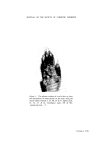
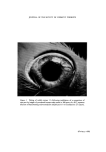
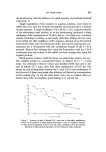
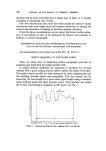
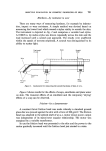
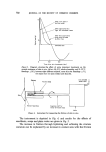
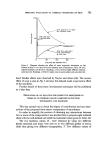
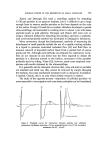
678 JOURNAL OF THE SOCIETY OF COSMETIC CHEMISTS Since the pharmacological excitation of human sweat glands with cholinergic drugs such as methacholine iodine, carbachol and pilocarpine is routinely employed in the evaluation of antiperspirants in human tests (15-18) the rat foot pad under a similar influence might also be suitable for antiperspirant studies. The present work was devised to examine this possibility, using some well-known antiperspirant substances. MATERIAL AND METHODS Animals Test groups of five male rats of the Wistar strain weighing between 180 and 300 g were used. Prior to experimentation they were given free access to to a standard small rodent diet (Oxoid) and water. Induction of sweating The animals were anaesthetized lightly with diethyl ether and the plantar surfaces of the feet swabbed with a mixture of ether and alcohol (50:50) to remove grease and adherent detritus. Pilocarpine (B.D.H., Poole, Dorset) dissolved in distilled water (2•) was administered sub- cutaneously in the dorsal cervical region at doses of 0.02, 0.1, 0.2, 0.5 or 1.0 ml to induce a graded response of sweat production. The rats were then restrained in a position with the plantar surfaces of their hind feet uppermost. These feet were inserted through impermeable rubber dams into perspex tubes (6 cc) and observed under a dissection microscope for the commencement of sweating. The air-tight cavity so formed around the feet effectively prevented the beads of perspiration evaporating as they formed. The mean sweating time (MST) for each foot was measured as the time required after administration of pilocarpine for beads of sweat to appear on all the pads of that foot, i.e. 5 digital pads, 4 interdigital pads and 2 metatarsal pads. In order to observe the actual number of functional sweat glands on each pad, the starch-iodine method of Wada and Takagaki (19) or the o-phthal- aldehyde test of Juhlin and Shelley (20) was used. By these tests active sweat gland pores are stained black and are readily observed under the dissection microscope (Fig. 1). Examination of the action of antit•erspirants The efficiency of antiperspirants in inhibiting pilocarpine-induced sweating in the rat foot pad was tested using water and aqueous solutions of
Purchased for the exclusive use of nofirst nolast (unknown)
From: SCC Media Library & Resource Center (library.scconline.org)