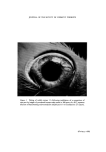
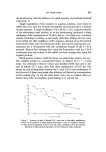
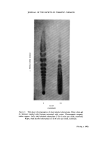
692 JOURNAL OF THE SOCIETY OF COSMETIC CHEMISTS non-irritant and the rainwater eluate from residues of the product certainly had an adverse effect in the complaint cases, it is conceivable that in the latter condition the ethoxylate was not retained in an interfacial film but was in aqueous solution. The rainwater eluate would thus have behaved in the eye like an aqueous solution of the ethoxylate. The effect of adding 'dandruff' scales to an aqueous solution of the hair- dressing suggested, as an alternative explanation, that a }vater-miscible hair- dressing may cause eye irritation owing to the ease with which it will help to transfer particulate matter from the scalp to the eyes this does not appear to have been reported following the use of other water-miscible hair- dressings however. Irritancy is usually studied in terms of the formulation as sold, prefer- ably making allowance for changes during storage. It is not customary to allow for changes after application to the body. However, the experiences reported here suggest that irritancy may change significantly during use. Furthermore, in applying the rabbit eye test, it may be desirable to pay more attention to corneal pitting or wrinklingin future. It is also interesting to note that a positive response was only obtained in the rabbit eye by making two instillations of 0.1 ml, separated by a lapse of 2 h. The conjunctival sac of the rabbit eye will only retain a small volume of test material and the principle of making a second instillation possibly warrants further examina- tion. ACKNOWLEDGMENTS Of the many colleagues who were involved in trying to elucidate the problems discussed in this paper, I should like to acknowledge especially the co-operation of Miss P.M. Dean, Miss M. Uttley, Mr J. D. Cheshire, Dr D. M. Brown and Dr J. Tesh. Mr H. Ashmore provided the photographs. Toxicological studies were carried out at Beecham Research Laboratories, at Consultox Laboratories Limited and at Huntingdon Research Centre. (Received: 22nd January 1973) ' REFERENCES (1) Osipow, L. I. J. $oc. Cosmet. Chem. 14 277 (1963). (2) Soulal, M.D. Personal communication (1967).

J. Soc. Cosmet. Chem. 24 693-707 (1973) ¸ 1973 Society of Cosmetic Chemists of Great Britain Instrumental evaluation of the effects of cosmetic products on skin surfaces with particular reference to smoothness J. K. PRALL* Presented on the 12th February 1973 in London, at the Symposium on 'Some surface chemical aspects of cosmetic and toiletry products', organized by the Society of Chemical Industry and the Society of Cosmetic Chemists of Great Britain. Synopsis--The OBJECTIVE EVALUATION of COSMETIC PROPERTIES of SKIN in vivo can be difficult because of the SENSITIVITY of skin to many variables. Some of the more important variables are discussed resulting from experience in measuring those PHYSICAL PROPERTIES which contribute to the overall TACTILE PERCEPTION of SKIN SMOOTHNESS. New techniques have been devised to measure these physical components of smoothness and, using these, a psycho-physical equation for skin smoothness has been established. This expresses smoothness in terms of surface topography, FRICTION and HARDNESS. The SENSITIVITY and potential usefulness of these techniques is illustrated by reference to some important product TREATMENTS which can affect the WATER CONTENT of the STRATUM CORNEUM. INTRODUCTION Rothman (1) and Harry (2) have painted a depressing picture about the roughening effects of age and weathering. In order to modify these effects a wide range of products exists whose functionality must be reliably and meaningfully evaluated in consumer terms. Workers in many fields * Unilever Research Isleworth Laboratory, Middlesex. 693
Purchased for the exclusive use of nofirst nolast (unknown)
From: SCC Media Library & Resource Center (library.scconline.org)