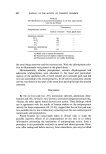
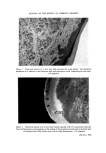
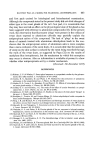
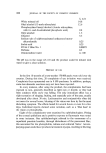
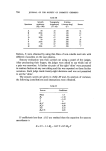
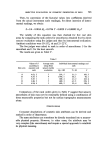
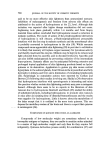
696 JOURNAL OF THE SOCIETY OF COSMETIC CHEMISTS Table II Scratch Fixed Varied Subject Friction resistance Temperature conditions conditions (% change) (•o change) (•o change) rh= 40 •o Tempx= 15øC A + 27 - 18 + 26 Wind vel= Tempa= 25øC B + 25 + 10 + 24 30 ft/min Temp = 20øC rhx = 40 •o A + 55 + 20 + 7 Wind vel= rha=70•o B +33 +34 + 2 30 ft/min Temp= 20øC Wind velx= 30 ft/min A 0 - 5 - 5 rh=40% Wind vela= 176 ft/min B -10 -15 - 4 Longer term and seasonal effects have been well-documented and, whilst not always controllable, may be allowed for by using sufficiently large control panels (5, 6). Effect of gravity A transient change in peripheral blood flow and turgidity of skin may be observed when the relative position between the subject's heart and the area to be measured are altered (7). This can greatly affect measurements of skin colour and other optical properties. It is essential then to standardize the posture of the subject for repeated measurement purposes. Effect of mechanical stress Several studies of the stress-strain properties in vivo have shown the extremely heterogeneous, isotropic and visco-elastic nature of skin (8, 9). These mechanical properties are reflected in many other physical pro- perties where the 'strength' of the skin is involved. For example, studies of surface topography involving a loaded stylus which is moved across the skin can show how dependent the measured profile is on load and contact time. The viscous nature of skin is illustrated particularly in indentation and compressed-fold studies, but the corresponding creep recovery curves have not been fully discussed by most workers (10-14).

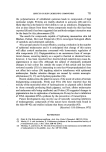
OBJECTIVE EVALUATION OF COSMETIC PROPERTIES OF SKIN 697 Thus in the recovery there can exist a residual deformation (seen after pinching a fold of skin), when all applied stress is removed. This may markedly affect measurements of surface topography whether by direct stylus or replication/stylus methods. The residual deformation may be attributed to internal friction within the stratum corneum and can be rapidly eliminated by gentle massage. The viscous nature of skin requires that most evaluation measurements be checked for any time-dependence 05). The layered nature of skin, each layer possessing different visco-elastic properties, can affect the interpretation of 'hardness' using perpendicular stress (16). Hertz's equations* may be invoked to establish probe parameters so that the underlying tissues may or may not play a significant contribution to the measured hardness value. Many studies of cosmetic effects in which only the stratum comeum has been affected have been invalidated by using unduly high probe loadings and by not standardizing the load application times. Effect of contact of the measuring probe with the skin Major variables can arise here owing first to isolation of the skin surface from the surrounding area by an occlusive probe and, second, to restriction of peripheral blood flow by probe pressure on the capillaries. In the first case occlusion can cause the surface of the stratum comeurn to become superhydrated (affecting for example friction) and abnormally hot, assum- ing the ambient temperature is below the blood temperature. In the second case a change in peripheral blood flow is likely to change the skin colour (17). In addition, undue pressure may cause expression of material from the skin orifices giving rise to big changes in surface film composition and amount. Preparation of the skin surface prior to measurement Many skin surface properties like friction, scratch resistance and gloss are markedly affected by the presence of surface films on the skin. A * These equations relate indentation load with depth of indentation and the hardness of the substrate.
Purchased for the exclusive use of nofirst nolast (unknown)
From: SCC Media Library & Resource Center (library.scconline.org)