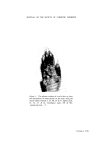
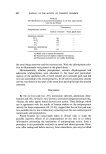
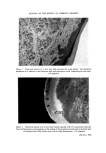
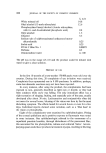
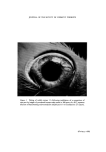
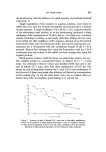
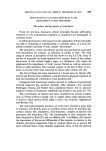
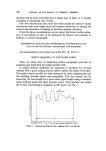
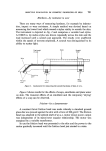
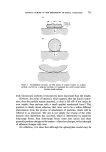
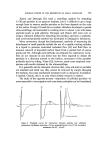
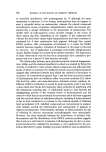
EYE IRRITATION 689 the hairdressing, with the addition of a small quantity of powdered dandruff scales (Fig. 1). Single ingredients of the product, in aqueous solution, were tested in rabbit eyes, but only the 13-mole ethoxylated oleyl alcohol gave a definite irritant response. A single instillation of 0.1 ml of a 12.6% aqueous solution of the ethoxylated oleyl alcohol, as in the hairdressing, produced a slight reddening of the conjunctivae at 24-48 h, but at 1-2 h there was a transient corneal wrinkling or pitting, as previously described. Pitting did not occur in the rabbit eye after instilling a 10.9• aqueous solution of an ethoxylated oleyl alcohol with only 5 Et 0 units per mole this was the appropriate con- centration for a formulation with this condensate instead of the 13 Et 0 material. Human hair rinsings after using the formulation with the 5 Et 0 condensate were less irritant to the rabbit eye than rinsings after using the original product. Much greater irritancy could be shown on animal skin than in the eye. The original product in concentrated form, or diluted up to 1:4 with water, was distinctly irritant to intact and abraded rabbit skin and to the ears of female CF/1 mice, after four daily applications of 0.01 ml. The mouse ear test distinguished between the 13 and 5 Et 0 unit condensates of oleyl alcohol, if these were tested after dilution well below the concentration in the product (Fig. 2). On the other hand, there was no irritant effect on human skin either in prophetic patch-testing or in normal use. 16- 14- 12 - •.. 8- o •- 6- 4- 2- 0 I I I I I I0 5 2 I 0.5 Concentration (%) Figure 2. Irritancy to ears of female CF/1 mice due to four daily applications of 0.01 ml of solutions of oleyl alcohol ethoxylates. Curve A= aqueous dilutions of oleyl alcohol ethoxylate (5 Et 0 units per mole, nominal). Curve B= aqueous dilutions of oleyl alcohol ethoxylate (13 Et 0 units per mole, nominal).

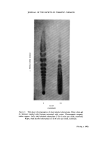
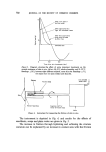
690 JOURNAL OF THE SOCIETY OF COSMETIC CHEMISTS HUMAN VOLUNTEER STUDIES In experiments designed to corroborate the animal findings, ten human volunteers used 3 ml of the product daily for 5 days. The head was rinsed with 50 ml of water and one drop of the eluate was instilled four times daily for 5 days in the same eye. No irritation was experienced by any subject. Aqueous solution of the 5 and 13 Et 0 condensates of oleyl alcohol were then tested, at increasing concentrations up to 6.3•o, in a cross-over study on ten volunteers. The 13 Et 0 condensate was more irritant than the 5 Et 0 material. Irritation consisted of a burning sensation, lachrymation and erythema. No delayed response, as in the actual complaints, was seen. Finally, another cross-over study was carried out on ten volunteers, using formulations incorporating the two different ethoxylates. For each volunteer, the dose was raised daily in alternate eyes, from one drop of 5•o, to three drops of a 50•o aqueous dilution. At the high dose-levels, both products gave rise to a slight or moderate burning sensation, some lachry- mation and erythema and occasionally, transient visual blurring, but all symptoms disappeared within 8 h. The investigators concluded that neither product was a severe eye irritant and that there was no clear difference between them in these experiments. CHEMICAL STUDY Checking through specifications and quality control records failed to show up any cause of eye irritation of a chemical nature, but thin-layer chromatography of the oleyl alcohol ethoxylates was quite revealing (Fig. 3). As expected, the 'nominal' 5 and 13 Et 0 condensates included a wide and, indeed, overlapping range of chain lengths the principal difference was in the relative proportions of the shorter or longer chain lengths. The hydro- philic character of an ethoxylate increases with Et 0 chain length further- more, maximum enzyme inhibition is shown by ethoxylates having 10-20 ethylene oxide units per mole (2) and this may well be related to irritancy. DIgCUSSION In trying to assess the significance of this case, it should be clear that adverse reactions must first be judged according to their severity even a single case of serious illness resulting from the use of a cosmetic product may necessitate withdrawing it from sale. When side-effects are less serious, it is
Purchased for the exclusive use of nofirst nolast (unknown)
From: SCC Media Library & Resource Center (library.scconline.org)