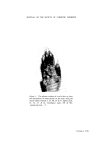
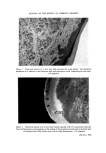
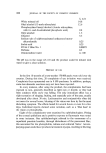
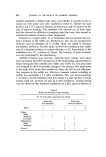
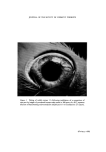
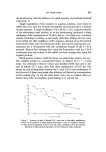
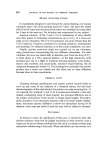
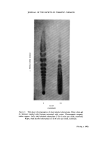
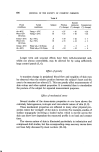
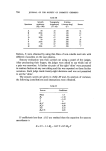
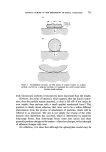
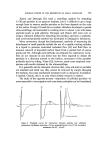
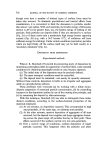
RAT FOOT PAD AS A MODEL FOR EXAMINING ANTIPERSPIRANTS 681 solution. After 24 h only a slight inhibition was seen with this concentration. Aluminium chlorhydrate. The antiperspirant effect due to this agent was still evident 24 h after a single application of 25•o. As with the 25•o aluminium chloride solution after this period, the antiperspirant effect was only slight compared to that seen after 3 and 5 h when inhibition was complete. Formalin. Pilocarpine injection did not provoke a sweating response in rat foot pads treated with a single application of 10•o phosphate buffered formalin 3 h previously. Magnesium chloride, dimethyl sulphoxide. When rat food pads were exam- ined for the sweating response 3 h after treatment with either 10•o magnesium chloride or 20• DMSO, droplets of sweat appeared slightly later than on the corresponding control feet and the volume of sweat produced initially was less, suggesting a partial inhibition. After 10 m_in observation, the sweating was similar on treated and control feet. No antiperspirant effect was evident with these solutions 5 h after treatment. Water, trichloroacetic acid. These agents did not significantly alter the pilocarpine-induced sweating of the rat foot pad 3 h after treatment. Attopine, scopolamine. A single subcutaneous injection of 0.2 ml of 15/o atropine or a topical application of 1}/o scopolamine completely inhibited sweat production on the rat foot pad for at least 3 h but after 5 h the effect was not significant. Histological and histochemical observations The epithelial and myoepithelial cells of the secretory and ductular portions of the rat sweat glands of animals treated with the various anti- perspirant agents revealed no histological changes from untreated or distilled water treated controls. The cells in the secretory tubules were of a medium to tall columnar type with slightly acidophilic cytoplasm and containing prominent spherical nuclei (Fig. 2). In the sweat gland ducts the epithelium consisted of two layers of cuboidal cells. The results of the Morin fluorescence study are given in Table IL In sections from foot pads treated with aluminium chloride, the characteristic blue-green fluorescence for aluminium ion was present as a narrow zone on the surface of the epidermal keratin and in the terminal portions of the gland ducts (Fig. 3). None was seen either in the proximal regions of the ducts or in the secretory portions of the glands. In those pads treated with 3 or 65/0 aluminium chloride or 25•o aluminium chlorhydrate, the surface fluorescence was less than that seen with 12.5 or 25•o alurninium chloride,

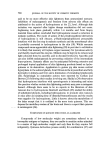
682 JOURNAL OF THE SOCIETY OF COSMETIC CHEMISTS Table II The distribution of aluminium fluorescence in rat foot pads stained with the dye Morin Antiperspirant solution Fluorescence Surface of keratin Sweat gland ducts Aluminium chloride 25% (a) 12.5 •o (b) 6% (c) 3% (c) Aluminium chlorhydrate 25 % (c) (a) Wide zone of intense fluorescence. (b) Narrow band of medium intensity fluorescence. (c) Fluorescence present but not widely distributed. the zone being narrower and the intensity less. With the chlorhydrate solu- tion no fluorescence was present in the gland ducts. Histochemically, alkaline phosphatase, succinic dihydrogenase and adenosine triphosphatase were abundant in the basal and perinuclear regions of the epithelial cells of both ti'eated and untreated pads and did not vary according to the treatment given. In all sections examined, enzyme activity was absent in that part of the sweat duct passing through the stratum corneum. DISCUSSION By the rat foot pad test, 25•o aluminium chloride, aluminium chlor- hydrate and 10•o formalin were shown to exert good antiperspirant activity, whereas the other agents tested showed poor action. These findings, which are in agreement with the results of human studies on the antiperspirant activity for these components (18, 23-31), suggest that the rat foot pad may be a suitable site for use in laboratory screening tests for new antiperspirant compounds and preparations. Punch biopsies are occasionally taken in clinical trials to study the possible injurious effects of an antiperspirant on the skin or to obtain information concerning the mechanism of antiperspirant action. Such a procedure is not practicable routinely on social and ethical grounds. How- ever, after testing and before recovery from anaesthesia, rats may be killed
Purchased for the exclusive use of nofirst nolast (unknown)
From: SCC Media Library & Resource Center (library.scconline.org)