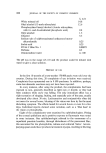
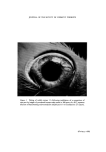
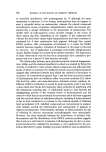
686 JOURNAL OF THE SOCIETY OF COSMETIC CHEMISTS White mineral oil Oleyl alcohol (13-mole ethoxylate) Phosphorylated lauryl alcohol (4-mole ethoxylates, with tri- and di-substituted phosphoric acid) Oleyl alcohol Glycerol Sodium salt of sulphosuccinated undecenoyl mono- alkanolamide Sorbic acid FD & C Blue No. 1 Perfume Demineralized water •o w/w 14.8 12.6 9.8 1.5 5.3 0.25 0.25 0.00075 0.5 to 100 The pH was in the range 4.5-5.0 and the product could be diluted with water to give a clear solution. HISTORY OF USE In the first 10 months of a test-market 170 000 packs were sold over the counter. During this time, 20 complaints of eye irritation were received. Complaints thus represented one in 8 500 purchases. In addition, perhaps, some less dramatic reactions may not have been reported. In every instance, after using the product, the complainants had been exposed to rain, generally described as light rain or drizzle, or they had been outdoors while snow was falling. The only immediate effect was a slight sensation of stinging. Itching, and especially pain of the eyes, usually developed after about 30 min. Lachrymation and conjunctivitis often did not occur for several hours blurring of the vision was then by far the most disturbing symptom. The effects lasted for several hours or even for a few days. Individual reports showed some variation, such as a 'blue haze' in the vision or photophobia. Eight of the complainants were examined by ophthalmologists. Pitting of the corneal epithelium and a positive response to fluorescein were noted in some instances. One ophthalmologist referred to the occurrence of a superficial punctate keratitis, through disturbance of the precorneal film this accounted for the photophobia, redness and coloured 'halos'. Accom- panying spasm could have produced a transient myopia, resulting in blurring

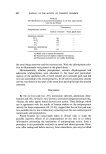
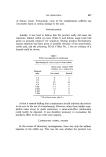
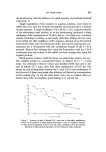
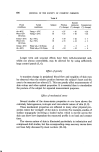
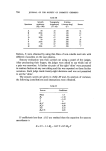
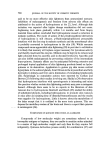
EYE IRRITATION 687 of distant vision. Fortunately, none of the complainants suffered any irreversible harm or serious damage to the eyes. INVESTIGATIONS Initially, it was hard to believe that the product really did cause the reactions indeed, rabbit eye tests (Table I) and human usage trials had given no grounds whatever for suspicion. During product development, special attention had been given to possible irritancy of the preservative, sorbic acid, and the colouring, FD & C Blue No. 1, but no evidence of a hazard could be shown. Table I Rabbit eye responses to hairdressing Hairdressing (0.1 ml) in eyes of three rabbits Mean scores (Draize 1959) Cornea+ iris + conjunctiva Observed after Not rinsed Rinsed* lh 0 2 2h 0 2 4 h 0.7 1.3 8 h 0.7 0 1 day 1.3 0 2 days 1.3 0 4 days 0 0 7 days 0 0 * 20 ml warm water after 5 s. At first it seemed baffling that complainants should attribute discomfort in the eyes to the use of a hairdressing. However, when three similar com- plaints came along in quick succession, a cause-and-effect relationship could hardly be disputed. It was therefore necessary to re-examine the product's effect in the eye with some urgency. LABORATORY ANIMAL STUDIES In the course of laboratory investigations, there was only the mildest response in the rabbit eye. This was the case whether the product was
Purchased for the exclusive use of nofirst nolast (unknown)
From: SCC Media Library & Resource Center (library.scconline.org)