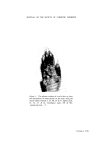
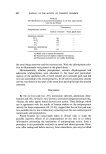
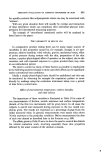
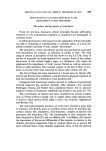
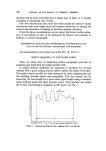
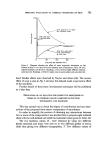
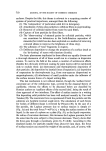
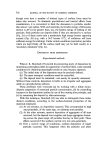
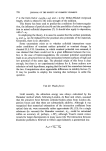
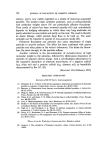
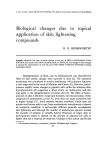
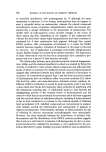
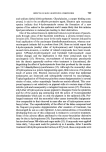
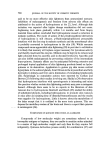
700 JOURNAL OF THE SOCIETY OF COSMETIC CHEMISTS situation will be more noticeable than a steady rate of shear or a steadily increasing or decreasing rate of shear. Our own observations have been that when people are asked tO assess smoothness with their fingers they will enhance sensitivity by varying the velocity and directions of rubbing to facilitate making a decision. From the above considerations we can expect the human tactile evalua- tion of smoothness of skin to be influenced by friction and hardness in addition to surface topography. EXPERIMENTAL RESULTS USING INSTRUMENTAL TECHNIQUES FOR THE EVALUATION OF FRICTION, TOPOGRAPHY AND HARDNESS All measurements were carried out at 48-55• rh, 19-21øC. Surface topography--by stylus/profile method There are many ways of measuring surface topography and also in analysing and expressing the surface profiles (39). A simple method unaffected by variations in hardness was devised whereby first a quick setting silicone rubber replica was made of the skin. The replica surface profile was then measured by stylus displacement and the resulting recorder traces were quantified. This was carried out by measuring the trace length for a given chart paper length using a standard stylus tracking speed and chart recorder speed. This quotient was called the T value representing a roughness profile factor, see Fig. 1. Roughness factor = •'--..L2.1 L I for average readings quadrantial in 360 ø Figure 1. gia•am showinõ how tho rouF•n½ss factor was dori¾od.

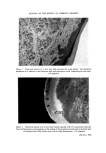
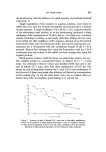
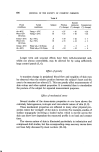
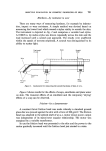
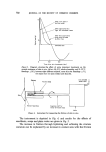
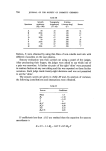
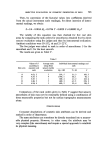
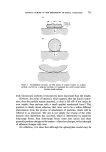
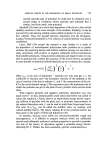
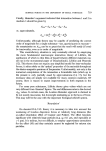
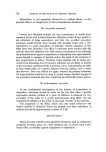
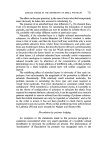
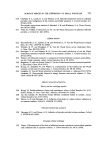
OISJECTIVE EVALUATION OF COSMETIC PROPERTIES OF SKIN 701 Hardness--by resistance to wear There are many ways of measuring hardness, for example by indenta- tion, impact or wear resistance. A simple method was devised based on measuring the lowest load which caused a stylus yisibly to scratch the skin. The instrument is depicted in Fig. 2 and comprises a variable load stylus. A 0.0005 in. tip radius stylus was drawn repeatedly across the skin and the load increased until a scratch just appeared. The results were unaffected within the speeds of traverse employed. A scratch was distinguished by its ability to scatter light. Free length Scale Scratch of wire value Wire point Perspex Thumb shoe screw Wire clamp Figure 2. Instrument for measuring the scratch hardness of skin in vivo. Figure 3 shows results for the effects of soaps, emollients and plain water on skin. The transient effects of an emollient and the temporary 'drying' effects of a soap can be observed. Friction--by a dynamometer A constant thrust friction head was made whereby a standard ground glass disc was pressed against the skin with a force of 200 g/cm •. The friction head was attached to the splined shaft of an a.c. motor whose power output was independent of its stator/rotor angular relationship. The motor was energized by a variable transformer. In use the friction head was presented to the skin and the power to the motor gradually increased until the friction head just started to rotate.
Purchased for the exclusive use of nofirst nolast (unknown)
From: SCC Media Library & Resource Center (library.scconline.org)