684 JOURNAL OF THE SOCIETY OF COSMETIC CHEMISTS (26) (27) (28) (29) (30) (31) (32) (14) Randall, W. C. and Kimura, K. K. The pharmacology of sweating. Pharrnacol. Rev. 7 365 (1955). (15) Juhlin, L. and Hansson, H. Topical glutaraldehyde for plantar hyperhydrosis. Arch. Derrnatol. 97 527 (1968). (16) Montagna, W. Histological, histochemical and pharmacologic properties in Advances in the biology of the skin, eds Montagna, Ellis and Silver 3 (1962) (Pergamon Press Ltd, London). (17) Randall, W. C. Quantitation and regional distribution of sweat glands in man. J. Clin. Invest. 25 761 (1946). (18) Hunziker, N. and Brun, R. Experiences with perspiration 14. Effect and duration of effect of aluminium salt solutions with various pH. Derrnatologica 117 200 (1958). (19) Wada, M. and Takagaki, T. A. Simple and accurate method for detecting the secretion of sweat. Tohoku J. Exp. Med. 49 284 (1948). (20) Juhlin, L. and Shelley, W. B. A stain for sweat pores. Nature (London) 213 408 (1967). (21) Gomori, G. Microscopic histochernistry (1952) (University Press, Chicago). (22) Wachstein, M. and Meisel, E. Histochemistry of substrate specific phosphatases at a physiological pH. J. Histochern. Cytochern. 4 424 (1956). (23) Brun, R. Studies on perspiration. J. Soc. Cosmet. Chem. 10 70 (1959). (24) Harry, R. G. Cosmetic materials Vol. 2 (1963) (Leonard Hill (Books) Ltd, London). (25) Brun, R. and Hunziker, N. Experiences sur la transpiration: XII. De l'effet du chlorine d' aluminium sur la s•cr•tion sudorale en fonction de l'age et de la couche sebacke. Derrnatologica 14 177 (1957). Shelley, W. B. and Horvath, P. N. Comparative study on the effect of anticholinergic compounds in sweating. J. Invest. Dermatol. 14 9 (1950). Stoughton, R. B. and Fritsch, W. Influence of dimethylsulphoxide (DMSO) on human percutaneous absorption. Arch. Dermatol. 90 512 (1964). Brun, R. and Manuela, L. Experiences sur la transpiration. Derrnatologica 104 267 (1952). Stillians cited by Weiss, R. S. and Marcus, M.D. Control of axillary hyperhydrosis by aluminium phenolsulphonate. Arch. Dermatol. Syph. 43 539 (1941). Govette, T. and de Navarre, M. G. Aluminium chlorhydrate, new antiperspirant ingredient. Arner. Perfun,. Essent. Oil Rev. 49 365 (1947). Martin, J. J., Rubino, A.M., Jones, J. L. and Lawrence, J. A. A new aerosol antiperspirant. Drug Cosmet. Ind. 99 54 (1966). Papa, P.M. The action of antiperspirants. J. Soc. Cosmet. Chem. 17 789 (1966).

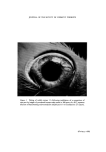
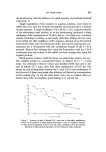
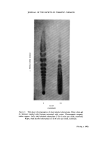
J. Soc. Cosmet. Chem. 24 685-692 (1973) ¸ 1973 Society of Cosmetic Chemists of Great Britain Eye irritation: studies relating to responses in man and laboratory animals N.J. VAN ABBI•* Synopsis---A male HAIRDRESSING formulated as a solid transparent MICRO-EMULSION gave essentially negative responses in EYE IRRITANCY screening tests conducted in RABBITS and squirrel MONKEYS. Nevertheless, soon after introduction into a test-market, complaints of human EYE IRRITATION arose. Visual blurring was a distressing though reversible symptom. The adverse effects invariably followed exposure to rain or snow. Somewhat similar responses in human volunteers were noted with an aqueous solution of the ETHOXYLATED OLEYL ALCOHOL incorporated in the formulation but were diminished by changing to a less hydrophilic ethoxylate. Transient corneal pitting seemed to be a relevant observation in laboratory animal eye tests in relation to the visual blurring which occurred in man. Tests for chemically-induced eye irritancy are carried out using laboratory animals in the hope of providing a reliable basis for predicting responses in the human eye. This report, however, is concerned with circum- stances in which essentially negative findings were obtained in laboratory screening tests although relatively severe visual disturbances and discomfort occurred soon after the product was launched in a test-market. The product was a male hairdressing which had the appearance of a transparent light blue-coloured gel the formulation was an oil-in-water emulsion, the disperse phase being in the form of extremely fine globules (probably 10-60 nm in diameter (1)). The formula was: * Beecham Products, Applied Research & Evaluation Unit, RandalIs Rd, Leatherhead, Surrey. 685
Purchased for the exclusive use of nofirst nolast (unknown)
From: SCC Media Library & Resource Center (library.scconline.org)