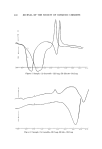
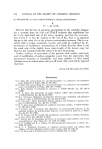
J. Soc. Cosmet. Chem., 26, 431-437 (September 1975) Differential Thermal Analysis of Chrysotile Asbestos in Pure Talc Talc Containing Other Minerals and W. LUCKEWICZ, B.S.* Presented October 14, 1974, Washington, D.C. Synopsis-Levels of 0.5 to 1.0% CHRYSOTILE ASBESTOS in TALCS can be detected by DIFFERENTIAL THERMAL ANALYSIS (DTA). The 845øC exothermic DTA peak is used for the detection of CHRYSOTILE. Both naturally occurring serpentinet and artificially added CHRYSOTILE ASBESTOS can be detected in PURE TALC and in talcs containing other minerals. INTRODUCTION Cosmetic and body talc products have shown a remarkable growth in sales over the past several years. Recently, asbestos forms (nameIy, chrysotiIe and tremolite) were reported to be present in cosmetic and body talc products. Asbestos fibers have also been detected and analyzed in beverages and drink- ing water (1). Cosmetic talc can be described as a mixture of naturally occurring min- erals, where the major constituent is a magnesium silicate and some of the minor constituents are chlorite and carbonates. The performance of a cos- metic talc can be effected by the presence of minor mineral constituents in the talc. The effect can be either detrimental or beneficia]. For example, chlorite is thought to be beneficial for perfume retention. Because of the pos- sible inhalation hazard associated with asbestos, the development of a sensitive analytical m•thod for its detection in cosmetic talc was necessary. * Avon Products, Inc., Suffern, N.Y. 10901. ?Serpentine is a family of asbestos consisting primarily of antigorite (nonfibrous) and chrysotile (fibrous). 431

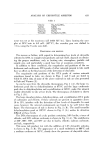
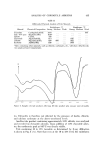
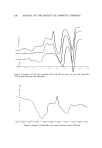
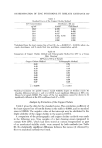
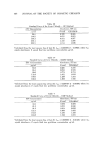
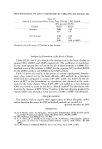
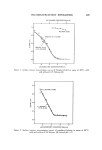
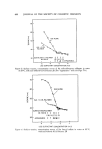
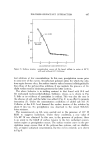
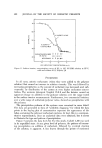
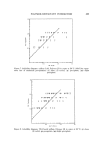
43'2 JOURNAL OF THE SOCIETY OF COSMETIC CHEMISTS The analysis of carbonates, chlorite, and other minerals in talcs is described by Pask and Warner (2). We also developed a differential thermal analysis (DTA) method for these minerals in 1979, (3). Analytical methods reported in the literature that are applicable to mineral characterization include: X-ray diffraction optical and electron microscopy atomic absorption (AA) infrared (IR) spectroscopy DTA and thermogravi- metric analysis (TGA). X-ray diffraction has been widely used for identification of minerals, but without repetitive scanning, it is not sufficiently sensitive to yield reproduci- ble results for constituents much below the 1% level. The various optical and electron microscopic techniques are considered tedious and time consuming, but are used as confirmation techniques in combination with X-ray diffrac- tion. The AA method is a sensitive method for detection of many elements, but the presence of sim:lar atoms in the minerals comprising the talc limits its effectiveness for determining asbestos. IR spectroscopy is widely used in mineral characterization, both qualitatively and quantitatively, because it is specific and reproducible, possessing a unique finger printing capability. DTA and TGA, due to their ability to provide information on the crystallo- graphic changes occurring in heating, are also widely used for mineral char- acterization (2, 3). The DTA method for both qualitative and quantitative mineral characteri- zation is extensively described in the literature. Although the DTA method for the detection of asbestos at the 1% level was developed by Avon Prod- ucts, Inc., over 2 years ago (3), a similar method has been recently reported (4). Our method offers several advantages: it is three times faster and requires no helium atmosphere. It has been found to be specific, reproducible, and requires no involved sample preparation. Therefore, it can be readily used for quality control purposes. EXPERIMENTAL The mineral composition of a large number of cosmetic grade talcs from the United States and other countries was determined by X-ray diffraction (5). Samples of the major talc constituents were obtained and were also •malyzed by X-ray diffraction. The minerals sometimes found in cosmetic talcs are given in Table I (5). One or more of these minerals may be totally absent in cosmetic talcs. The dupont 900 DTA equipped with the 1200øC high temperature cell was used for the analysis of chrysotile asbestos in talcs. Chrysotile asbestos from Seitz at 1.0 and 3.0% level was used in the talc blends. The samples (38 to 40 mg) were heated in platinum cups at 30øC/rain in a static air atmosphere using A12Oa as a reference material. The tempera- ture scale T was set at 0.8 MV/in., and the sensitivity of the DTA instru-
Purchased for the exclusive use of nofirst nolast (unknown)
From: SCC Media Library & Resource Center (library.scconline.org)