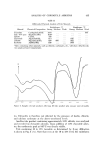
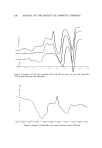
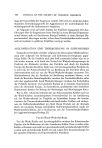
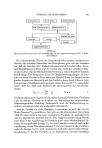
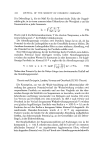
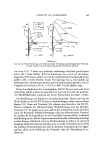
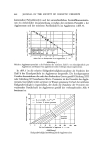
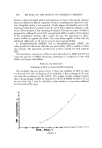
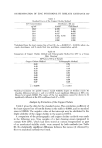
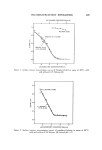
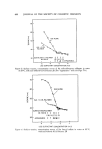
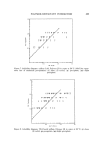
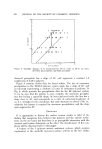
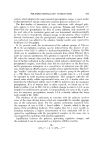
POLYMER-SURFACTANT INTERACTION 469 1.0 0.1 / / ttt pp/ p sp sp ' / / / / / / c c c ß i I I IIIIII I I I I 1111l I I I 0.1 1.0 10 wt. % LAS Figure 7. Solubility diagram: sodium LAS, Polymer JR in •vater at 20øC. Solid line repre- sents line of maximum precipitation: (c) clear (t) turbid (p) precipitate (sp) slight precipitate 1.0 cc sp spsp p// s.p c c sp spslp •/•,p sp c c. .c sps.y p t. c c _.c .c spsp p• .p t. c. c. _ 0.1 I I I I I IIll I I I I I IIII 0.1 1.0 Wt % TEALS sp sp .c .c c i a I I I 111 lO Figure 8. Solubility diagram: TEA lauryl sulfate, Polymer JR in vater at 20øC: (c) clear (t) turbid (p) precipitate (sp) slight precipitate

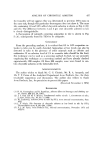
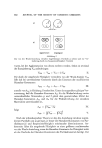
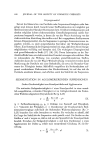
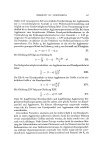
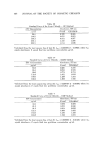
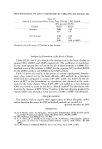
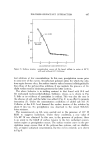
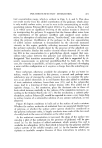
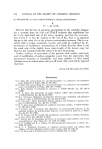
470 JOUBNAL OF THE SOCIETY OF COSMETIC CHEMISTS 1.0 01 .t t..p p s.p s.p t. _ /t,•' sp sp _- c b/P Ip sp sp c //"' [ // / .• .c t. 7s.P $P c • .c c p/s.p s.p s.p c. .c 0.1 1.0 Wt. % K•LAURATE C C I I I IJfl 10 Figure 9. Solubility diagram of K laurate/polymer JR in water at 20øC: (c) clear (t) turbid (p) precipitate (sp) slight precipitate observed precipitate has a slope of 45 ø and represents a constant 1:2 weight ratio of LAS to polymer. Figure 8 contains similar data for lauryl sulfate. The line of maximum precipitation in the TEALS/polymer system again has a slope of 45 ø and an intercept representing a constant 1:2 ratio of surfaetant to polymer. In Fig. 9, which presents the precipitation data for the KL/polymer system, it can be seen that the pattern is more complex, the maximum precipita- tion line having a sigmoidal shape. At lower polymer levels, the line has a slope close to 45 ø and corresponds to a ratio of surfaetant-to-polymer of ca. 2:1. At higher levels of polymer, this ratio decreases to about 1:3-4 i.e., relatively less laurate is required for maximum precipitation, and the slope again approaches 45 ø. DISCUSSION It is appropriate to discuss the surface tension results in light of the finding that complexes form between the polymer and the anionie surfae- tants, on the one hand, but that there is no perceptible interaction with the nonionic and betaine detergents, on the other. The stoiehiometry of the com- plexes will be discussed later in this paper. A feature of the 3 polymer/anionie surfaetant systems, which requires explanation, is the markedly increased surface activity in the low surfae-
Purchased for the exclusive use of nofirst nolast (unknown)
From: SCC Media Library & Resource Center (library.scconline.org)