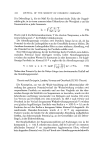
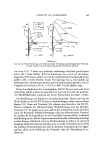
452 JOUI•NAL OF THE SOCIETY OF COSMETIC CHEMISTS (22) Kaye, B. H., Boardman, R. P., Proc. 3rd Congr. Europ. Fed. Chem. Engr., London: lnstn. Chem. Engr.'A 17 (1962). (23) Koglin, B., Chemie-lng.-Techn. 44, 515 (1972). (24) Koglin, B., Proc. 1. lnt. Conf. Particle Technol., Chicago: lit Research Institute 1973• 265. (25) Koglin, B., Leschonski, K., Alex, W., Chemie-lng.-Techn. 46, 563 (1974). (26) Brauer, H., Grundlagen der Einphasen- und MehrphasenstrSmungen, Sauerliinder, Aarau-Frankfurt/Main 1971. (27) Richardson, J. F., Zaki, W. N., Trans. lnstn. chem. Engr. 32• 35 (1954).

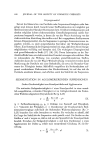
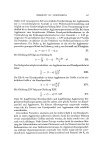
J. Soc. Cosmet. Chem., 26, 453-459 (September 1975) Determination of Zinc Pyrithione by Chelate Exchange B. L. KABACOFF, B. S. and C. M. FAIRCHILD, B.S.* Synopsis-Displacement of zinc from ZINC PYRITHIONE (ZPT) by ETHYLENEDI- AMINETETRACETIC ACID (EDTA), CU (II), or FE (III) is the basis for several analytical methods for this compound. In one method, the water insoluble ZPT is dis- solved in neutral EDTA and freed from interfering substances by precipitation as the copper complex. The precipitate is dissolved in chloroform and is read spectrophotometri- cally. In other methods, the compound is dissolved in aqueous HC1, DIMETHYL- SULFOXIDE (DMSO), or DIMETHYLFORMAMIDE (DMF) and a color is developed with Fe (III) ion. INTRODUCTION Zinc pyrithione (ZPT), the zinc chelate of 2-mercaptopyridine-l-oxide, is a potent bactericide and lungicicle, which is used in antidandruff preparations. It has been assayed by titration with Ti (lid ion, which reduces the aminoxide group to form 2-mercaptopyridine (1). The mercapto group has been titrated by iodine, which oxidizes it to the disulfide, 2,2' dithiobispyridine-l-oxide (2). In cosmetic and dermatological preparations, however, there are numerous substances which will react with either titrant. Much greater specificity is obtained by anodic polarography of the mercapto group, in aqueous alcohol at pH 6.7 by Krivis et al (3), and in aqueous alkali in the Revlon Analytical Laboratories, Revlon Research Center, Bronx, N.Y. While polarography has been satisfactory for some formulations, in others, distortions of the polarographic wave have been obtained, which precluded comparison with standard solutions of the compound. Analytical methods have been required that would permit the isolation of the compound from interfering substances in experimental formulations or of' sufilcient specificity to overcome those interferences. Several procedures, de- *Revlon Research Center, Bronx, N.Y. 4•53
Purchased for the exclusive use of nofirst nolast (unknown)
From: SCC Media Library & Resource Center (library.scconline.org)