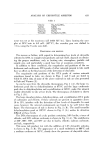
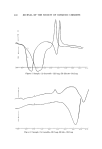
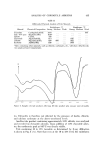
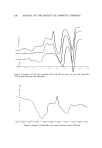
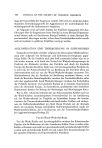
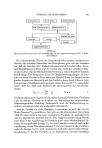
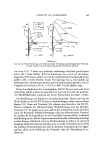
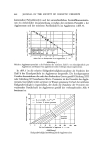
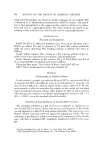
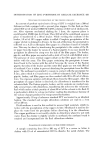
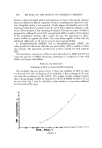
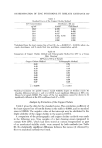
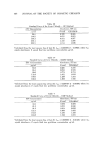
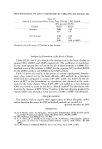
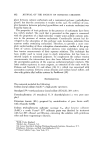
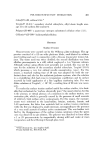
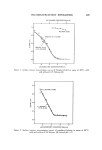
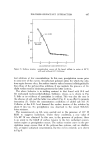
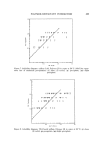
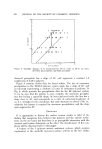
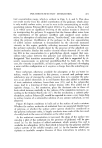
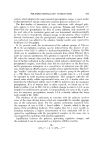
ANALYSIS OF CHBYSOTILE ASBESTOS Table II Differential Thermal Analysis of Talc Minerals 435 Mineral Endotherms, ø C Exotherms, ø C Chemical Composition Strong Medium Weak Strong Medium Weak Tremolite •]a•Mg•SkO2•(OH)_o 1075 ......... Tale--97% pure Mg:,Si40•0(OH)• 1010 • . ........ : Calcite CaCOa 790 ...... Chrysotile Mg3SiaO•(OH)• 673 ... •d• Chlorite Mg•_oSi•O•0(OH)• 600 •6 ... 885 Kaolinitc AhSiO•(OH)• 530 ...... 1055 845 ß . . ß . . ß . . ß . . ß o . •'Talcs containing other minerals, such as chlorite, carbonates, etc., xvill show dehydroxyla- tion peaks at lower temperatures. 935 • 99S ø lOSS o Figure 3. Sample: (A) talc product-d0.0 mg (B) talc product plus one per cent chrysotile tos. Chrysotile is therefore not affected by the presence of kaolin, ½hlorite, and calcium carbonate at the above-mentioned levels. Another tale product containing approximately 5.0% ehlorite was analyzed and revealed no ehrysotile asbestos. Upon addition of 1.0% ehrysotile asbes- tos, the exothermie peak at 845øC was dearly visible. Tale containing 10 to 15% tremolite as determined by X-ray diffraction is shown in Fig. 4 (A). Note that even at the 10 to 15% level, the endotherm

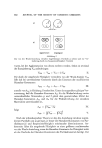
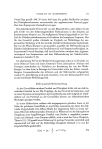
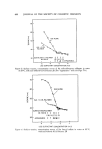
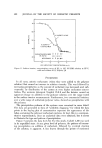
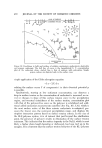
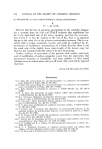
436 JOUBNAL OF THE SOCIETY OF COSMETIC CHEMISTS Figure 4. Sample: (A) talc phxs tremolite-39.0 mg (B) talc plus one per cent chrysotile (C) talc plus three per cent chrysotile 457 • 530øC i i 600 ø 675 ø 7q0 ø i i i i ! 805 ø 870 ø 935 ø 995 ø 1055 ø 1115 ø Figure 5. Sample: (A) naturally occurring serpentine in talc-10.5 mg
Purchased for the exclusive use of nofirst nolast (unknown)
From: SCC Media Library & Resource Center (library.scconline.org)