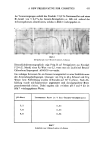
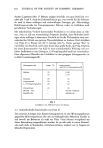
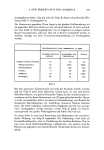
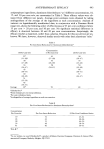
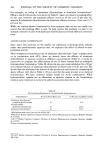
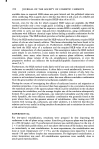
444 JOURNAL OF THE SOCIETY OF COSMETIC CHEMISTS For example, an isolog of aluminum chlorohydrate is aluminum bromohydrate.* Efficacy data for this product are shown in Table II. Again, we observe a peaking effect. In this case, however, the maximum efficacy occurs at 24 per cent (5 per cent A1), whereas for aluminum chlorohydrate the maximum efficacy occurs at 15 per cent (3.75 per cent A1). While the analysis shows a maximum for dose-response data, we are not totally con- vinced that this peaking effect is real. To help resolve this problem, we plan to run multiple crossover studies with aluminum chlorohydrate at several different concentra- tions. ALCOHOL SOLUBLE ANTIPERSPIRANTS Since many new products on the market use anhydrous or hydroalcoholic vehicles rather than predominantly aqueous ones, we explored the effect of solvent on anti- perspirant activity. Most nonaqueous formulations use an aluminum chlorohydrate "type" complex alone or in conjunction with A1Cla. Since we already know the efficacy of aluminum chlorohydrate in aqueous systems at different concentrations (Table I), it would be instructive to compare the effectiveness of one of these systems with an analogous hydroalcoholic formulation. Table III shows the per cent sweat inhibition for a 50 per cent ethanol solution of aluminum chlorohydrate at 20 per cent to be 41 per cent. The alcohol has not attenuated the activity of this product, as can be seen by comparing the above efficacy with that in Table I (39 per cent) for the same product at an identical concentration. We have observed similar results for A1-Zr combinations. While h•Ydroalcoholic systems are as efficacious as aqueous systems in the formulations studied, some reduction in activity for anhydrous systems has been noted. Table III Per Cent Sweat Reduction for Alcohol Soluble Antiperspirants Antiperspirant a Per Cent Sweat Reduction 95 Per Cent Confidence Limits Aluminum chlorohydrate b propylene glycol complex 21 9-31 Alcohol soluble ½ aluminum chlorohydrate 47 40-55 Aluminum chlorohydrate d 41 31-52 aAll solutions made up to 5 per cent A1 in SDA-39C. bRehydrol©, Reheis Chemical Company, Division of Armour Pharmaceutical Company, Berkeley Heights, N.J. 07922. cA.S.C.©, Reheis Chemical Company, Division of Armour Pharmaceutical Company, Berkeley Heights, N.J. 07922. d50 per cent hydroalcoholic solution. *B.A.B. ©, Reheis Chemical Company, Division of Armour Pharmaceutical Company, Berkeley Heights, NJ 07922.

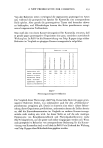
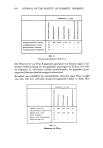
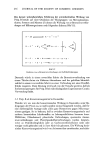
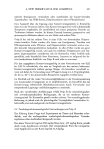
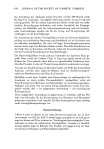
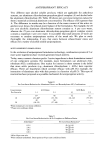
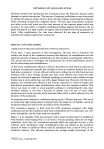
ANTIPERSPIRANT EFFICACY 445 Two different type alcohol soluble products, which are applicable for anhydrous systems, are aluminum chlorohydrate-propylene glycol complex (A) and alcohol solu- ble aluminum chlorohydrate (B). Table III shows per cent sweat reduction values for these 2 materials at identical aluminum concentrations. The efficacy of B is greater than A. The difference in results may be a function of the water content of the active in- gredient and, hence, the ethanol-water balance of the formulation. For example, the 20 per cent alcoholic aluminum chlorohydrate system contains ca. 4 per cent water, whereas the 25 per cent aluminum chlorohydrate-propylene glycol complex system contains a maximum 1 per cent water. It is possible that small amounts of water are necessary to catalyze antiperspirant activity of the metal salt. We plan to study thoroughly the relationship, if any, that exists between ethanol:water ratios and efficacy for a variety of alcohol soluble antiperspirants. MULTI-INGREDIENT FORMULATIONS In the evolution of antiperspirant formulation technology, combination systems of 2 or more active ingredients have recently generated much interest. Today, many cosmetic chemists prefer 2 active ingredients in their formulation instead of one component systems. For example, many formulators use aluminum chlo- rohydrate-AICla combinations. One reason for interest in these systems is the belief that more acidic products (e.g., aluminum chlorohydrate + AICh) have superior efficacy. There are hypotheses which correlate efficacy with pH. For example, the interaction of aluminum salts with skin protein is a function of pH (5). This type of reaction has been proposed as a possible mechanism for antiperspirant activity. Table IV. Per Cent Sweat Reduction for Aluminum Chloro- and Bromohydrate-A1Ca Combinations Concentration AI:C1 Ratio AI:Br Ratio Per Cent w/w 1:1 2:1 1:1 2:1 35 a 44 52 52 10 (23-48) b (33- 56) (41-62) (53- 63) 49 38 -- -- 20 (38-59) (27-48) -- -- apoint estimate per cent sweat inhibition. b95 per cent confidence limits. Table V Per Cent Sweat Reduction for AI-Zr Complexes at Different Ratios AI:Zr Ratio a Per Cent Sweat Reduction • 0.5: ! 45-54-66 -- 2.0:1 50-58-68 4.0: ! 48-59-70 6.0: ! 50-60-69 aAll at 10 per cent w/w. •Point estimate underlined. Outer points at 95 per cent confidence limits.
Purchased for the exclusive use of nofirst nolast (unknown)
From: SCC Media Library & Resource Center (library.scconline.org)