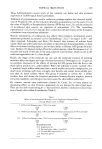
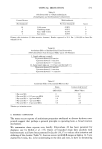
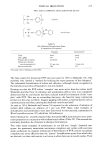
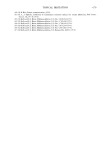
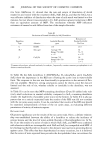
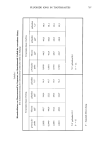
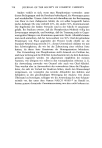
TOPICAL IRRITATION 669 Drug Administration's recent study of the cosmetic use habits and skin irritation responses of 10,000 typical American families. Inhibition ooe polymerization (and/or oxidation) perhaps explains the observed useful- ness of Vitamin E (30), of the reduction oflanolin sensitizations over the years (21), of the value of Na2SOa in Paraphenylene diamine (PPD) hair dyes (24), and the reduction of uv-induced skin cancers • ia ingestion of antioxidants (25). The "quenching phenomenon" (22,23,27,6 l) has also been connected with prevention of the formation of oxidative resins in perfume aldehydes. Keratin substantivity of compounds also affects their irritation, sensitization and/or antiirritant potential, as pointed out by Goldemberg (7,26,27) in regard to Ni ++ and other materials. Scheuplein and Ross (28) showed that irritancy of sodium lauryl sulfate (SLS) and other surfactants correlates to their keratin denaturing ability, to their effect on its water binding capacity, and to their ability to liberate (SH) groups from ke- ratin. Bettley (29) showed similar effects for sodium laurate, while Dominguez et al. (3) recently tied much ooe this data to the peak sorption (onto keratin), which occurs as the surfactant approaches the C•2 chain length. Finally, the shape of the molecule (its size and the molecular location of irritating rnoieties) affect the degree and type ofirritancy produced. Dominguez et aL (3) gave us an excellent discussion of the effects of moving the SOa group from the first to the third carbon position in C• alkyl sulfates. When the sulfonate is in the "normal" (No. 1) position, lauryl sulfate surfactants have a much smaller molecular configuration, are much more irritating, sorb more strongly onto keratin, and extract more soluble pro- tein than do lauryl sulfates whose SOa group is attached to carbon No. 3. Other workers have also shown the frequent association between keratin sorption, protein extraction capability, and irritation reactions caused by alkyl suloeate surfactants. By contrast, sucrose ester surfactants (claimed by Croda, Inc. to have almost no denaturing effect on skin proteins) apparently do not disrupt the skin's lipid layer. They are not only nonirritatingper se, but have been shown to distinctly reduce irrita- tion ooe1auryl ether sulfate formulations (Table I). Table I Effect of Two Ethoxylated Nonionics on an Amphoteric Shampoo Base (Average Draize scores, 6 rabbits) I. 30 Per Cent Shampoo base, 70 Per Cent water 24 h 7 days 18 6.5 II. 30 Per Cent Shampoo base, 5 Per Cent POE 20 sorbitan monolaurate, 65 Per Cent water 24 h 7 days 19 5.0 III. 30 Per Cent Shampoo base, 5 Per Cent sucrose monolaurate, 65 Per Cent water 24 h 7 days 18 3.0 SHAMPOO BASE 20.0 Amphoteric-10 7.0 Na lauryl ether sulfate (1 mol Et0) 1.0 Coconut DEA superamide (1:1) 2.0 Propylene glycol 30.0

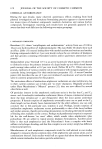
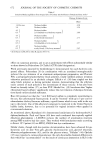
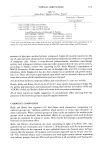
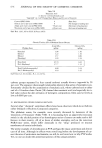
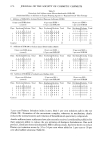
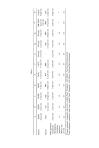
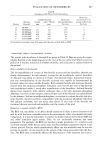
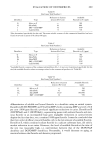
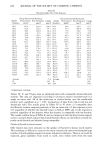
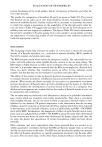
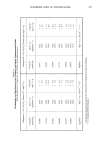
670 JOURNAL OF THE SOCIETY OF COSMETIC CHEMISTS CHEMICAL ANTIIRRITANCY During the past decade, many observed antiirritancy effects resulting from both planned investigations and fortuitous formulating practices appear to cluster around two major types of chemical compounds: imidazole derivatives and various hydroxy compounds. Investigators reporting such results have not generally appeared to be aware that their work falls into the following two major groupings. I. IMIDAZOLE COMPOUNDS: Kawakami (31) claims "antiphlogistic and antihistaminic" activity from use of 0.08 to 10 per cent hydroxyethyl-4,5 diphenylimidazole. His data (Table II) clearly show such an effect. Libby (33) reacted imidazoline with methyl acrylate and various acrylamides, forming compounds which (at 2 per cent levels) reduce the eye irritation of shampoos and hair grooms containing ethoxylated amides and/or quaternary ammonium com- pounds. Imidazolidinyl urea ("Germall 115") is an active bactericide which Lanzet (34) showed to distinctly reduce the primary irritation of a liquid make-up (via 48-h closed human patch testing) when added at 0.2 per cent levels (Tables III& IV). Other urea com- pounds, clathrates of various cosmetic oils in combination with inorganic pigments, are currently being investigated for their antiirritant properties (52). A recent Canadian patent (48) describes the use of 3 per cent imidazol-3-oxyalcanoic acid (and its metal salts) in cosmetic preparations for this purpose. The antiirritant effects of imidazoline amphoteric surfactants are also well-known, due to their current common use in baby and "no tears" shampoos. Originally produced under Hans Mannheimer's "Miranol" patents (32), they are now offered by several other firms as well. Of particular interest in this amphoteric surfactant series is the fact that C•0 and C•2 mono- and di-carboxylic imidazoline surfactants (those of major commercial interest) show the least irritation per se and (frequently) show the most potent antiirritant properties. If keratin sorption of amphoterics eventually turns out to peak at the chain length (as has already been demonstrated for the alkyl sulfates), one can only conclude that in this particular case, sorption is good. Perhaps, keratin sorption of imidazoline amphoteric surfactants occurs preferentially to that of the lauryl sulfates and similar anionics, thereby preventing denaturation via blocking the limited number of binding sites available on the cornea. Perhaps such preferential sorption is responsi- ble for the well-known "no tears" effect, which results when amphoterics (plus polysorbate 20) are added to typical anionic shampoo formulations. Another possi- bility is that such amphoterics (and the Polysorbate?) form a complex with lauryl sulfates via hydrogen bonding, and that this complex (a new entity) simply has different irritational properties. Manufacturers of such amphoteric compounds would be well advised to run studies designed to measure relative sorption rates of the amphoteric and anionic alone, and of combinations thereof. Such studies would tell us a great deal about the mechanism by which certain imidazoline derivatives provide antiirritancy.
Purchased for the exclusive use of nofirst nolast (unknown)
From: SCC Media Library & Resource Center (library.scconline.org)