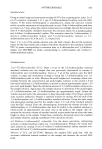
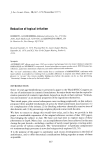
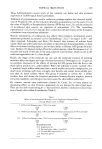
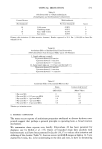
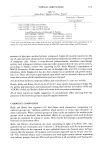
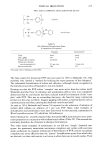
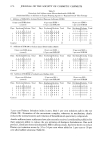
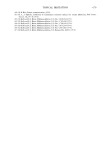
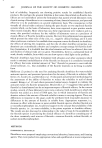
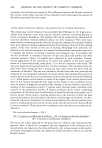
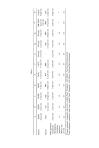
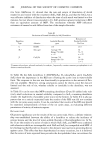
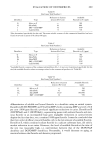
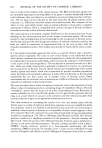
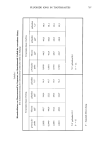
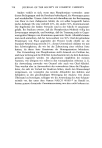
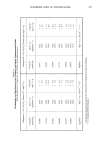
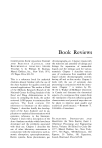
TOPICAL IRRITATION Table VI Kelley-Ritter "Mildness Additive" Patents* 673 Total Score, 12 Persons (24 hr Skin Patch) 6 per cent SLS (sodium lauryl sulfate) 6 per cent SLS + 6 per cent TEA oleate 6 per cent SLS + 6 per cent TEA dimerate Use of Dimer Acids via Following U.S. Patents: US 3,538,009--11/3/70 US 3,798,182--3/19/74 US 3,630,934--12/28/71 US 3,813,350--5/28/74 US 3,769,242--10/30/73 US 3,947,382--3/30/76 15 15 5 •Tests were run with dimer and trimer acids (of oleic and linoleic), and with their esters and amides (in 1:1 ratios, at 0.15 per cent) with various detergents such as ABS, SLS, lauryl ether sulfate, and TEA laurate. presence of glycogen, another hydroxy compound. Lipkin (8) recently reported on the use of a glycoprotein obtained from normal human epidermis to inhibit in vitro growth of malignant cells. Glucan, a yeast-derived polysaccharide, stimulates macrophage activity (and subsequent immune response) when injected directly into active tumors, according to Smith's review (46) reporting on Dr. Peter Mansell's experiments at McGill University. Zviak patented the use of thiodiglycollic acid (50) to reduce scalp irritations, while thioglycerol has also been claimed as an epithelial cell growth stimu- lant (51). There also exists a gluconamide quat which can be tolerated in the eye at 100 times the levels at which benzalkonium quats are tolerated. Are all of these hydroxy compound effects just coincidence? It seems most unlikely. Finally, Kelly and Ritter (43,62,63,64,65,66,67) have clearly demonstrated (Table VI) via guinea pig immersion and human patch testing that hydroxy derivatives (-OH and -COOH) of oleic and linoleic dimer and trimer acids are potent antiirritants. All of these reports are highly suggestive of a prophylactic effect deriving from the presence of the hydroxyl group in topically-applied materials. CARBOXYL COMPOUNDS Kelly and Ritter also reported (43) that dimer acids themselves (containing 2-4 carboxyl groups) are "mildness additives which prevent or reduce skin irritation" of many surfactants. When carboxyl groups of dimer acids are replaced by weaker polar groups (such as hydroxyl) the antiirritant effects do not appear until such hydroxyl groups are separated by at least 15 atoms. Here was the first attempt at quantifying the hydroxyl ion antiirritant effect. Kelly and Ritter's observations are most interesting in light of LeVeen (49), who patented the use of traumatic acid (1-decene-1,10-dicarboxylic acid) for its pronounced favorable effect on the ingrowth of new epithelial tissue into burned areas. LeVeen reports that the presence of traumatic acid increases ingrowth rate by 40 per cent (Ta- ble VII), whereas sebacic acid (a saturated acid with eight central carbons separating two carboxy groups) does not affect such growth rate at all, and adipic acid (having two

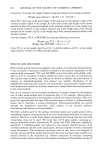
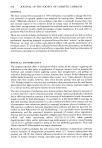
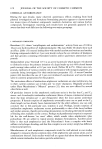
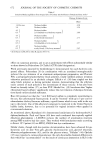
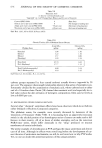
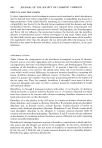
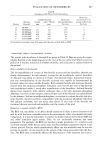
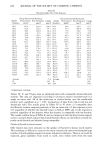
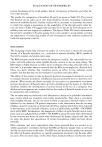
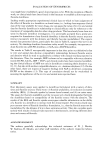
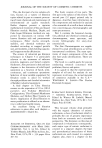
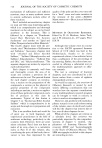
674 JOURNAL OF THE SOCIETY OF COSMETIC CHEMISTS Table VII Traumatic Acid (1-decene- 1,10-dicarboxylic acid) "Ingrowth" on 1 cm 2 Human Burn Blisters (as Per cent of Control) Control (PEG 6000) Sebacic acid (2 per cent in PEG 6000) Adipic acid (2 per cent in PEG 6000) Traumatic acid (2 per cent in PEG 6000) 0 0 -50 per cent +40 per cent (Base line) (No change in healing rate) (Decrease in healing rate) (Increase in healing rate) •Ref: Brit. 1,013,109 to H. H. LeVeen (1965). Table VIII Chronic Toxicity (IP) of Phthalate Esters (Mouse) Acute LD.50 Chronic LD.50 Phthlate Ester (g/Kg) (g/Kg) Dimethyl 3.98 1.40 Diethyl 3.22 1.56 Dibutyl 3.57 0.89 Diisobutyl 3.99 1.94 Di-n-Octyl 65.70 3.02 Di-2-Ethylh exyl 37.77 1.35 Butyl Carbobutoxymethyl 6.88 3.34 Bis (2-Methoxyethyl) 4.18 1.65 (Lawrence et al., Environ Res., 9, 1-11 (1975)). carboxy groups separated by four central carbons) actually decreases ingrowth by 50 per cent. The apparent chain-length relationship shown in this series of examples is un- fortunately clouded by the unsaturation of traumatic acid, whose carboxyls are at either end of a 10-carbon chain. Pacini (58) claimed that traumatic acid (and especially its co- bait salts) reduce the skin irritation of detergent compositions when used at levels as low as 0.0005 per cent. III. MISCELLANEOUS OTHER CHEMICAL IRRITANTS Several other "chemical" antiirritant effects have been observed, which do not fall into either Imidazol or Hydroxy Compound categories. The phthalate esters, for example, were recently discussed by Lawrence of the University of Tennessee (Table VIII). It is fascinating how an apparently innocuous switch in the alcohol portion of an homologous series of esters can make such a dif- ference in their toxicity. All of us know of similar examples, such as the sunscreen PABA-ester series, which differ drastically in the "sting" produced on mucous membranes of certain individuals. The prime example of detoxification is PVP, perhaps the classic antiirritant and detoxi- cant of all time. Although its effects were noted long before the development of cur- rent theories of antiirritant mechanisms, we still do not know how or why PVP works. Yet, no one can doubt the antiirritant potency of this unique polymer.
Purchased for the exclusive use of nofirst nolast (unknown)
From: SCC Media Library & Resource Center (library.scconline.org)