682 JOURNAL OF THE SOCIETY OF COSMETIC CHEMISTS lack of reliability, frequently not showing positive results for established fluoride products. But perhaps the greatest dilemma is that caries clinical trials on fluoride den- tifrices are not undertaken unless the formulation has passed several laboratory tests clinical testing of dentifrices is too consuming of time, financial resources, and personal effort for it to be undertaken on a purely exploratory basis. The consequence is that virtually all clinical trials conducted during the past decade or two employed fluoride systems which, on the basis of laboratory data, were expected to give positive results when tested clinically. More often than not, these expectations were realized, and in a sense, this provided evidence for the validity of laboratory tests as a predictor of clinical efficacy of fluoride dentifrice systems. But very few publications have appeared which present the other side of the coin, viz., negative clinical findings, and it is only when studies are conducted to establish dose-response curves for fluoride in dentifrice, the effects of altering the excipients, and the role of other dentifrice properties (e.g. abrasion) can a scientifically cohesive and complete concept emerge for fluoride denti- frice formulation. It is doubtful that this ideal situation will ever be achieved the costs and frailties of clinical trials are too great. Nonetheless, there is a substantial body of work, already available, from which one can draw upon to shed light on the problem. Fluoride dentifrices have been formulated with abrasives and other excipients which result in minimal insolubilization of the fluoride ion because it is considered essential for efficacy that some minimal amount of "free" fluoride be present to react with the dental substrate, viz., that availability of the fluoride depends on its being in soluble form. Hefferren (2) pointed to the need for analyzing fluoride dentifrices for water-soluble anticaries species, and presented procedures for the assay of fluoride in solution. Hef- ferren (3), Cooley (4), and Gershon eta/. (5) discussed and presented methodology for the assessment of the ability of fluorides to reduce the solubility in acid of dental enamel. K6nig eta/. (6) and others presented animal assays designed to evaluate the anticaries value of a fluoride preparation. Brudevold eta/. (7) suggested that uptake of fluoride by dental enamel can be an important aspect of fluoride efficacy. In the current studies, several of these laboratory tests were conducted with dentifrices in which the fluoride was added at a level of 1000 ppm, but in which interaction of fluoride and abrasive reduced the amount of fluoride soluble in water to varying degrees. Thus, any differences in response in the assays could be attributed with reasonable assurance to differences in the amount of fluoride in soluble form. Appropriate responses, i.e., decrease in effect with decrease in water-soluble fluoride species, whether fluoride ion or monofiuorophosphate ion, would lend support to the concept that availability of the fluoride species, i.e., its water solubility, is the prime requisite to dentifrice efficacy. The results are also discussed in relationship to the value of tests for bioavailability of the fluoride species in predicting the clinical efficacy of a dentifrice containing any of the three commonly used sources of fiuoride--stannous fluoride, sodium fluoride, or sodium monofiuorophosphate. METHODS EXPERIMENTAL DENTIFRICES Dentifrices were prepared employing conventional abrasives, humectants, and foaming agents. They were packed into appropriate tubes and equilibrated at room temperature

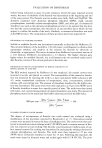
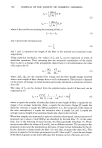
EVALUATION OF DENTIFRICES 683 before being subjected to assay. In some instances, where the assay required several weeks, the state of solubility of the fluoride was determined at the beginning and end of the assay period. The fluoride sources studies were SnF2, NaF, and Na2POaF. The abrasives examined were dicalcium phosphate dihydrate (DPD), chalk, calcium pyrophosphate, insoluble sodium metaphosphate (IMP), and silica gel. A commercial dentifrice was used as the calcium pyrophosphate product to be assured that the abra- sive had the' correct properties this introduced an uncontrolled factor which did not appear to confuse the results of the study. Similarly, a commercial dentifrice was used as the IMP product. The compositions of these products have been reported (8). ESTIMATION OF AVAILABLE FLUORIDE Soluble or available fluoride was determined essentially as described by Hefferren (2). This involved dilution of the dentifrice 1:10 with water, centrifugation to obtain a clear supernatant solution, and analysis of the solution for fluoride by electrode or chemically, as appropriate. The major deviation from Hefferren's procedure was use of a 1:10 dilution Hefferren recommended a 1:3 dilution. The higher dilution gave higher values for available fluoride, but in all instances the two methods ranked avail- able fluoride content of the various products in the same way. ESTIMATION OF ABILITY OF DENTIFRICE TO REDUCE SOLUBILITY OF DENTAL ENAMEL IN ACID (RES) The RES method reported by Hefferren (3) was employed. Six enamel crowns were mounted in acrylic and placed in a vessel. The susceptibility of the enamel to dissolu- tion was measured by exposing the teeth to a lactic acid-lactate buffer solution at pH 4.5, under standardized conditions of temperature, time, concentration, solution volume, pH, and stirring rate. The amount of phosphate dissolved by the buffer solu- tion was determined. The same teeth were then exposed to a 25 per cent (W/W) slurry of fluoride dentifrice in water for a specific period of time. The teeth were then rinsed with water, and a second measurement of enamel dissolution was made. The amount of phosphate present in the initial and final buffer solutions provided the RES value: RES per cent = [PO4-31 initial- [PO4-31 final [PO4-a] initial x 100 FLUORIDE UPTAKE IN TOOTH ENAMEL The degree of incorporation of fluoride into tooth enamel was evaluated using a modification of the procedure reported by Brudevold et al. (7). Noncarious enamel crowns were mounted in wax at the base of small glass vials. The crowns were then sub- jected to several successive etchings with 0.5 M HCIO4 until a constant amount of fluo- ride was removed at each etching. The fluoride concentration per million parts of sur- face enamel removed by etching was determined by analyzing the etching solutions for calcium, phosphorous, and fluoride. The teeth were then exposed to 25 per cent (W/W) slurry of fluoride dentifrice in water for ! 5 min. Following this exposure, the teeth were rinsed in dionized water and etched again with 0.5 M HC104. The post-
Purchased for the exclusive use of nofirst nolast (unknown)
From: SCC Media Library & Resource Center (library.scconline.org)