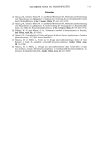
TOPICAL IRRITATION 679 (60) R. R. Riso, Private communication (1976). (61) D. L. J. Opdyke, Inhibition of sensitization reactions induced by certain aldehydes, Food Cosmet. Toxicol., 14, 197-8 (1976). (62) R. Kelly and E.J. Ritter, Mildness additive, U.S. Pat. 3,630,934 (1971). (63) R. Kelly and E.J. Ritter, Mildness additive, U.S. Pat. 3,769,242 (1973). (64) R. Kelly and E. J. Ritter, Mildness additive, U.S. Pat. 3,798,182 (1974). (65) R. Kelly and E. J. Ritter, Mildness additive, U.S. Pat. 3,813,350 (1974). (66) R. Kelly and E. J. Ritter, Mildness additive, U.S. Pat. 3,947,382 (1976). (67) R. Kelly and E. J. Ritter, Mildness additive, U.S. Reissue Pat. 28,913 (1976).

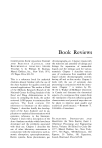
J. Soc. Cosmet. Chem., 28, 681-694 (November 1977) The evaluation of fluoride dentifrices MORTON PADER, LEWIS P. CANCRO, Lever Br0thers Research Center, Edgewater, NJ and BERNARD GUILLO, Laboratoire de Recherches Unilever, St. Denis, Paris Synopsis Four laboratory tests were investigated as indicators of the compatibility of FLUORIDE SOURCE and ABRASIVE SYSTEM in FLUORIDE DENTIFRICES. These were solubility of the fluoride in water, ability to reduce the solubility of dental enamel in acid in vitro, uptake of fluoride from the dentifrice in vitro, and a rat assay for anticaries efficacy. Dentifrices were formulated with 1000 ppm fluoride (as NaF, SnF.,, or Na2PO3F) and with abrasives known to either interact or not interact with those particular fluorides. Also, clinically proven commercial products were examined. The assays for water-solubility of the fluoride and the rat assay clearly distinguished between the dentifrices with respect to compatibility of fluoride source and dentifrice abrasive, in agreement with the results of clinical trials reported in the literature, involving dif- ferent abrasives and sources of fluoride. INTRODUCTION Fluoride dentifrices, as opposed to puredy cosmetic dentifrices, now account for ap- proximately 80 to 85 per cent of the United States' market, and are becoming increas- ingly important in dentifrice markets throughout the world. The anticaries efficacy of dentifrices containing fluoride with compatible toothpaste excipients has been proven in numerous clinical trials. (Most of those which have been reported in the literature up to 1972 are summarized by Gershon et al. (1)). These trials demonstrated that a properly formulated fluoride dentifrice containing 1000 ppm fluoride incorporated as stannous fluoride, sodium fluoride, or sodium monofluorosphosphate can be expected to reduce the caries rate by some 15 to 30 per cent over the course of 2 to 3 years when used in normal dentifrice fashion by populations susceptible to caries. Fluoride dentifrices in the United States, Canada, and elsewhere are categorized as drugs. As such, their formulation poses unique and difficult problems. Both safety and efficacy must be firmly established before marketing. There are only a few who at this time question either safety or efficacy of fluoride combined with a compatible cleaning system, but there is still no unanimity with respect to the means for proving compati- bility and efficacy. Views have ranged from simply the presence of a prescribed amount of fluoride in a soluble form as adequate evidence of efficacy to the requirement of several clinical trials to prove such efficacy. One of the more important reasons for such a divergence of views is the lack in the literature of virtually any correlations between the results of chemical and animal assays for efficacy and those of clinical tests. The former types of tests have in some instances given results not subsequently satis- factorily confirmed by clinical test when applied to agents other than fluoride. On the other hand, caries clinical tests are far from precise, and they, too, have suffered from 681
Purchased for the exclusive use of nofirst nolast (unknown)
From: SCC Media Library & Resource Center (library.scconline.org)