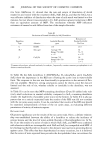
692 JOURNAL OF THE SOCIETY OF COSMETIC CHEMISTS frice in terms of the totality of the carious process. The RES and fluoride uptake tests are extremely important in showing ability of an agent to interact beneficially with the tooth substrate they are limited as an evaluative tool in providing less than a full pic- ture. The rat assay can be criticized on the same basis that all animal systems can be criticized, i.e., differences between human and animal systems. But compared to the other, in vitro, tests which involve only an enamel substrate, it alone gives a complete assessment of efficacy which is compatible with current concepts of fluoride dentifrice formulation and the results of human clinical trials. The carious process is extremely complex. Hefferren (3) has summarized more recent thinking on the carious process and on the design of anticaries agents. He has also pointed to the incompleteness of our knowledge on the mechanism of fluoride action. And he has indicated the need for greater reliance on definitive laboratory studies, the basis for which is correlation of experimental data on the new product with the clinically established product. The studies reported above clearly define such a correla- tion. It is becoming increasingly apparent that caries is a specific disease state, caused by specific disease orgknisms. The route to cure of this disease is not unlike that of any other disease-eliminate the causative microorganisms(s), combat the microorganism(s) by making the environment unfavorable, and/or increase the resistance of the substrate to the action of the microorganism(s). The mechanism of anticaries activity for a fluo- ride, while not totally understood, is generally considered to involve, at a minimum, the incorporation of fluoride into the dental enamel and strengthening of the enamel thereby against acid attack, which acid is generated by specific microbial populations under favorable environmental conditions. A direct effect of fluoride on the microbial metabolism has not been ruled out as another route of fluoride action. Other mechanisms may be involved, such as interactions of effects of fluorides and effects of variations in substrate (tooth) characteristics. The tests described above follow the pattern commonly used in the assessment of drug efficacy when formulating products containing drugs of established efficacy. Fluoride "availability" assures that the drug is in an active (noncomplexed) state. Reduction in enamel solubility (in vitro) and fluoride uptake (in vitro) give further assurance that the drug is in a state wherein it can act on the substrate, and the animal assay gives final assurance that the drug is active against the disease process in vivo. The ideal situation in correlating the results of in vitro and animal assays with the human assay is a series of studies in which dose-response curves are available for all the test situations. Such is not feasible in the fluoride arena, and only one real attempt to establish a dose-response to fluoride in a (compatible) abrasive system appears to have been reported. Reed (9) conducted two-year clinical trials with calcium pyrophosphate dentifrices containing 0, 250, 500, or 1000 ppm added fluoride (as NaF). All 3 fluoride products resulted in a significant reduction of the parameter "decayed, missing, and filled teeth." Only the product with ! 000 ppm fluoride, however, gave a significant re- duction in the more relevant parameter, "decayed, missing and filled tooth surfaces" (DMFS). Trends, however, pointed to a dose-response relationship with both parameters. DMFS reductions, for example, were: 7.5 per cent for 250 ppm F, 8.5 per cent for 500 ppm F, and 20.0 per cent for 1000 ppm F. Extension of the study to a third

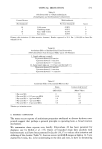
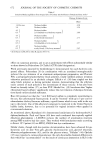
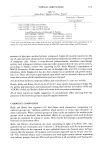
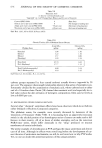
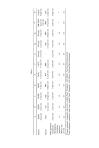
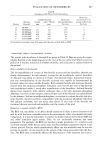
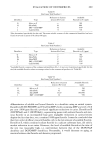
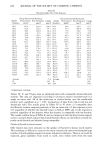
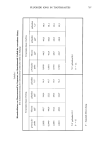
EVALUATION OF DENTRIFRICES 693 year might have established a good dose-response curve. With the exception of Reed's work, no clinical trials have been found in the literature to establish a dose-response in fluoride dentifrices. Lacking totally appropriate experimental clinical data on which to base judgments of the effect of fluoride in a dentifrice on dental caries, i.e., lacking dose-response clinical data of the type available for most drugs, one can assess the value of in vitro and animal data for fluoride dentifrices in relationship to clinical efficacy only by reference to the treatment of comparable data for other drug products. This has already been done in a sense by fluoride dentifrice investigators it is universally accepted that a prime pre- requisite for formulation of any fluoride dentifrice is that the fluoride source must not interact excessively with the abrasive and thereby become insolubilized. The experi- mental data presented above, particularly the data in Table II, support this view in its entirety. No thinking dentifrice formulator today would, for example, incorporate so- dium fluoride into a DCPD dentifrice, or SnF2 into a DCPD dentifrice. The results in Table II are especially important in that they point out definitively that in vitro and animal data disclose compatibility relationships between fluoride source and abrasive which do tend to qualitatively correlate with clinical trial data reported in the literature. Thus, for example, MPF is shown to be compatible with every abrasive tested (DCPD, CaCOa, IMP + DCP), and clinical results have been reported establish- ing the clinical efficacy of MFP not only in dentifrices containing these abrasives (e.g. 10, 11), but also with another compatible abrasive, viz., alumina trihydrate (12). On the other hand, there are reports of negative findings with NaF in dentifrices containing DCPD as the abrasive (13). This type of correlation should not be overlooked in assessing the significance of the in vitro and animal tests reported here. SUMMARY Four laboratory assays were applied to dentifrices formulated with a variety of abra- sives and fluoride sources. These were: (1) fluoride availability (2) reduction in enamel solubility (RES), (3) fluoride uptake by human dental enamel and (4) rat caries assay. The assays for fluoride availability and the rat assay very clearly.distinguished between the dentifrices based on compatibility of the fluoride source with the abrasive. The results of the RES and fluoride uptake assays gave valuable information on the ability of a fluoride in a dentifrice to interact with the dental enamel. The results clearly sup- port current views of fluoride dentifrice formulation, i.e., that the fluoride must not be insolubilized by the abrasive if it is to have anticaries activity. They also correlate quali- tatively with results of clinical trials reported in the literature, involving different abra- sives and sources of fluoride. ACKNOWLEDGMENT The authors gratefully acknowledge the technical assistance of D. J. Martin, W. Kalriess, B. Moulin, and other staff members of the authors' respective labora- tories.
Purchased for the exclusive use of nofirst nolast (unknown)
From: SCC Media Library & Resource Center (library.scconline.org)