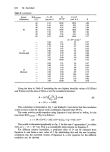
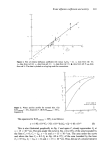
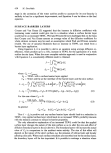
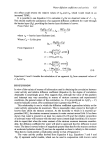
J. Soc. Cosmet. Chem. 29 641-649 (1978) Design and evaluation of a water-resistant sunscreen preparation RICHARD S. BERGER, JAMES A. MEZICK* and CHRISTOPHER M. PAPA Division of Dermatology, Rutgers Medical School, Piscataway, New Jersey and *Dermatological Division, Johnson & Johnson, New Brunswick, U.S.A. Presented at the joint Symposium with the Pharmaceutical Society of Great Britain, 'Cosmetic and Pharmacological Aspects of Colour', 11 November 1976 at Stratford upon Avon Synopsis A water resistant sunscreen preparation was formulated to function during swimming, exercising and sunbathing. The sunscreen agent, oetyl p-N,N-dimethylamino benzoate (PABA) and an ammonium aerylate/aerylate ester polymer were combined in a cosmetically pleasing oil-in-water, fugitive amine, lotion vehicle. When applied to skin, a substantive film forms which does not interfere with transepi- dermal water loss or normal sweat gland function. Double blind clinical studies showed that this water- resistant sunscreen preparation provided protection from sunburn after 60 min swimming in fresh or salt water. This water-resistant sunscreen preparation was found to be safe and of low irritancy, allergenic, sting and stain potential. INTRODUCTION Ultraviolet light (uvl) produces profound effects on human skin. This is especially true for the electromagnetic spectrum in the uv-B region of 290-320 nm. This radiation produces excitation of electrons which leads to chemical changes in DNA of epidermal cells and to the release of vasoactive substances, such as prostaglandins producing painful sunburn and cell destruction (1). This action spectrum is most likely responsible for the in- duction of skin cancers and ageing processes seen with prolonged solar exposure. With increased awareness of these sequelae and the popularity of out-door recreation, there is now a demand for effective products to protect individuals from these effects. In addition, there are a small number of individuals who require products to prevent sun-related exacerbation of underlying diseases, such as lupus erythematosus. Most available sunscreen preparations are removed by active swimming because of the incorporation of a water soluble sunscreen agent or a water-washable emulsifying system-. Our primary objective was to develop a sunscreen preparation for the mass market that would resist removal and provide effective uv-B protection during conditions of normal usage, such as swimming and exercising. Even if individuals are diligent about applying a sunscreen repeatedly, they may get burned while swimming, since water filters out very little uv-B. Therefore, the important feature of water-resistance is needed to protect people during and following swimming. 0037-9832/78/1000-0641 $02.00 ¸ 1978 Society of Cosmetic Chemists of Great Britain 641

642 R. $. Berger, J. A. Mezick and C. M. Papa Ideally, a sunscreen should have a proper uvl absorption and be non-sensitizing and non-stinging, so that it could be used on irritated or inflamed skin. The product should not stain clothing or skin and be cosmetically acceptable so that it can be used routinely on the face. Cosmetic acceptability includes being able to apply the product evenly to provide uniform protection. Our approach was to combine a water-insoluble sunscreen agent with a water- resistant, skin adherent, film-forming polymer to prevent wash-off or rub-off of the sunscreen agent. Although the polymer had to remain on the skin during swimming and sweating, it had to be easily removed by soap and water, when desired. It was also important that this sunscreen preparation would not interfere with normal cutaneous functions, i.e. sweating. METHODS PHYSICAL CHEMICAL STUDIES The water solubility of sunscreen agents (p-aminobenzoic acid (PABA), N,N-dimethyl PABA esters and benzophenones) was determined spectrophotometrically. Saturated solutions of each sunscreen agent were prepared by mixing and equilibrating the agent in water at 37øC for 24 h. Solutions were centrifuged .and filtered through a 0.22 I• millipore filter. The concentration of each sunscreen remaining in solution was deter- mined by absorbance using a Beckman © model 25 spectrophotometer. Erythemal transmittance values of pure sunscreen agents were determined spectro- photometrically according to the method of Cumpelik (2). POLYMER AND VEHICLE An acrylate film-forming polymer was selected as the primary film-former for the sunscreen preparation. This polymer is skin-adherent and water-resistant. When dried on the skin, however, the film is easily removed with soap and water. An oil-in-water emulsion containing the acrylate polymer and octyl dimethyl PABA was prepared. Ammonium isostearate served as the primary emulsifier. ANIMAL STUDIES The hairless mouse model system (3-4)was used to evaluate the photoprotective effectiveness of the film-forming sunscreen preparation. For comparison, a commercial preparation containing 5% PABA in a hydroalcoholic lotion was included in the study. Test materials (5 rag/era •) were applied to the backs of the mice and allowed to dry for 1 h. One group of mice was exposed only to ultraviolet radiation and the second group was immersed in water for 30 min prior to uv exposure. The mice were irradiated for 150 rain at a distance of 30 cm with a Westinghouse FS 40 sunlamp. Grading was done 120 h after irradiation. SKIN SAFETY To test for irritation potential of the film-forming sunscreen preparation on damaged skin, adhesive tape stripped wounds (1.27 x 2.54 era) were made on the backs of human volunteer subjects. Commercial sunscreen preparations containing 5% PABA (lotion) 3•o glyceryl PABA plus 3•o amyl dimethyl PABA (lotion) 2'5•o amyl dimethyl PABA
Purchased for the exclusive use of nofirst nolast (unknown)
From: SCC Media Library & Resource Center (library.scconline.org)