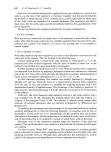
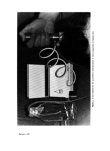
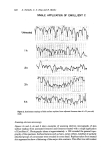
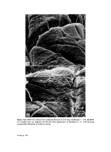
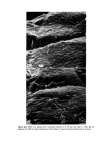
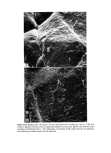
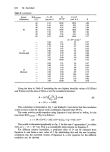
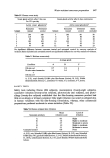
Water-resistant sunscreen preparation 643 (alcoholic vehicle) and 10•o sulisobenzone (lotion) were included in the study. Each test material was applied to gauze (0-5 ml), placed on the wound, occluded for 18 h and evaluated on a 0-4 scale 2 h after removal of the gauze. Standardized predictive tests, i.e. Draize, maximisation, cumulative irritation, phototoxicity, photoallergy and subtotal inunction tests were conducted on the film-forming sunscreen preparation. Also, known acrylate sensitive volunteers were tested for allergic sensitivity by a 48 h occlusive patch test. TRANSEPIDERMAL WATER LOSS A 5.08 x 5.08 cm area was outlined on the backs of six volunteer subjects. Trans- epidermal water loss readings were measured with an air flow hygrometer on these normal skin sites. The polymeric film-forming sunscreen product was applied (0.2 ml) to the outlined site and allowed to dry for 30 min before measuring transepidermal water loss. ECCRINE SWEAT STUDY To determine whether the acrylate film would interfere with sweating and/or produce sweat retention problems, the polymeric film-forming sunscreen preparation was applied daily (2.5 mg/cm •) to 10.16 x 10.16 cm sites on human volunteers under chronic use conditions (12 h per day for 7 days) and misuse conditions (continuous use for 4 days). At the end of both experiments, the films were removed with soap and water and the areas allowed to dry at least 2 h before sweat prints were made. Sweat prints were obtained with the silastic impression technique of Harris (5). A Saran© wrap occluded site served as a positive control. CLINICAL STUDIES Double blind clinical investigations included the following. 1. Two fresh water swimming pool studies. Weather conditions varied from a hot, dry climate in Phoenix, Arizona (100øF, 5•o relative humidity) to hot, humid conditions in Bradenton, Florida (90øF, high humidity). 2. One salt water ocean study conducted in Holmes Beach, Florida, with hot and humid weather conditions, (85øF, 68•o relative humidity) in winds of 20 mph and rough seas. The film-forming sunscreen preparation containing 3'3•o octyl dimethyl PABA and commercial products containing the following sunscreen agents were evaluated in these studies: 5.0• PABA (lotion) 3.0• amyl dimethyl PABA plus 3-0• octyl dimethyl PABA (lotion) and 10• sulisobenzone (lotion). A single application of product was applied to the backs of each subject (2.5 mg/cm 2) at Phoenix and Holmes Beach and (5.0 rag/era 2) at Bradenton. Product sites were random- ised on each subject. Sun exposure was between 10:00 a.m. and 2:00 p.m. with 60 min swimming before 12:00 noon. Erythema was graded on a scale of 0-3 (0, none 1, mild 2, moderate 3, severe), 6 h after the study. FABRIC STAIN STUDY A multifibre fabric obtained from Testfabrics, Incorporated, and approved by the

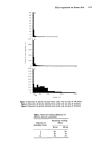
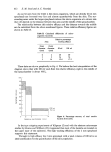
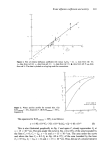
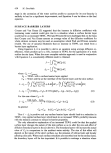
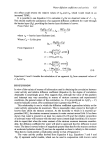
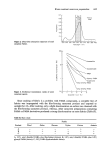
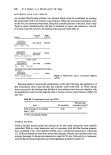
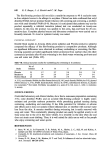
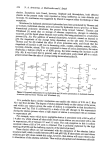
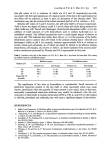
644 R. S. Berger, J. A. Mezick and C. M. Papa American Association of Textile Chemists and Colorists (AATCC) was used. This multifibre fabric consisted of 1.5 cm strips of wool, orlon 75, dacron 54, nylon 6.6, bleached cotton and acetate. Fabrics were impregnated with 0.05 ml of the following sunscreen preparations: 3.3•o octyl dimethyl PABA plus film-former (lotion) 3'0•o amyl dimethyl PABA plus 3'0•o glyceryl PABA (lotion) and 5.0% PABA (lotion). A glassine paper was applied over the fabric and a 2 kg weight placed on a glass plate over the paper was allowed to sit undisturbed for 60 s. Each fabric was exposed to direct sunlight for 4 h and 8 h later, washed with All © detergent in a 'normal' wash of 12 min in a washing machine. RESULTS AND DISCUSSION SUNSCREEN AGENT The sunscreen agent, octyl dimethyl PABA, was selected for the film-forming preparation because it fulfils many important features of a desired sunscreen agent. The presence of the octyl group and the two methyl groups (Fig. 1) make this derivative less reactive, less water soluble and more photostable than the parent compound, PABA. The water insolubility of octyl dimethyl PABA (Table I) promotes its water-resistance. o •-0 -CH•- iCH -CH• -CH• -CH= -CH• [• CH•, CH•, H •c/N'•*C H.• Figure 1. Structure of octyl dimethyl PABA. Table I. Water solubility of pure sunscreen agents Sunscreen agent Solubility (%) Octyl dimethyl PABA 0.0001 Homosalate 0.0003 Amyl dimethyl PABA 0.0005 Oxybenzone 0'0013 PABA 0.80 Glyceryl PABA 18.0 Sulisobenzone 40.0 Figure 2 shows that octyl dimethyl PABA absorbs energy in the sunburning range, having an absorption maximum at 312 nm, and transmits energy in the tanning range (320-400 nm), thus allowing the user to obtain a gradual tan. At 3•o concentration, octyl dimethyl PABA transmits less than 1 •o erythemal energy (Fig. 3).
Purchased for the exclusive use of nofirst nolast (unknown)
From: SCC Media Library & Resource Center (library.scconline.org)