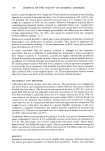
758 JOURNAL OF THE SOCIETY OF COSMETIC CHEMISTS components of a cosmetic formulation and there are hundreds of Pseudomonas species and an almost limitless number of strains, which may differ in their vulnerability to antimicrobials. It was therefore of interest to examine the behavior of a variety of pseudomonads in the presence of Imidazolidinyl Urea • (7), a commonly used (8) cosmetic preservative, in a laboratory screening test. Of course no screening test can substitute for the testing of a finished product. Only by challenge testing the final cosmetic formulation can one hope to establish whether or not a cosmetic is adequately preserved. Nevertheless, screening experiments can sometimes provide general information, which the authors felt might help cosmetic chemists and microbiologists to recognize the complexities and limitations of all testing procedures with Pseudomonas. EXPERIMENTAL METHODS Since different screening methods often give different results (9), a modification of an AOAC screening test (10) was chosen which was consistent with general practice, although somewhat more rigorous than usual. The choice was made to ignore bacterial counting and to require complete kill. This unusually rigorous approach meant that a 99.9% kill would be recorded in this study as "no kill," because growth would occur in a subculture even if only one organism survived. Nevertheless, the authors felt that this adaptation of the phenol coefficient method (10), spread out over several days, more closely represented the needed activity against Pseudomonas. An incubation temperature of 37øC for P. aeruginosa is recommended by AOAC (10) and others (11), and is considered by many (12) as the optimum temperature for growth of most bacteria. Since the USP XIX (13) recommends an incubation temperature for bacteria of 30-35øC, the choice was made in the study reported here to routinely incubate at 35øC. A third basic choice was to incubate in dilute nutrient media (see below), following the often-repeated suggestion by Goldman (14) that such dilute media best simulate conditions of growth in cosmetics. Initial screening was done with 11 pseudomonads purchased from ATCC (15), including those types most likely to be found in cosmetics. A 0.3% solution (16) of Imidazolidinyl Urea (Germall 115-Sutton Laboratories, Inc., Roselie, N.Y. 07203) was challenged with approximately 106 pseudomonads/mi. All pH's were adjusted to 7.0, because for most bacteria the optimum pH for growth generally lies between 6 and 8 (3, 12, 17). Table I shows the ATCC pseudomonads tested and includes strains of P. aeruginosa recom- mended by the USP (13) for testing antimicrobial effectiveness (i.e., P. aeruginosa ATCC 9027), by the AOAC (10) for disinfectant testing (i.e., P. aeruginosa ATCC 15442), by the CTFA Preservation Subcommittee (11) for testing of lotions (i.e., P. aeruginosa ATCC 13388), by the FDA (18) for testing of antiseptics (i.e., P. aeruginosa ATCC 14502) and the neotype strain (19) which is also used for antibiotic testing (i.e., P. aeruginosa ATCC 10145). The other pseudomonads tested (P. cepacia, P. putida, P. stutzeri, P. fluorescens and P. aureofaciens) are neotype strains of pseudomonads of interest to cosmetic microbiologists, and are species generally found in soil and water. Cultures were maintained on Trypic Soy Agar (TSA, Difco Laboratories, Detroit, Michigan) at 5øC. They were transferred approximately once a month. •GERMALL 115, registered trademark of Sutton Laboratories, Inc., Roselle, NJ 07203.

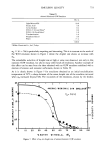
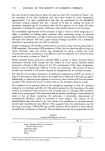
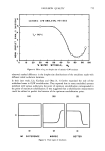
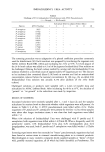
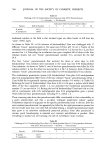
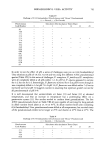
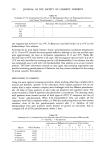
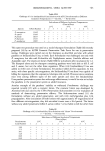
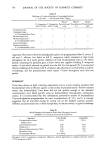
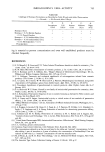
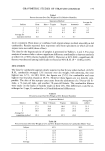
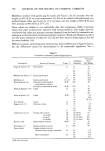
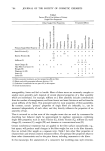
IMIDAZOLIDINYL UREA ACTIVITY 759 Table I Challenge of 0.3 % Imidazolidinyl Urea Solutions with ATCC Pseudomonads (+ = Growth, - = No Growth) Subculture After Incubation Times (Days) Species ATCC Number 1 2 3 7 14 21 28 P. aeruginosa 9027 - - - P. aeruginosa 15442 - - - P. aeruginosa ! 3388 - - - P. aeruginosa 14502 - - - P. aeruginosa 10145 - - - P. cepacia 10856 - - - P. cepacia 25416 - - - P. putida 12633 + + + P. stutzeri 17588 - - - P. fluorescens 13525 - - - P. aureofaciens 13985 + + + The screening procedure was an adaptation of a phenol coefficient procedure commonly used for disinfectants (10). Each inoculum was prepared by inoculating the organism into AOAC Letheen Broth (BBL 10914) and incubating for 24 hr at 35øC. A 0.5-ml aliquot of the 24-hr broth culture was added to 4.5 ml of the aqueous Imidazolidinyl Urea solution to be challenged. Diluting the broth culture tenfold by mixing with the Imidazolidinyl Urea solution resulted in a microbial count of approximately 106 organisms per mi. The mixture to be incubated also contained dilute (1:10) broth as nutrient and had an antimicrobial concentration reduced below the nominal concentration by 10% (e.g., the so-called 0.3% Imidazolidinyl Urea solution was actually 0.27% after addition of the 24-hr broth culture). Challenged solutions or products were sampled with a 4-mm id transfer loop and subcultured in AOAC Letheen Broth. After incubating for 48 hr at 35øC, the decision of "growth" vs. "no growth" in the subculture was made by inspection. RESULTS OF SCREENING Inoculated solutions were routinely sampled after 1, 2 and 3 days (d), and the samples subcultured in nutrient broth to determine whether viable organisms were still present. As shown in Table I, 9 of the 11 ATCC pseudomonads were killed within 24 hr. Viable organisms of P. putida and P. aureofaciens were present for the first 3 d, but when samples were taken after longer incubation times, it was clear that both organisms were killed within 7 d. When 0.5% solutions of Imidazolidinyl Urea were challenged with P. putida and P. aureofaciens, both organisms were killed within 2 d (Table II). When a frequently used (20) preservative system, 0.3% Imidazolidinyl Urea plus 0.2% methylparaben plus 0.1% propylparaben, was used, both P. putida and P. aureofaciens were killed within 1 d (Table iii). Screening experiments were then extended to "house" pseudomonads, organisms that had been found at various times in cosmetic manufacturing plants or in cosmetic products. Microbiologists in many cosmetic companies kindly supplied samples or "slants" of these wild, possibly mutated organisms, all of which had been identified as Pseudomonas. The
Purchased for the exclusive use of nofirst nolast (unknown)
From: SCC Media Library & Resource Center (library.scconline.org)