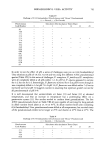
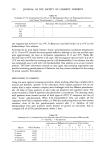
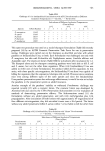
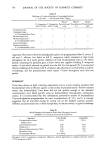
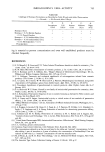
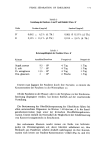
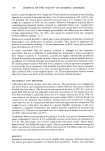
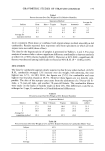
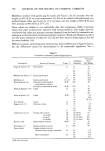
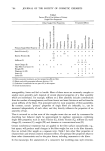
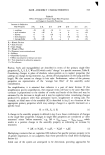
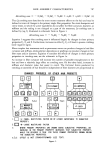
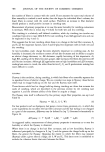
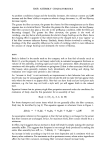
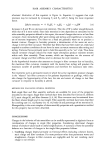
764 JOURNAL OF THE SOCIETY OF COSMETIC CHEMISTS' Table X Challenge of Cosmetic Emulsions Containing Parabens (+ = Growth, - = No Growth After 2 Days) "House .... House .... House" P. Aeruginosa P. Aeruginosa Pseudomonad Pseudomonad Pseudomonad ATCC 15442 ATCC 13388 34A 37-3 82C Cleansing Cream Cleansing Cream + 0.3 % Imidazolidinyl Urea Moisturizing Lotion Moisturizing Lotion q- 0.3% Imidazolidinyl Urea Nutrient Emulsion Nutrient Emulsion q- 0.3% Imidazolidinyl Urea + + organisms. The lotion with 0.2% methylparaben plus 0.1% propylparaben killed S. aureus, E. coli and C, albicans, but failed to kill P. aeruginosa, which remained at high levels throughout the 28-d study period. Addition of 0.3% Imidazolidinyl Urea to the lotion already containing the parabens gave a lotion which was capable of killing P. aeruginosa within 2 d and which showed no growth over the full 28-d test period (25). A second and third re-challenge of the lotion with P. aeruginosa also showed no survival within 2 d of the re-challenge, and the pseudomonad count stayed 10/ml throughout each 28-d test period. SUMMARY It has been shown in both screening experiments and in actual cosmetic products that Imidazolidinyl Urea is effective against a wide variety of pseudomonads. The few resistant strains that Imidazolidinyl Urea alone did not kill quickly enough at the indicated concentrations were killed quickly using an Imidazolidinyl Urea-paraben combination system. It is recommended that the combination preservative system of Imidazolidinyl Urea-methylparaben-propylparaben be used in proportions of 3:2:1, and it is strongly suggested that all microbial testing be carried out on the finished cosmetic product. Different pseudomonads vary in their susceptibility to antimicrobials, so good housekeep- Table XI Model Shampoo Formulation (Water Base Detergent System), ASTM E-35. ! 5 Cosmetic Preservative Task Force Ingredient % By Weight Grams/Kilo Triethanolamine Lauryl 25.00 250.0 Sulfate (40%) Lauryl Diethanolamide • 5.00 50.0 Amphoteric-2 5.00 50.0 Polyoxyethylene Lanolin (50%) 3.00 30.0 Phosphoric Acid 0.20 2.0 Demineralized Water qs to ! 00% Detergent system containing an amphoteric (Miranol). Add all ingredients to mixing vessel and warm to !50øF. Sweep stir to 90øF.

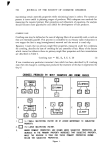
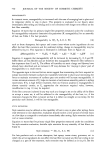
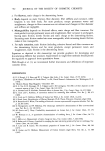
IMIDAZOLIDINYL UREA ACTIVITY 765 Table XII Challenge of Shampoo Formulation as Described in Table XI and with Added Preservatives (+ = Growth, - = No Growth After 2 Days) P. E. S. C. A, Aeruginosa Coli Aureus Albicans Niger 15442 10536 6538 10231 9642 Shampoo Alone + - - + + Shampoo + 0.2% Methyl-Paraben + - - + + + 0.1% Propyl-Paraben Shampoo + 0.3% Imidazolidinyl Urea ..... Shampoo + 0.3% Imidazolidinyl Urea ..... + 0.2% Methylparaben + 0.1% Propylparaben ing is essential to prevent contamination and even well established products must be checked frequently. REFERENCES (1) F. N. Marzulli, J. R. Evans and P. D. Yoder, Induced Pseudomonas keratitis as related to cosmetics, J. Soc. Cosmet. Chem., 23, 89-97 (1972). (2) R. M. Baird, Microbial contamination of cosmetic products, J. Soc. Cosmet. Chem., 28, 17-20 (1977). (3) R. E. Buchanan and N. E. Gibbons, Eds., "Bergey's Manual of Determinative Bacteriology," 8th ed., Williams and Wilkins Company, Baltimore, Md., 1975, pp 217-219. (4) C. L. Goldman, Taxonomy and ecological significance of microorganisms isolated from cosmetic products, CTFA Cosmet. J., 8 (No. 1), 31-2 (1976). (5) L. A. Carson, M. S. Favero, W. W. Bond and N.J. Peterson, Morphological, biochemical, and growth characteristics of Pseudomonas cepacia from distilled water, Appl. Micro., 25 (No. 3), 476 (1973). (6) S. Tenenbaum, Significance of pseudomonads in cosmetic products, Amer. Perfum. Cosmet., 86, 33-37 (January 1971). (7) P. A. Berke and W. E. Rosen, Germall, a new family of antimicrobial preservatives for cosmetics, Amer. Perfum. Cosmet., 85 (No. 3), 55-59 (1970). (8) E. L. Richardson, Preservatives: frequency of use in cosmetic formulas as disclosed to FDA, Cosmetics and Toiletties, 92, 85-6 (March 1977). (9) R. A. Cowen and B. Steiger, Antimicrobial activity---a critical review of test methods of preservative efficacy, J. Soc. Cosmet. Chem., 27, 467-81 (1976). (10) "Official Methods of Analysis," 12th ed., Association of Official Analytical Chemists, Washington, D.C., 1975, pp 57-60. (11) J. A. Rodgers, G. Jacobs, E. M. Owen, D.C. Pease, Jr., A. F. Peterson, W. H. Riley, A. G. Schenkel, J. L. Smith, C. E. Stegmann and j. A. Ramp, Evaluation of methods for determining preservative efficacy, CTF,'I Cosmet. J., 5 (No. 1), 2 (1973). (12) J. Schimmel and M. N. Slotsky, Preservation of cosmetics, in M. A. Balsam and E. Sagarin, Eds., "Cosmetics Science and Technology," Vol. 3, 2nd ed., Wiley Interscience, New York, N.Y., 1974, pp 397 and 401. (13) "United States Pharmacopeia XIX, Antimicrobial Preservatives--Effectiveness," Mack Printing Company, Easton, Pa., 1975, pp 587-8. (14) C. L. Goldman, private communication. (15) American Type Culture Collection, 12301 Parklawn Drive, Rockville, Md. 20852. (16) The concentrations referred to in the text and listed in the tables are "nominal" concentrations. In fact, after adding 1 part of inoculum to 9 parts of solution, the concentration of Imidazolidinyl Urea was reduced by 10%--that is, a "nominal" concentration of 0.3% was actually 0.27%. (17) M.J. Pelczar, Jr., and R. D. Reid, "Microbiology," 2nd ed., McGraw Hill Book Company, New York, N.Y., 1965, pp 87-8. (18) The American Type Culture Collection Catalog of Strains I, 12th ed., 1976, p 97.
Purchased for the exclusive use of nofirst nolast (unknown)
From: SCC Media Library & Resource Center (library.scconline.org)