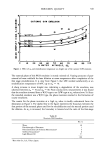
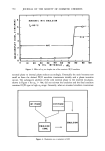
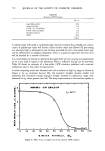
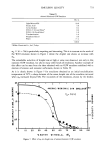
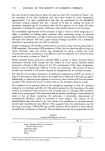
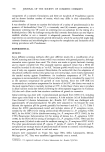
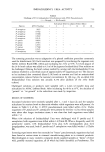
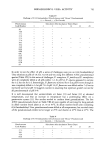
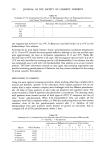
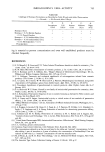
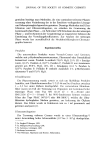
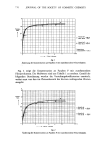
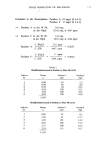
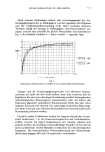
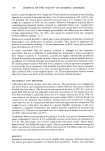
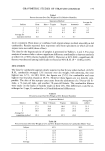
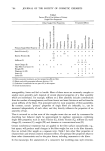
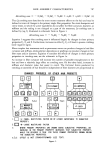
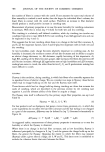
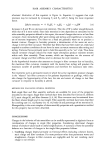
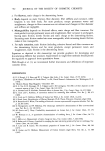
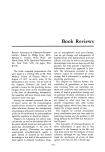
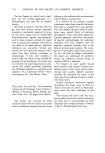
750 JOURNAL OF THE SOCIETY OF COSMETIC CHEMISTS • 6 i I I i I i i I i - NONIONIC W/O EMULSION - _ T. '80øc • - F O/W'-- 0 I0 20 $0 40 50 60 70 80 90 O0 % OIL WITH HELD , O( e Figure 3. Effect of •o on droplet size of the nonionic W/O emulsion external phase to internal phase reduces accordingly. Eventually the ratio becomes too small to form the desired W/O emulsion concentrate initially and a phase inversion occurs. The subsequent addition of the cold external phase to the inverted emulsions, shown in Figure 3 for oz o 70%, did not reinvert the emulsion and the final emulsion remained O/W type in high oz o range. Generally, when an inverted emulsion concentrate INT PHASE I EX'[ PHASE EMULSI ON CONC. EMULSION ! Figure 4. Illustration on • variation in LEE

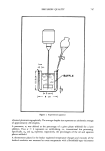
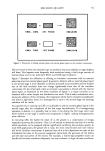
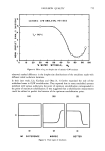
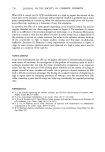
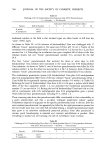
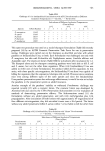
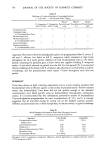
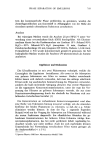
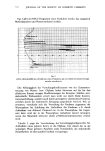
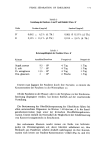
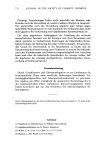
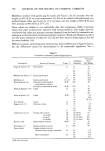
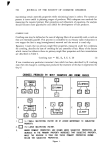
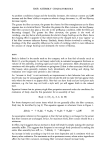
EMULSION QUALITY 751 EMUL. CONC. EXT. PHASE • + EMUL. CONC. EMULSION I NT. PHASE EMULSION Figure 5. Illustration of adding external phase and internal phase liquids to the emulsion concentrate fails to reinvert to form the intended type, an emulsion with poor stability or large droplets will form. This happens more frequently with emulsions having a fairly large amount of internal phase and is true with both W/O- and O/W-type emulsions. Figure 5 illustrates the difference in diluting an emulsion concentrate with an external phase liquid and an internal phase liquid. In general a dilution with an external phase liquid at the second stage is more desirable as dilution proceeds more smoothly and the droplet size of the final emulsion does not change significantly from that of the emulsion concentrate. On the other hand, when an emulsion concentrate is diluted with the internal phase liquid, as illustrated by the lower emulsion of Figure 5, a coarse emulsion or an emulsion with a wider droplet size distribution can result. This is easily understood since, during the addition of the cold phase, the temperature of the batch is lowered considerably and unless a high-shear mixer or a homogenizer is used in the second stage the resulting emulsion will be coarse. As a general rule in carrying out LEE, it is advisable to add the external phase liquid in the second stage after the completion of the first stage emulsification. If a homogenizing operation is desired, it is generally best to carry it out during the first stage since total batch volume at this stage is smaller and temperature is higher, making homogenization more effective. In executing LEE, the higher the value of ce, the greater is a conservation of energy expended to process the emulsion. Thus, it is of interest to determine the limit of ce within which emulsions can be prepared without significantly sacrificing the emulsion quality. In most LEE applications, the greater the ce value, the more concentrated and more viscous will be the emulsion concentrate. A practical limit of ce is thus dependent not only on the formulation but also on the process equipment, particularly the geometry of the kettles and the type and power of the mixers. For example, a marine-type propeller mixer can handle low-viscosity emulsions adequately, but not moderate- to high-viscosity emulsions.
Purchased for the exclusive use of nofirst nolast (unknown)
From: SCC Media Library & Resource Center (library.scconline.org)