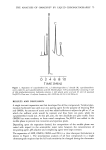
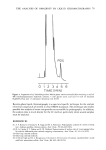
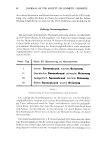
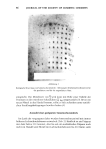
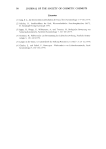
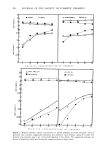
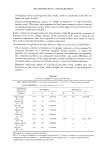
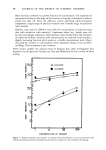
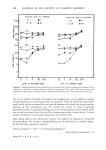
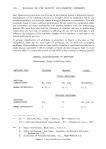
THE ANALYSIS OF OMADINE © BY LIQUID CHROMATOGRAPHY 79 PDS I I ! I ! I 012 34 ,_56 TIME (MIN) Figure 2. Separation of 2,2'-dithiobis-pyridine. Mobile phase: 50:50 acetonitrile/H20 containing 5 ml/1 of 40% tetrabutylammonium hydroxide solution, 4 ml/1 glacial acetic acid and 0.5 ml/l of saturated Na2EDTA. Flow rate: 1.5 ml/minute. Sensitivity: 0.01 AUFS. Reverse-phase liquid chromatography is a rapid and specific technique for the analysis of several compounds of interest in clear OMDS shampoos. This technique also makes possible the analysis of some compounds not accessible by polarography. In addition, the analysis time is much shorter for the LC method, particularly when several samples must be analyzed. REFERENCES (1) A. F. Krivis, E. S. Gazda, G. R. Supp and M. A. Robinson, Polarographic analysis of a series of metal ion 1-hydroxy-pyridine-2-thione systems, Anal. Chem., 35,966-968 (1963). (2) D. A. Csejka, S. T. Nakos and E. W. DuBord, Determination of sodium salt of 2-mercaptopyridine- N-oxide by differential pulse cathodic stripping voltammentry, Anal. Chem., 47,322-324 (1975). (3) Olin Corp. internal methods. (4) Olin Corp. internal methods. {• • ('•li,,ori_Vierh •ncl 1-1 I l•r•ec•7i•n Colorlmerrlc determination of sodium 2-Dvridinethiol 1-oxide with ferric ammonium sulfate, Anal. Chem., 48, 1001-1003 (1976).

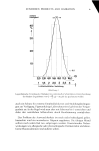
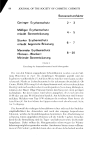
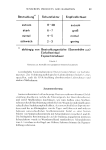
j. Soc. Cosmet. Chem., 30, 81-90 (March/April 1979) Lichtschutz unter Reisebedingungen A. WISKEMANN* Synopsis -- Sunscreen products are expected to absorb that amount of erythema-produclng radiation which exceeds the tolcr,'mce limits of the skin but still allow enough radiation to penetrate in order to produce tainting, which is itself radiation protective. Because individuals exhibit different radiation sensitivity and because the exposure may depend on the time of the year and the time of the day and because of the additional factors of varying radiation intensity, a range of sun-protective agents exhibiting a protective factor between 2 and 20 is required. The biological evaluation of starscreens by determination of their protection factors has been standardized in West Germany. In most cases, a protection factor of 4 to 5 should prove to be sufficient higher protection factors can inhibit pigment formation. Einleitung Alljahrlich fliegt ein Heer von Touristen einem Strahlungsklima entge- gen, an das ihre Haut nicht angepaf•t ist. Ohne Sonnenschutzmittel wtirden die meisten von ihnen bereits nach einer Stunde Mittagssonne einen Son- nenbrand erleiden, und dieses Ergebnis gilt nicht nur ftir stidliche Lander, sondern auch schon ftir einen Badeurlaub in Mitteleuropa. Wird die Strahlenmcnge auf cinc suberythcmat6sc Dosis reduziert, st) kommcn vorzugsweisc die biopositiven Wirkungcn des Sonnenlichtes zur Geltung. Dartiber hinaus paf•t sich die Haut an die neuen Strahlungsbedin- gungen an, u.a. durch eine verstarkte Hautbraune. Hautsch•digende Spektren der Globalstrahlung Dic crschntc, abcr im (Jbcrmat• hautsch:,idigcndc Strahlung crrcicht uns nicht nut dirckt vt)n der Sonne, sondcrn auch •ndirckt als Himlnclsstrah- lung aus allen Richtungen. Die Gesamthcit bcider Strahlungen bezeichnet man als Globalstrahlung. Einen Sonncnbrand kann nut der kurzwclligc Wcllen12ngenbereich )x 300-320nm, die sogenannte UVB-Strahlung, ver- ursachen. Eine chronische Schadigung der Epidermis im Sinne der Atrophie, * Universidits-Hautklimk Hamburg, Abteilung f•ir dermatologische Radiologie, (Prof. Dr. A. Wiskemann} Martinistr. 52, 2000 Hamburg 20. 81
Purchased for the exclusive use of nofirst nolast (unknown)
From: SCC Media Library & Resource Center (library.scconline.org)