J. Soc. Cosmet. Chem., 30, 181-190 (July/August 1979) Transepidermal moisture loss III. An in vitro approach GENE R. BERUBE and FRANK TRANNER, Chesebrough- Pond's Inc., Trumbull Industrial Park, Trumbull, CT 0661 I. Received January 16, 1979. Presented at the Annual Scientific Meeting, Society of Cosmetic Chemists, November 30-December I, 1978, New York, New York. Synopsis To facilitate OCCLUSIVE SCREENING EVALUATIONS at LOW relative HUMIDITIES, we have developed an IN VITRO model system using a polymeric film to simulate a skin substrate. The apparatus and the control and effects of temperature and relative humidity are described. Examples of the application of this device to the screening of some typical creams and lotions, USP Petrolatum, and some specific raw materials are given. It is shown that the effectiveness of some materials differs with the test humidity. INTRODUCTION Hydration of the stratum corneum by occlusion is one of the approaches used by cosmetic chemists in developing moisturizers. Therefore it is advantageous to be able to screen rapidly cosmetic products and raw materials for their capacity to retard moisture loss from the skin. While the in vivo experiments (1) better approximate real use conditions, they are tedious and time-consuming because of the necessity of accurately controlling the exogenous and endogenous variables. These have been discussed by Spruit and Malten (2). In particular, skin temperature (3,4) and relative humidity (5-7) have been shown to be extremely important. These factors, coupled with the variability of human subjects and their response to psycho-environment, make it extremely difficult to use in vivo moisture loss experiments as a routine screening technique. Others have developed in vitro approaches. Higuchi and Aguir (8) have determined the water vapor permeability of fats, waxes, and other coatings using a classical vapor diffusion experiment. Rieger and Deem (9) have utilized isolated human stratum corneum. Handjani, et al. (10) have described a model using a highly hydrated gelatin gel as a substrate. The basic form of our in vitro instrumentation was dictated by our desire to simulate our in vivo method (11) while replacing human stratum corneum, as the substrate, with a more readily available polymeric film. In addition, the capacity to vary relative humidity was a prime objective (13). 181

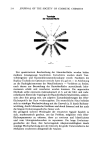
182 JOURNAL OF THE SOCIETY OF COSMETIC CHEMISTS EXPERIMENTAL INSTRUMENTATION A schematic for the apparatus is shown in Figure 1. The apparatus consists of a source (S) of dry air (dew point less than -40øC). Conventional pressure regulation and flow control through the use of valving were used. Humidification was accomplished by blending a stream of dry air with a stream of moist air. The moist air was achieved by passing dry air through an R.J. Harvey permeation cell, C-1, (R.J. Harvey Instrument Corp., 77 Brookside Place, Box 98, Hillsdale, NJ 07642). The cell is equipped with a source of distilled water and a polymeric membrane which regulates the diffusion of water into the air stream. Temperature control of the humidification process is accomplished with a conventional hot air laboratory oven (O-!) modified to accept the R.J. Harvey permeation cell. R Figure 1. Schematic of the in vitro apparatus. Where S-dry air R-regulator V• •o-valves 0•_2-oven C•.2-cells T•.•-thermistors TH-thermometer H•.2-dew point hygrometers B-bubblemeter RC-recorder TI-timer The humidity is monitored with an EG&G Model 880 dew point hygrometer, H-! (Environmental Equipment Div., 151 Bear Hill Road, Waltham, MA. 02154). The sample of polymeric film is placed into a second R.J. Harvey permeation cell (C-2) which is temperature controlled by a second hot air laboratory oven (0-2) and is monitored by a second dew point hygrometer (H-2). Temperatures are recorded using a Yellow Springs Instrument Model 8720-23 Thermistor Thermometer, TH with appropriate thermistors. The hygrometer signals are recorded on an appropriate strip chart recorder (RC). METHOD The polymeric film (Nylon 6 film, Capran, manufactured by Allied Chemical Corp. Morristown, NJ 07960) is placed into the sample cell, C-2, so that one side is in contact
Purchased for the exclusive use of nofirst nolast (unknown)
From: SCC Media Library & Resource Center (library.scconline.org)