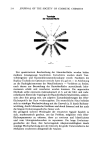
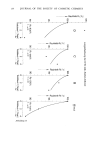
INSTRUMENTAL EVALUATION OF ODOR 247 into peptides and constituent amino acids which are further broken down to the volatile and odoriferous sulfur volatiles (8). A comparison of the instrumental evaluation of the headspace of incubated putrefied saliva with L-cysteine after 3 hr of incubation, early morning mouth air samples and the headspace of incubated sterile saliva system containing a gram-negative, Bacte- roides melaninogenicus are shown in Figure 2. It is obvious from the chromatograms and the corresponding retention times, that volatile sulfur compounds, hydrogen sulfide, methyl mercaptan and dimethyl sulfide are present in all these samples and are responsible for the offensive malodor. CONCLUSIONS The results of this study showed that: (1) Oral microorganisms play a role in the production of mouth realodors. (2) Gram-negative anaerobes, but not the gram-positive microorganisms, cause the formation of unpleasant odor in a sterile saliva system with L-cysteine as exogenous substrate in the presence of human blood components. (3) The malodor can be detected organoleptically and can be shown instrumentally to arise from volatile sulfur compounds associated with human mouth odor. (4) The chromatograms of the headspace of sterile saliva incubated with the gram- negative microorganisms are similar to those obtained for human mouth air samples as well as the headspace of stagnant saliva. REFERENCES (1) T. McNamara, J. Alexander and M. Lee, The role of microorganisms in the production of oral malodor, Oral Surg., 34, 41 (1972). (2) J. Tonzetich, Direct gas chromatographic analysis of sulphur compounds in mouth air in man, Arch Oral Biol., 16, 587 (1971). (3) M. C. Solis-Gaffar, H. P. Niles W. C. Rainieri and R. C. Kestenbaum, Instrumental evaluation of mouth odor in a human clinical study,J. Dent. Res., 54, 351 (1975). (4) M. Berg and L. S. Fosdick, Studies in periodontal disease, II. Putrefactive organisms in the mouth. J. Dent. Res., 25, 73 (1946). (5) S. Socransky and S. Manganiello, The oral microbiota of man from birth to senility,J. Periodont., 42, 485 (1971). (6) N. F. Schmidt, S. R. Missan, W.J. Tarbet and A. Cooper, The correlation between organoleptic mouth odor ratings and levels of volatile sulfur compounds, Oral $urg., 45,560 (1978). (7) N. F. Schmidt and W.J. Tarbet, the effect of oral rinses on organoleptic mouth odor ratings and levels of volatile sulfur compounds, Oral $urg., 45,876 (1978). (8) J. Tonzetich, Production and origin of oral malodor. A review of mechanisms and methods of analysis, J. Periodont., 48, 13 (1977).

Book Reviews TOXICOLOGY ANNUAL, Vol. III, 3rd ed., C. L. Winek, Ed., Marcel Dekker, Inc., New York, 1978, 332 pages. Price: $39.50. As in previous volumes, a broad range of subjects of interest to toxicologists is presented. The fifteen chapters include excellent reviews on the toxicity of pyri- thiones, phthalate esters, and fluorescent whitening agents plus new data on blood levels of ethylene and diethyleneglycols and blood and kidney concentrations of oxalate in rats dosed with these compounds. All three chapters are well referenced the large amount of data on pyrithiones could perhaps have been presented more effectively using tables, figures, etc. Chapters dealing with the use of the uricase-inhibited rat as an animal model, acute heroin fatalities, the toxi- cology of Poinsetta, and the toxicity of indigenous plants (Sudan) and agricul- tural chemicals in farm animals will be of value to those with special interest in these areas. (The section on agricultural chemicals does not deal comprehensively with the subject.) Preliminary data are presented on the toxicity of triphenyl tin oxide. There are timely chapters on quality control in the toxicology laboratory and liver carcino- mas in mice (some of the data on the bio-assay of pesticides is not current). The review articles on chemical toxi- cology are particularly informative and continue to make the series a useful reference.--C. BURNETt--Clairol Incor- porated. DICTIONARY OF PARTICLE TECHNOLOGY ENGLISH-GERMAN, GERMAN:ENGLISH, K. Leschonski and F. T. C. Carter, Elsevier Scientific Publishing Company, Amster- dam-New York, 1978, Introduction + 286 pages. Price: US $49.00, Dfl 110.00. The authors state that this specialized dictionary was prepared to fill a need in the relatively young science of Particle Technology where much of the work is carried out in German and Anglo-Saxon countries. This work concentrates on comparative German and English terminology as it applies to this specialty. After examining the dictionary, it became apparent that Particle Technology referred t• powder particles as related to process and chemi- cal engineering rather than particles as they apply to atomic physics and sub- atomic particles. Unlike the typical English-German dictionary for chemists, the translations offered in this dictionary are limited to a single version in the other language. In my opinion, this is good. 249
Purchased for the exclusive use of nofirst nolast (unknown)
From: SCC Media Library & Resource Center (library.scconline.org)