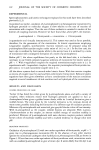
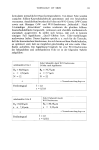
INSTRUMENTAL EVALUATION OF ODOR 245 Table II Controls VSC Odor Production Produced Sterile saliva No None Sterile saliva + L-cysteine No None Cysteine + H20 No None Non-sterile saliva + L-cysteine Yes Unpleasant Incubation period: 3 hr or 24 hr, 37qC by microorganism was associated with the malodor present in the incubated system. Among t'he gram-negatives tested, K/ebsie//a pneumoniae was observed to produce the most abundant amounts of VSC after 3 hr or 24 hr incubation. The controls for this study are shown in Table II. It is clear that the sterile systems failed to produce the characteristic and distinctive malodor observed with incubated non-sterile saliva. Moreover, VSC was not detected in the headspace of the sterile controls. DISCUSSION The results of this study confirm the earlier findings by Berg and Fosdick (4) and later by McNamara and co-workers (1) that oral microorganisms are involved in producing mouth malodors. Significantly, our results indicate that this odor is primarily caused by the formation and presence of VSC. Moreover, the ability to produce malodor resides on the gram-negative microorganisms. It has been pointed out by Socransky and Manganiello (5) that different microorganisms colonize in different sites of the oral cavity, that is, the organisms have a primary ecologic niche. The ecologic niche of the four gram-negatives that produced VSC in this study seems to be those areas where saliva readily stagnates. In general, these areas include the gingival crevice, interdental spaces, papillary crypts of the tongue, tonsillar folds and accumulations of dental plaque. Among the four gram-negatives studied, Bacteroides me/aninogenicas and Fusobacterium nucleatum are predominantly found in the gingival crevice, Veillonella alcalescens in plaque and Klebsiella pneumoniae in the interdental spaces. Possibly these areas provide the environmental conditions favorable to the growth of gram-negative anaerobes. According to McNamara and co-workers (1) saliva that was allowed to stagnate resulted in a shift in the ratio of gram-positive to gram-negative organisms favoring the Table III pH Changes Before and After Incubation at 370C t Microorganisms pH Before pH After Incubation Incubation 3 hr 24 hr Klebsiella pneumoniae 7.6 10.0 10.5 Fusobacterium nucleatum 7.2 7.2 7.9 Bacteroides melaninogenicus 7.0 7.7 8.9 Veillonella alcalescens 7.2 7.3 7.5 •Sterile saliva + L-cysteine + sterile human blood.

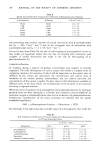
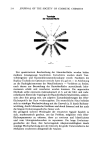
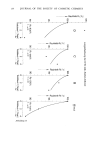
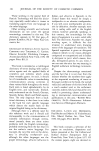
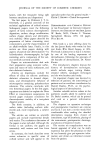
246 JOURNAL OF THE SOCIETY OF COSMETIC CHEMISTS growth of gram-negatives. With this shift came a corresponding increase in the pH. Our data tends to support their findings that an alkaline pH favors malodor production. Table III shows the change in pH of the incubated system containing the gram-negative organisms before and after 3 hr or 24 hr incubation with L-cysteine as exogenous substrate. The gram-positives, on the other hand, did not cause any appreciable changes in the pH of the incubating medium. Freshly collected whole human saliva has a slightly acid pH and a rather pleasant smell. However, when it is incubated, the saliva becomes more alkaline and takes on a distinctive putrid odor after 8 hr. Instrumental analyses of the headspace of stagnant putrefied saliva show the presence of the VSC similar to those detected in the direct analyses of the breath samples from the mouth (Figure 2). I 2 STERILE SALIVA + GRAM-NEGATIVE ORGANISM + L-CYSTEINE I 2 EARL' MORNING MOUTH AIR SAMPLE WHOLE HUMAN SALIVA + L - CYSTEINE I. H2S 2. CH3SH 3, (CH3} 2 S COLUMN: FEP TEFLON COLUMN PACKED WITH 5% POLYPHENYL ETHER AND 0.05% H3PO 4 ON 30/60 MESH CHROMSORB T ATTENUATION: 1.28 x I0 -IøAFS TEMPERATURE: 60øC CARRIER GAS: AIR Figure 2. GC-FPD chromatogram of headspace of incubated system with gram-negative microorganism compared to chromatograms of mouth air sample and headspace of incubated whole human saliva. Moreover, Schmidt and co-workers (6, 7) showed that volatile sulfur compounds detected instrumentally by GC and a flame photometric detection system from mouth air correlates with the organoleptic ratings of the same subjects. Our results in Table I indicate that the incubated system of sterile saliva and gram-negative microorganism had a malodor and VSC was detected from its headspace. The incubated systems with the gram-positives failed to develop any odor and no VSC was detected instrumentally from analyses of the headspace of these systems. Possibly the volatile sulfur compounds arise from the action of specific gram-negative microorganisms such as Bacteroides melaninogenicus, Fusobacterium nucleatum, Veillonella alcalescens and Kleb- siella pneumoniae, on exogenous and endogenous proteinaceous substrates such as epithelial cells, food debris, saliva and blood. The proteins then undergo proteolysis
Purchased for the exclusive use of nofirst nolast (unknown)
From: SCC Media Library & Resource Center (library.scconline.org)