BENZENE DERIVATIVES IN OXIDATIVE HAIR DYEING 205 cond•jtions of oxidation dyeing, the p-aminophenol would be used in coupling prior to the p-,p•henylenediamine. This conclusion has been confirmed by bubbling oxygen into an aqueous solution of equimolar amounts of p-aminophenol, p-phenylenediamine, and one coupler chosen from m-phenylenediamine, 1-naphthol, and m-aminophenol. In each case the dye from p-aminophenol and the coupler was formed first. In competition experiments using 1 mol of p-aminophenol and 1 mol each of two different couplers, the yields of the two indo dyes were in the proportion expected from the relative coupling rate constants. p- Aminophenol and p- Phenylenediamine Since both p-aminophenol and p-phenylenediamine can self-couple to give the trinuclear product (V) and Bandrowski's base respectively, it was of interest to see whether a "cross-coupled" product would be formed when a mixture of the two primary intermediates was oxidized. It was found that the precipitate, formed when an equimolar mixture of p- aminopl•enol and p-phenylenediamine was oxidized at pH 10 with air, contained small amounts of t,he self.coupled products (V) and Brandrowski's base. The major product was a brown solid which was readily purified by recrystallization. The elemental analysis (C = 67.1 H = 4.9) and the mass spectrum (m/e = 321) are consistent with the structure (XlI). This would be the expected product since p-aminophenol would oxidize first to p-benzoquinone monoimine. This would couple with p-aminophenol and with p-phenylenediamine, in a proportion dependent on their relative reactivities, to give (V) and (XlI). Such a condition would result in consumption of all the p.aminophenol prior to that of p-phenylenediamine. Oxidation of the excess of the latter would then give Bandrowski's base. Such a mechanism is consistent with the experimental observation if it is assumed that the reactivity ofp-aminophenol (k•) and p-phenylenediamine (k2), as couplers, is of the same order of magnitude. If k• were much greater than k2, only the self-coupled products would be formed, while if k2k•, only the cross-coupled product (XlI) and Bandrowski's base would be formed. •/N ,••NH 2 ,OH HO •'"•/•' H2N •/"• N • xII STABILITY OF INDO DYES AND DYEINGS To test the stability of the dyeings produced with various couplers and p-aminophenol, blond hair swatches were dyed in a dyebath comprising 0.5% p-aminophenol, 0.5% coupler, and 3.0% hydrogen peroxide adjusted to pH 9.5 with aqueous ammonia, at a liquor ratio of 10:1. The swatches were then stored for 88 weeks at 0% and 80% relative humidity. The color was noted initially and after 88 weeks. The results are shown in Table XlI. The effect of humidity on the stability of the dyeings was not as marked as had been

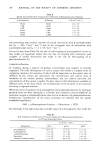
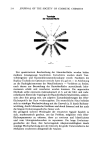
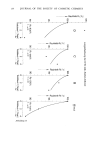
206 JOURNAL OF THE SOCIETY OF COSMETIC CHEMISTS Table XlI Stability of Dyeings on Hair Color of Hair Swatch Couple Initial After 88 wks.• p-Aminophenol light brown light brown p-AP + m-phenylenediamine brown violet black p-AP + 2,4-diaminoanisole red-violet black p-AP + m-aminophenol warm brown dark brown p-AP + 5-amino-0-cresol red red-brown p-AP + resorcinol yellow green medium brown •At 80% relative humidity. noted for dyeings with p-phenylenediamine and couplers (1). In general there was a tendency for the color to darken on ageing, with a loss in distinct overtones even at 0% humidity. It is well established that many 2-aminoindo dyes show a marked tendency to undergo intramolecular cyclization to phenazines. Such reactions, while slow compared with the rate of dye formation in oxidation dyeing, are significant in terms of shade stability on hair. Thus we have shown (1) that the stability of dyeouts decreases as the relative humidity increases, and that cyclization of 2-aminoindamines occurs on the hair. We have examined the stability of some 2-aminoindo-dyes, derived from p-aminophe- nol, in aqueous solution. As shown above, p-aminophenols couple para to the hydroxy group of m- aminophenols to produce orange to brownish red colors on hair. The initial coupling products are 2-aminoindophenols (eg. VII) which, at high pH, have the characteristic blue color of the anion (XIII): On heating, the blue solution slowly becomes yellow due to the formation of the corresponding 2,8-dihydroxyphenazine (XIV). Consider- able effort was involved in seeking a suitable method to study the kinetics of cyclization, since the anion (XIII) is readily attacked by hydrogen peroxide formed in the oxidation of the dihydrophenazine intermediate. Eventually, it was found that an excess of m-aminophenol in the reaction mixture could act as a hydrogen peroxide scavenger and a good spectrophotometric course could be obtained for the reaction. At pH 10, the rate of cyclization was found to be independent of pH. In the pH range 7-8, the rate decreased tenfold for each unit decrease in pH. Since the pKa of the 2-aminoindophenols is ca. 8.6, the observation indicates that the anion (XIII) is the active species in the rate-controlling step. In the pH range 6-7, the 2-aminoindophenols are particularly stable. However, at lower pH, hydrolytic fission occurs to give p-aminophenol and the corresponding 2- amino-/•-benzoquinone (XV). The rate of this reaction, in the pH range 2-6, increases tenfold for each unit decrease in pH and becomes pH independent below pH 1. This suggests that the cationic species (XVI) is the active species in the hydrolytic fission. The decomposition of 2-aminoindophenols in aqueous solution can be represented as shown in Figure 7. Although the 2-aminoindophenols are relatively stable at intermediate pH values, slow decomposition does occur. Spectral examination of the solutions does not, however,
Purchased for the exclusive use of nofirst nolast (unknown)
From: SCC Media Library & Resource Center (library.scconline.org)