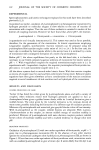
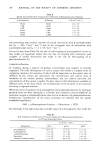
204 JOURNAL OF THE SOCIETY OF COSMETIC CHEMISTS Table X Specific Second-Order Rate Constants for the Reaction of Monoimines with m-Diamines p-Aminophenol m-Diarnine k (oe rnol -• rnin -•) Parent Parent 6.6 x 10 2 2-Me Parent 3.2 x 10 3-Me Parent 3.6 x 10 Parent 2-Me 3.2 x 10 • Parent 4-Me 2.4 x 10 3 Parent 4-Me0 1.1 x 10 4 rate-controlling step involves reaction of neutral monoimine with p-aminophenolate ion (k a = 48.6 l mol -• min -•) and of the conjugate acid of monoimine with p-aminophenolate ion (k 6 = 1.5 X 10 8 l mol -• min-•). As can be seen from Table XI, the rate of self-coupling of p-aminophenol is two to four orders of magnitude slower than the rate of coupling with commonly used couplers. A similar observation was made in the case of self-coupling of p- phenylenediamine (1). Competitive Reactions In oxidative dyeing a mixture of primary intermediates and couplers is normally employed. The color development in such a system will involve a complex series of competing reactions, the outcome of which will be dependent on the relative rates of diffusion of the various dye precursors, the concentration and relative rates of oxidation of the various primary intermediates, and the relative reactivity and concentration of the various couplers. To date, there is little information available on diffusion rates, so we must restrict our consideration of the situation to the reactions occurring in aqueous solution. While the rates of oxidation of p-aminophenol and p-phenylenediamine by hydrogen peroxide have not been measured, it is known that oxidation of p-aminophenol by molecular oxygen is considerably faster than that of oxidation of p- phenylenediamine. Furthermore, consideration of the redox potentials (2) indicates that the rapidly established equilibrium. PAP + p-Benzoquinone di-imine • Monoimine q- PPD lies essentially to the right-hand side at all pH values. It is thus apparent that, under the Table XI Rate Constants for the Reaction of Various Couplers with p-Benzoquinone Monoimine at 30øC and Various pH Values kto• (oe mol • min -•) Monoimine pH 11 pH 10 pH 9 p-Arninophenol 4.8 x 10 3.2 x 10 3.2 x 10 m-Aminophenol 2.4 x 10 4 1.6 x 10 4 2.4 x 10 3 2,4-Diaminoanisole 1.1 x 10 4 1.1 x 10 4 1.2 x 10 4 Resorcinol 1.5 x 10 6 5.7 x 10 5 2.4 x 10 5 4-Arnino-2-hydroxy-toluene 1.5 x 10 5 8.0 x 10 4 1.4 x 10 4

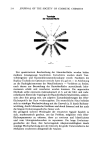
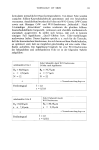
BENZENE DERIVATIVES IN OXIDATIVE HAIR DYEING 205 cond•jtions of oxidation dyeing, the p-aminophenol would be used in coupling prior to the p-,p•henylenediamine. This conclusion has been confirmed by bubbling oxygen into an aqueous solution of equimolar amounts of p-aminophenol, p-phenylenediamine, and one coupler chosen from m-phenylenediamine, 1-naphthol, and m-aminophenol. In each case the dye from p-aminophenol and the coupler was formed first. In competition experiments using 1 mol of p-aminophenol and 1 mol each of two different couplers, the yields of the two indo dyes were in the proportion expected from the relative coupling rate constants. p- Aminophenol and p- Phenylenediamine Since both p-aminophenol and p-phenylenediamine can self-couple to give the trinuclear product (V) and Bandrowski's base respectively, it was of interest to see whether a "cross-coupled" product would be formed when a mixture of the two primary intermediates was oxidized. It was found that the precipitate, formed when an equimolar mixture of p- aminopl•enol and p-phenylenediamine was oxidized at pH 10 with air, contained small amounts of t,he self.coupled products (V) and Brandrowski's base. The major product was a brown solid which was readily purified by recrystallization. The elemental analysis (C = 67.1 H = 4.9) and the mass spectrum (m/e = 321) are consistent with the structure (XlI). This would be the expected product since p-aminophenol would oxidize first to p-benzoquinone monoimine. This would couple with p-aminophenol and with p-phenylenediamine, in a proportion dependent on their relative reactivities, to give (V) and (XlI). Such a condition would result in consumption of all the p.aminophenol prior to that of p-phenylenediamine. Oxidation of the excess of the latter would then give Bandrowski's base. Such a mechanism is consistent with the experimental observation if it is assumed that the reactivity ofp-aminophenol (k•) and p-phenylenediamine (k2), as couplers, is of the same order of magnitude. If k• were much greater than k2, only the self-coupled products would be formed, while if k2k•, only the cross-coupled product (XlI) and Bandrowski's base would be formed. •/N ,••NH 2 ,OH HO •'"•/•' H2N •/"• N • xII STABILITY OF INDO DYES AND DYEINGS To test the stability of the dyeings produced with various couplers and p-aminophenol, blond hair swatches were dyed in a dyebath comprising 0.5% p-aminophenol, 0.5% coupler, and 3.0% hydrogen peroxide adjusted to pH 9.5 with aqueous ammonia, at a liquor ratio of 10:1. The swatches were then stored for 88 weeks at 0% and 80% relative humidity. The color was noted initially and after 88 weeks. The results are shown in Table XlI. The effect of humidity on the stability of the dyeings was not as marked as had been
Purchased for the exclusive use of nofirst nolast (unknown)
From: SCC Media Library & Resource Center (library.scconline.org)