J. Soc. Cosmet. Chem., 31,179-200 (July/August 1980) Effects of surfactant solutions on hair fiber friction G. V. SCOTT and C. R. ROBBINS, Colgate-Palmolive Research Center, 909 River Road, Piscataway, N.J. 08854. Received January I I, 1980. Presented at Annual Scientific Meeting, Society of Cosmetic Chemists, December 1979, New York, New York. Synopsis A capstan method using the Instron Tensile Tester © is described for measuring friction of hair fibers on various reference surfaces. Other test variables examined include fiber tension, rubbing speed, fiber diameter and hair condition. The method was developed to evaluate effects of SURFACTANTS on HAIR FIBERS as part of a longer range objective to predict hair fiber assembly behavior from single fiber properties. Accordingly, frictional results are supplemented with qualitative combing tests on tresses. Cationic surfactants differ for frictional effects on hair rubbed against hard rubber or wool. Some produce friction minima as concentration is reduced, while others of higher molecular weight maintain low frictien. The existence of FRICTION MINIMA was confirmed by qualitative combing tests. With anionic surfactants, friction of hair fibers on hard rubber decreases with increasing concentration. The addition of metallic ions to TEA-lauryl sulfate can either raise or lower friction, depending on their mode of complexing with TEA. Shampoos of different types can be distinguished by frictional measurements, using a "controlled rinse" procedure. INTRODUCTION Change in hair fiber friction by application of shampoos or creme rinses is a critical factor for understanding product performance. Combing and properties such as hand or feel, body, manageability, raspiness and static charge, are expected to show frictional dependence. Discussion of desirable direction and magnitude of friction change is inappropriate at this point but certainly friction should be measured to provide a basis for explaining and improving product performance. Mechanical combing methods (1, 2) can be empirically defended but the work or force values obtained are very complex in origin for simple or theoretical description. Single fiber friction offers more attractive prospects for uncovering fundamental principles required to explain influences of surfactant and other treatments on hair combing. Such information is essential to a longer range objective, i.e. predicting hair assembly behavior from single fiber properties (3). Complying with this objective, consumer perception of certain frictional effects are preliminarily tested by paired comparison of surfactant treatments on small hair tresses, qualitatively ranked by individuals for combability. Interesting options for measuring friction of wool and other textile fibers are described in original articles, reviews (4, 5) and books (6-11). A "fiber twist" method, experimentally and theoretically described by Lindberg (12), is of special interest for fiber on fiber friction with an Instron as measuring device and accessory parts 179

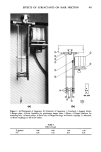
180 JOURNAL OF THE SOCIETY OF COSMETIC CHEMISTS relatively simple to construct. Violin bow methods (5, 13-15) which slide fiber loops down an inclined fiber seemed less attractive. Other workers (16-18) have measured forces to draw single fibers from bundles of parallel fibers. A category of methods which appeared valuable for fundamental investigations uses the capstan principle for measurement of forces to slide a weighted fiber on the curved surface of a reference material. The capstan approach, adopted for this paper is employed in several original articles (19-23) including one by Schwartz and Knowles (24) for measurements on human hair. A double capstan method using an Instron © has been developed, examined for effects of test variables and applied to a frictional study of surfactant systems. Method development and characterization are confined to the first section of this manuscript and surfactant behavior is described in the remaining sections. EXPERIMENTAL MATERIALS AND METHODS MATERIALS Hair fibers used were from a 12-year old Caucasian female (LAL), never waved or bleached, and from De Meo (DM) "blue string" hair. Fibers were bleached for 30 minutes with hydrogen peroxide containing ammonia to pH 10, unless otherwise specified. Mounts were prepared by fastening root and tip ends onto celluloid tabs with Scotch electrical tape, allowing 8 in of fiber between tabs. Hard rubber mandrels were prepared from polished rod supplied by Ace Comb Co., Butler, N.J., and wool mandrels by a single wrap of a wool challis fabric on a steel rod. EQUIPMENT Instron © Tensile Tester, Model TM with Automatic Integrator, Load Cell "A" and Friction Apparatus (See Section I). Usual conditions for wet friction are: chart 1 in/min., crosshead 5 in/min., extension cycle 4 in, chart sensitivity 4 g full scale, hard rubber mandrels at 10.7 RPM, total wrap angle 97 ø. METHODS Tress combing tests are conducted with three or more persons, each arranging four to six tresses according to combing ease, half treated with test material, half with reference. Tress position scores are taken, averaged and converted to a 0-4 scale with a 4 score indicating that all test tresses were ranked by all combers as easier to comb than reference tresses (0 score). Friction is measured as follows. The Instron © chart and integrator are zeroed and calibrated (4-g wt.) in the usual way but with the fiber mount on the load cell chain and the lower tab supported separately. The mandrels are immersed in test solution at 110øF, letting the fiber mount hang vertically with lower tab immersed with 1-g weight attached. The Instron crosshead is cycled and the integrator value (X•) for the down stroke is recorded. The fiber is wrapped on the immersed mandrels, rotation is started and the crosshead is cycled four times. Integrator readings are recorded for the last three downstrokes. Four additional fibers are measured similarly. An average integrator
Purchased for the exclusive use of nofirst nolast (unknown)
From: SCC Media Library & Resource Center (library.scconline.org)