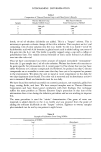
SAFETY TESTING IN THE EIGHTIES 215 with the responsibility of safety testing your company's new products, as well as the official correspondent to consumer complainants. Kligman's Facial Sting Test (6), conducted in an environmental chamber with carefully preselected facial stingers, or an exaggerated usage test, can be helpful in discovering which new facial products may have a potential for eliciting temporary burning or stinging. Possibly special panels of subjects, who have active atopic dermatitis, or xerotic skin, or seborrheic dermatitis, should be used with this type of problem. CONTACT SENSITIZATION Over the years, the human tests for predicting contact sensitization potential have undergone significant evolution. Our testing has progressed from the Schwartz-Peck Test (7), with a single induction patch followed by a challenge application 10 to 14 days later, to multiple induction applications, also followed by a subsequent challenge in 10 to 21 days (Draize-Shelanski Repeat Insult Procedure) (8,9). The sample sizes for this latter test have ranged from 50 to 200 subjects. Proponents of this test procedure find solace in increasing the panel size in an effort to improve the statistical inference of the test results and their relationship to the population-at-large. One satisfactorily completed sensitization test of this type, however, even if it involves 200 panelists, cannot be equated to the real world, where millions of consumers may be exposed to a specific product. Moreover, patch test conditions are vastly different from normal use conditions. The Maximization Test (10,11) is particularly useful for evaluating the sensitization potential of certain products, particularly colognes and perfumes, which characteristi- cally are simple formulations with relatively high fragrance loads and containing few other ingredients. If the original test results suggest that the product may be a sensitizer, the testing should always be repeated with new panelists. It must he understood at the outset that the Maximization Test does not directly assess the safety of a product in actual use--except when the results of testing are negative. The Maximization Test, conducted and interpreted properly, is here to stay for the 1980's. Of course, there are those who may have moral and ethical reservations about the Maximization Test, and the possibility of inducing allergic contact sensitization for an indefinite period of time. If sensitization is produced, it does not persist for a full lifetime. It wanes with time--a cardinal feature of cell-mediated, delayed hypersensitiv- ity. Secondly, it does not necessarily follow that induction of contact sensitization, via the Maximization Test, will mean that the positively reacting panelist will become a positively reacting consumer. The customary usage of most cosmetic products is vastly different than this particular testing procedure, where optimal, artificial conditions have set the stage for enhanced penetration. A few caveats should be mentioned about the Maximization Test. The total fragranc• load in any group of four test samples should not exceed a concentration of 20-25%. Fragrance oils are complex formulations. Therefore, there is always the possibility of common ingredients--at significant levels--in different fragrances. The spillover effect (12), or phenomenon coined para-allergy (11), where reactions become intensified as a result of strong allergic patch test reactions elsewhere, should also be recognized. This problem, understandably, calls for retesting with different panelists and a different group of test products.

216 JOURNAL OF THE SOCIETY OF COSMETIC CHEMISTS Lastly, erythema, as well as other signs of inflammation, is much more difficult to observe and interpret in the skin of blacks. More importantly, black skin may be a more effective barrier than white skin. This finding has been demonstrated by challenge experiments with several known chemical irritants (13,14). The very best panel of subjects for conducting a Maximization Test would consist of those with highly sensitive skin--a combination of red hair and freckles, or light-complexioned blue-eyed blonds of Scots-Irish descent, or young, white females who give a history of always sunburning and never tanning. This sounds like shades of testing with different sunscreen formulations. PHOTODERMATITIS The recent finding that 6-methylcoumarin, a synthetic fragrance, is a potent photocon- tact allergen has had a sobering impact on all involved in the safety assessment of new formulations prior to marketing. Phototoxicity testing can be conducted under natural sunlight or in the laboratory under carefully controlled conditions. Sophisticated, well-calibrated, artificial light sources, complete with light-filtering capabilities, are currently available. Lamp testing is much more convenient, precise, and free from the finickiness of our ungovernable weather. Photomaximization testing has been described in detail by Kaidbey and Kligman in their report entitled "Photocontact allergy to 6-methylcoumarin" (15). This report defined how the induction phase was carried out with repeated applications of 5% 6-methylcoumarin in Hydrophilic Ointment, U.S.P., under an occlusive dressing. Then the test sites were exposed to 3 MED's of solar-simulating radiation. Ten (10) days after the last exposure, the sites were challenged with an appropriate UV-A dose (320-400 nm), the action spectrum characteristic for photoallergens. Of course, suitable controls--that is, an unexposed 6-methylcoumarin-treated site, a vehicle site and the full formulation of suspect suncreen product--were included in this testing. Observa- tions at 24, 48, and 72 hr pinpointed the reaction characteristic of photocontact allergy, namely, erythema and vesiculation, reaching a maximal intensity 48-72 hr after irradiation, spreading beyond the confines of the actual patch and associated with intense pruritus. Yes, products of the future, particularly those containing fragrances, dyes, sunscreens, bacteriostats and brand new ingredients, will be candidates for photosensitization testing with our rapidly improving and readily available methodol- ogy. THE 1980'S During the next decade, stricter attention will be paid to the possibility of percutaneous absorption of cosmetic ingredients from different vehicles. The unearth- ing of neurotoxic effects of acetyl tetramethyl tetralin (AETT) in animal studies has brought a new dimension to every fragrance supplier as he considers a safety testing program for new ingredients. The findings of the nitrosamine, N-nitrosodiethanol- amine, and 1,4-dioxane as contaminants in cosmetic products and cosmetic raw materials, respectively, are other examples of our increasing awareness of the possibility of systemic absorption. If these compounds cause cancer in laboratory animals, what are the implications when applied to human skin? Admittedly, as with
Purchased for the exclusive use of nofirst nolast (unknown)
From: SCC Media Library & Resource Center (library.scconline.org)