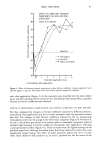
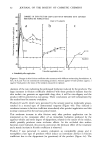
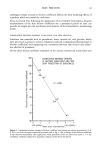
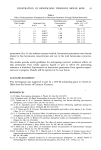
ANTIPERSPIRANT ACTION OF ALUMINUM SALTS 73 CONCLUSIONS The relative site of action within the sweat gland was determined for three antiperspirant agents, ACH, AZAP and AIC13 using the Scotch © tape stripping procedure. It was found that the primary site of action of ACH and AZAP was at the level of the stratum corneum layer, whereas A1CI3's site was deeper. REFERENCES (1) W. B. Shelley and P. N. Horvath, Comparative study on the effect of anticholinergic compounds on sweating,J. Invest. Derre. 16, 267-274 (1951). (2) H. M. Emrich and K.J. Ulrich, Auscheidung verscheidener Stoffe in Schweiss in Abhangigheit yon der Schweissfiussrate, Pflugers Archiv. 290, 298-314 (1%9). (3) K. Sato, J. R. Taylor and R. L. Dobson, The effect of ouabain on eccrine sweat gland function, J. Invest. Derre. 53,275-282 (1%9). (4) C. M. Papa and A. Kligman, Mechanism of eccrine anhidrosis. II. The antiperspirant effect of aluminum salts,J. Invest. Derre. 49, 139-145 (1%7). (5) H. H. Relier and W. L. Luedders, Pharmacologic and toxicologic effects of topically applied agents on the eccrine sweat glands. Part II. Mechanism of action of metal salt antiperspirant$, Adv. Mod. Tox. 4, 18-54 (1977). (6) J. M. Einbinder and R. A. Walzer, Separation of epidermis from dermis by use of disodium cantharadin,J. Invest. Derre. 41,109 (1%3). (7) B. I. Gordon and H. I. Maibach, Studies on the mechanism of aluminum anhidrosis, J. Invest. Derre. 50, 411-413 (1968). (8) J. Zahejsky and J. Rovensky, A comparison of the effectiveness of several external antiperspirants,J. $oc. Cosm. Chem. 23,775-789 (1972). (9) M. Wada and T. Takagaki, A simple and accurate method for detecting the secretion of sweat, Tokohu, J. Exp. Med. 49, 284 (1948). (10) Readi-Band ©, Parke Davis & Co., Detroit, MI. (11) Scotch Tape ©, 3M Company, St. Paul, MN.

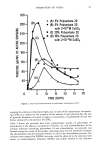
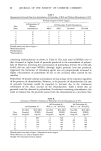
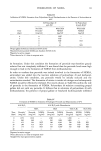
j. Soc. Cosmet. Chem., 32, 75-85 (March/April 1981) Formation of N-nitrosodiethanolamine from the peroxidation of diethanolamine JOHN T. H. ONG, BONNIE S. RUTHERFORD, and ALFRED G. WICH, Elizabeth Arden Research Center, Lilly Research Laboratories, 307 E. McCarty St., Indianapolis, IN 46285. Received October I6, I980. Presented at the Society of Cosmetic Chemists Annual Scientific Meeting, New York, NY, December I I- 12, 1980. Synopsis N-Nitrosodiethanolamine (NDE1A) was formed in aqueous solutions containing POLYSORBATE 20 and diethanolamine stored at pH 6 and 50øC under continuous aeration. The yield of NDEIA increased over a period of four weeks and was related to the PEROXIDE level in the solution. The peroxide was formed as a result of the AUTOXIDATION of polysorbate 20. However, no peroxide could be detected in polysorbate 20 solutions containing diethanolamine, indicating the reaction of the peroxide with diethanolamine. It is suggested that peroxidation of diethanolamine would yield nitrite or oxides of nitrogen which then nitrosated the remaining diethanolamine. The formation of NDE1A was enhanced at higher level of peroxide but inhibited effectively by the ANTIOXIDANT propyl gallate or butylated hydroxyanisole. Furthermore, NDEIA was also formed in aqueous solution of hydrogen peroxide and diethanolamine. Mono- or triethanolamine did not yield NDEIA under the same experimental conditions, although the formation of peroxide from polysorbate 20 was similarly inhibited. The implication of the results is discussed. INTRODUCTION N-Nitrosamines are a group of organic compounds that have attracted considerable amount of attention due to their carcinogenicity in laboratory animals (1--3). Recently, Fine et al. (4) and Rosenberg et al. (5) have developed analytical techniques which would allow the determination of non-volatile nitrosamines in the parts-per-billion level. Consequently, trace levels of N-nitrøsødiethanølamine (NDEIA) have been detected in several cosmetic products (6). Edwards et al. (7) have demonstrated that NDEIA is absorbed through the human skin from a contaminated facial cosmetics. It appears that the majority of cosmetic ingredients do not significantly contribute to the presence of NDEIA in the products (8). Rather, the contamination is generally believed to be caused by the chemical reactions between a nitrosating agent and the widely used di- or triethanolamine. Some of the known nitrosating agents are C-nitro compounds, nitrite, or the oxides of nitrogen. Schmeltz and Wenget (9) have assessed 75
Purchased for the exclusive use of nofirst nolast (unknown)
From: SCC Media Library & Resource Center (library.scconline.org)