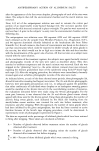
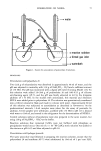
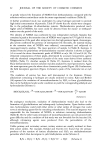
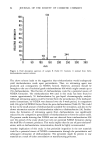
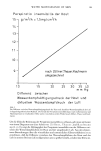
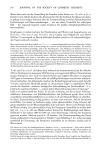
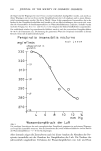
76 JOURNAL OF THE SOCIETY OF COSMETIC CHEMISTS the role of the commonly used C-nitro preservative, 2-bromo-2-nitropropane-l,3-diol, as the precursor of nitrite. Factors that affect the rate of NDEIA formation in aqueous solutions of 2-bromo-2-nitropropane-l,3-diol and ethanolamines are pH, the presence of catalyst or inhibitor, and the kind and grade of the ethanolamine (10). Furthermore, Fan et aL (11) reported the nitrosation of morpholine by several C-nitro compounds in a non-aqueous system. With regard to nitrite or oxides of nitrogen, data to date have not shown their presence in many common cosmetic ingredients (8). The purpose of this study was to identify a potential source of nitrosating agent in the course of inhibiting the formation of NDEIA in cosmetics. It has been reported (12,13) that polyoxyethylene compounds can undergo autoxida- tion to form hydroperoxides with subsequent cleavage of the chain. The importance of this hydroperoxides formation in relation to drug stability was assessed by McGinity et al. (14,15). More recently, Donbrow et al. (16) reported a detail study of the autoxidation of polyoxyethylene sorbitan mono-fatty acid esters (polysorbates) leading to the formation of hydroperoxides and subsequent changes of the physical and chemical properties of the surfactants. In view of the frequent use of polyoxyethylene surfactants to enhance the stability of the ethanolamine-fatty acid emulsion systems, it was thought necessary to explore the possibility of NDEIA formation in such combination of surfactants. This study reports the interaction of ethanolamines with hydrogen peroxide or the hydroperoxides of polysorbate 20 that was subjected to accelerated autoxidation. EXPERIMENTAL MATERIALS The following materials were used as received: polysorbate 20 (I.C.I. United States, Inc.) hydrogen peroxide 3 percent (Baker Chemical Co., AR 1-2180) monoethanol- amine 95 percent (Aldrich Chemical Co., Inc. 11,016-7) diethanolamine (Baker Chemical Co., AR 9227) triethanolamines 85 percent (Ashland Chemical Co.), 98 percent (Dow Chemical Co.), and analytical reagent grades (Baker Chemical Co., AR 1-9468) antifoam AF-72 (General Electric Co.) and disodium EDTA (J. F. Henry Chemical Co.). Propyl gallate and butylated hydroxyanisole were used as Tenox S-1 and Tenox A (Eastman Chemical Products, Inc.), respectively. All other materials, unless otherwise specified, were of analytical grade. Water for Injection USP was used as the solvent throughout the study. ' .]i APPARATUS Figure 1 shows the system used in the autoxidation of polysorbate 20. The reaction vessel was a 100-ml two-neck round-bottom flask equipped with a 20-cm Liebig condenser and a fritted gas inlet connected to the air supply with Tygon tubing. The vessels were immersed in a constant temperature waterbath at 50 ___ 0.2øC (Magni- Whirl, Blue M Electric Co. or Precision Scientific Co.). The air flow was regulated by adjusting the clamps on the tubing such that the air bubbles caused a mild turbulent mixing evenly in each of the reaction mixtures. The system was continuously exposed • to the fluorescent light of the laboratory throughout the study.

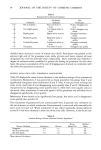
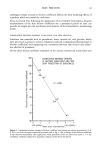
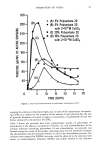
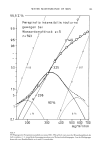
FORMATION OF NDEIA 77 water water air - reaction solution - -, fritted gas inlet waterbath Figure 1. System for autoxidation of polysorbate 20 solutions. PROCEDURE Peroxidation with polysorbate 20 Two (2.0) g of ethanolamine was dissolved in approximately 30 ml of water, and the pH was adjusted to neutrality with 1.38 g of NaH2PO 4 - H20 and a sufficient amount of ! N HCI. The pH was monitored with a digital pH meter (Corning Model 125). To this solution were added 3.0-20.0 g of polysorbate 20 and 0.05-0.15 g of silicone anti-foaming agent AF-72, and the pH was finally adjusted to 6.0 by the dropwise addition of ! N HC1. In the studies with antioxidant, this material and disodium EDTA were added prior to polysorbate 20. The solution was quantitatively transferred into a 100-ml volumetric flask and made to volume with water. Approximately 80 ml of this solution was subjected to autoxidation as described in APPARATUS. At the predetermined intervals, 1.0-ml samples were taken for the assay of peroxide. In addition, 5.0-ml samples were withdrawn, acidified with ! N HCI to pH 1.8-2, diluted with water to 10.0 ml, and stored in the refrigerator for the determination of NDE1A. Control solutions without ethanolamine were also prepared in the same manner, but using 2.68 g of Na2HPO 4 ß 7H20 as the buffer. Reaction solutions that contained CuSO4 were not buffered with phosphate as precipitation would occur. One ml of 2 x 10⁻²M CuSO 4 stock solution was added to the mixture at pH 6-6.5 and then adjusted to pH 6.0. Peroxidation with hydrogen peroxide The same procedure was followed in preparing the reaction solution, except that the polysorbate 20 and antifoam AF-72 were substituted by 10.0 ml of 3 per cent H202
Purchased for the exclusive use of nofirst nolast (unknown)
From: SCC Media Library & Resource Center (library.scconline.org)